
Have you ever noticed that your hair feels rough, dry, and difficult to manage no matter how many hair products you try?
Maybe you’ve switched shampoos multiple times.
Maybe you’ve invested in conditioners, hair masks, and serums.
Yet your hair still feels lifeless.
You might also be experiencing:
- Increased hair fall while combing
- An itchy scalp
- Dry hair ends
- Dull-looking hair
- Excessive tangles
- Product buildup that never seems to go away
Most people blame stress, weather, diet, or genetics.
But there is another factor that often goes unnoticed:
Hard Water Hair Damage.
Many households unknowingly use hard water every day. Over time, the minerals present in hard water can affect both your hair and scalp, making it difficult to maintain healthy-looking hair.
If you’ve been struggling with unexplained hair concerns, understanding the connection between hard water and hair health may help you find the right solution.
Signs Hard Water Is Affecting Your Hair
The effects of hard water do not usually appear overnight.
Instead, the damage develops gradually over time.
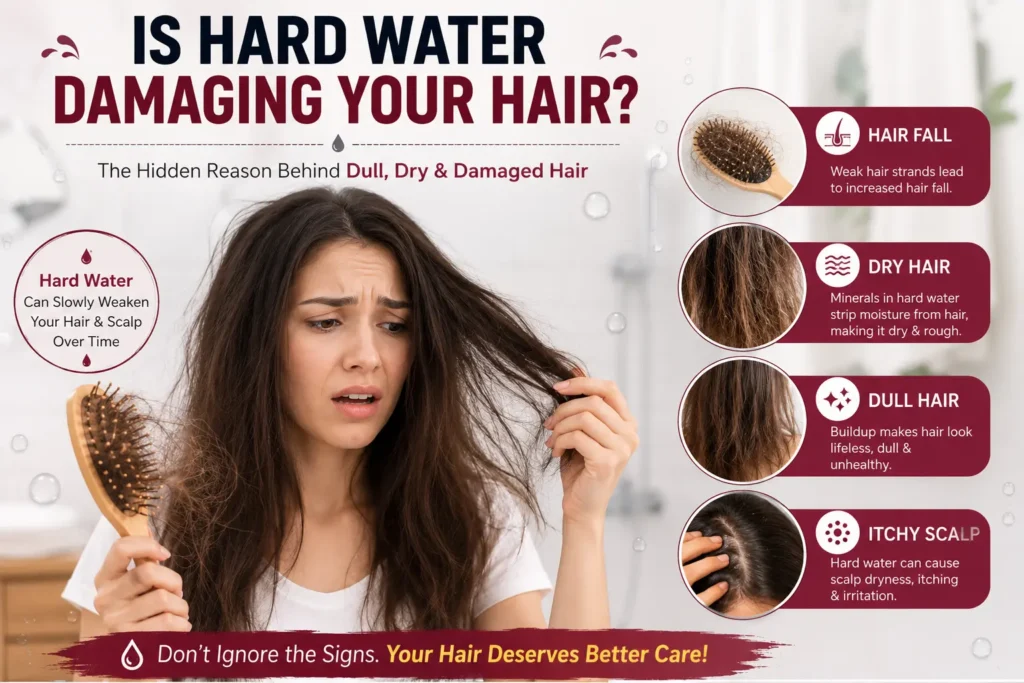
Hair Feels Dry and Rough
One of the earliest signs of Hard Water Hair Damage is dryness.
Even after conditioning, your hair may feel:
- Rough
- Brittle
- Frizzy
- Difficult to detangle
This happens because minerals in hard water can create a layer on the hair strands.
Increased Hair Fall
Many people experiencing Hair Fall Due to Hard Water notice more strands in:
- Hairbrushes
- Shower drains
- Pillows
While hard water may not be the sole cause of hair loss, it can weaken hair and increase breakage.
Scalp Itching and Irritation
Another common sign is scalp discomfort.
Many individuals experiencing Hard Water and Scalp Problems report:
- Itching
- Dryness
- Flaking
- Sensitivity
Hair Losing Its Shine
Healthy hair reflects light naturally.
However, Hard Water Hair Damage often causes hair to appear:
- Dull
- Lifeless
- Flat
What Is Hard Water and Why Does It Affect Hair?
Hard water contains high levels of minerals such as:
- Calcium
- Magnesium
- Iron
While these minerals are not harmful for drinking, they can affect how your hair and scalp respond to cleansing products.
Unlike soft water, hard water can leave mineral deposits behind.
These deposits accumulate gradually and contribute to Hard Water Hair Damage.
As the buildup increases, your hair may feel heavier, rougher, and less manageable.
How Hard Water Hair Damage Happens Over Time
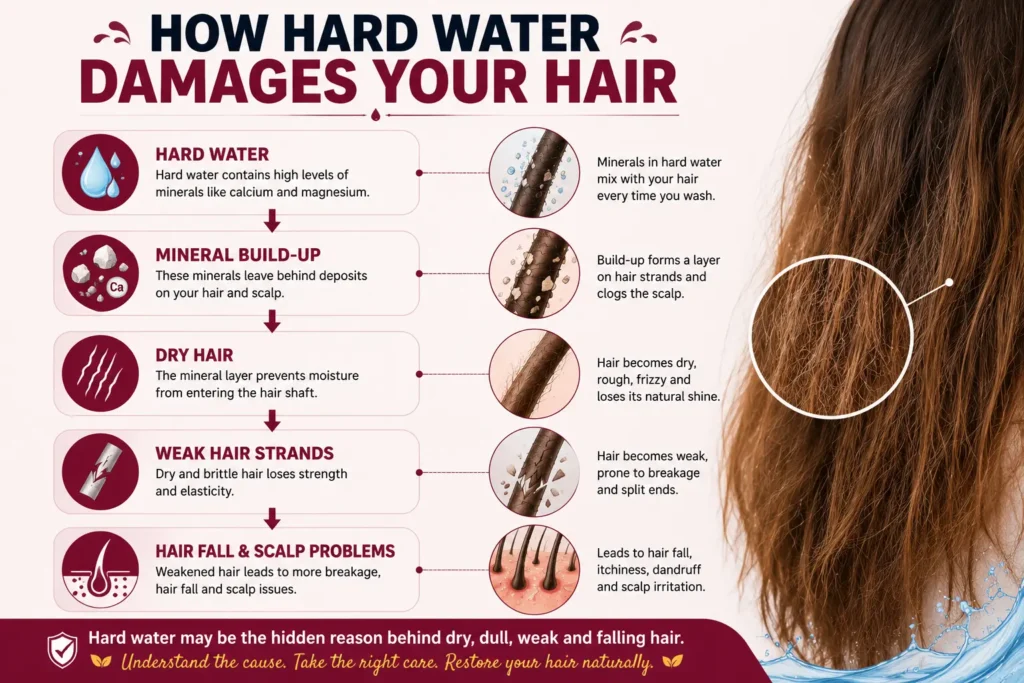
The effects are usually slow and gradual.
Initially, you may notice mild dryness.
Months later, your hair may become:
- More tangled
- More prone to breakage
- Less shiny
- Difficult to style
Because mineral buildup remains on the hair shaft, moisture struggles to penetrate effectively.
This is one reason why Hard Water Hair Damage often leads to persistent dryness.
Common Effects of Hard Water on Hair
Understanding the Effects of Hard Water on Hair can help you identify the problem earlier.
Reduced Moisture Retention
Mineral buildup can prevent hydration from reaching the hair shaft.
Increased Frizz
Dry hair tends to absorb moisture unevenly, creating frizz.
Hair Breakage
Weak, dehydrated hair breaks more easily.
Product Ineffectiveness
You may feel like your shampoo or conditioner isn’t working anymore.
In many cases, the issue is not the product itself but the Effects of Hard Water on Hair.
Hard Water and Scalp Problems You Should Not Ignore
Healthy hair begins with a healthy scalp.
Unfortunately, Hard Water and Scalp Problems often go unnoticed.
Common symptoms include:
Dry Scalp
Mineral deposits can contribute to dryness and irritation.
Flaking
Many people mistake mineral-related flakes for dandruff.
Scalp Sensitivity
The scalp may become more reactive and uncomfortable.
Ignoring these concerns may allow Hard Water Hair Damage to continue worsening over time.
Can Hard Water Cause Hair Fall?
This is one of the most common questions people ask.
Hard water does not directly cause permanent hair loss.
However, Hair Fall Due to Hard Water can occur when:
- Hair becomes weak
- Hair strands become brittle
- Breakage increases
- Scalp health declines
As hair loses strength, everyday activities such as brushing and washing can result in greater hair shedding.
Who Is Most Likely to Experience Hard Water Hair Damage?
Certain individuals may notice stronger effects.
You may be more vulnerable if:
- You already have dry hair
- You frequently use heat styling tools
- You chemically treat your hair
- You wash your hair daily
- You live in a hard-water region
For these individuals, Hard Water Hair Damage may become more noticeable.
How to Protect Your Hair From Hard Water
Fortunately, there are several ways to reduce the impact.
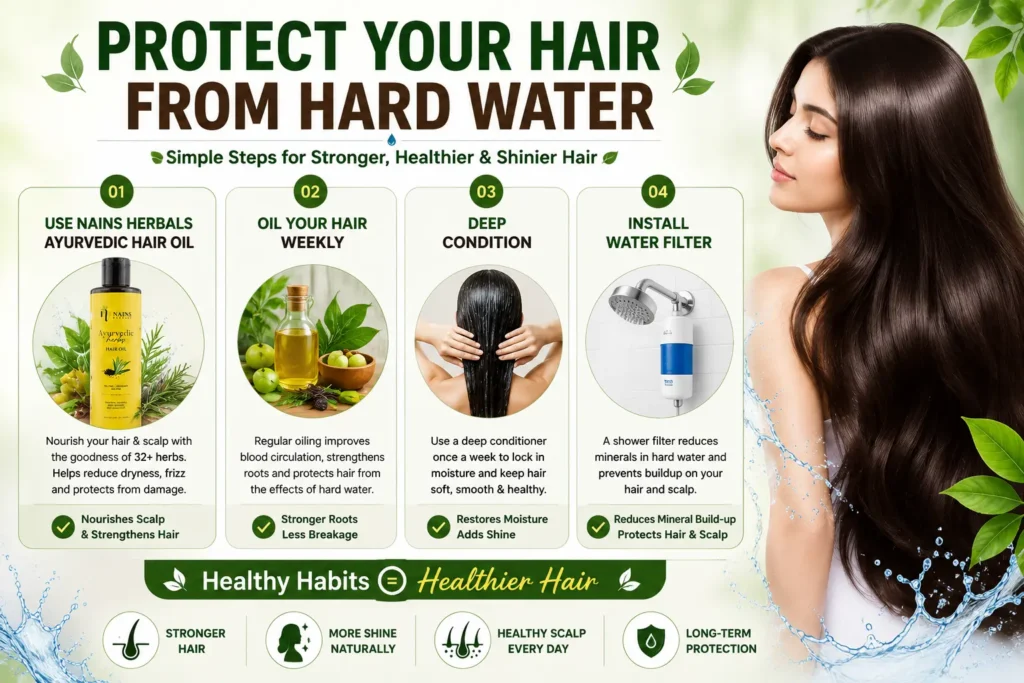
Use a Clarifying Shampoo
Clarifying shampoos can help remove mineral buildup.
Install a Water Filter
A shower filter may reduce mineral exposure.
Avoid Overwashing
Frequent washing may worsen dryness.
Deep Condition Regularly
Conditioning helps restore moisture.
Oil Your Hair Consistently
Oiling can help support healthier-looking hair and scalp health.
This is particularly helpful when dealing with Hard Water Hair Damage.
Best Hair Oil for Damaged Hair
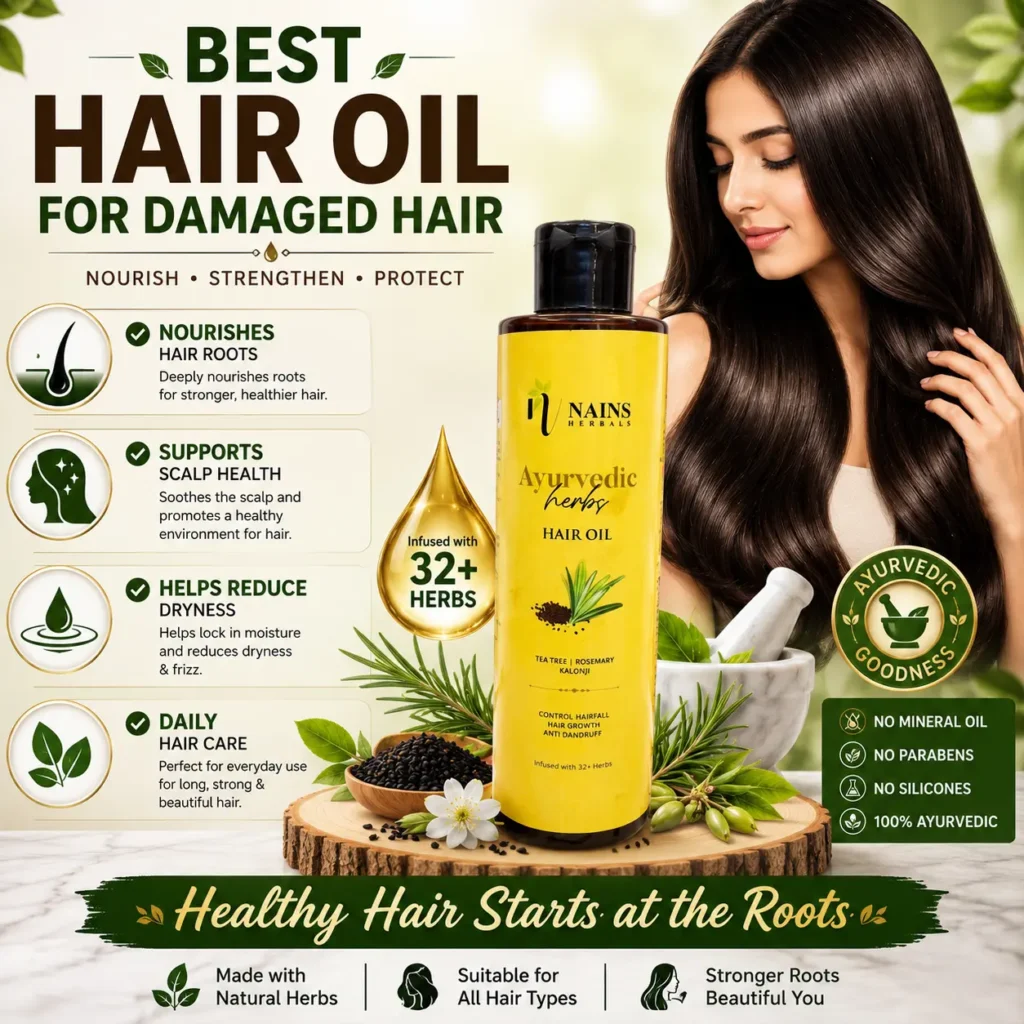
If hard water has left your hair feeling rough, dry, and lifeless, nourishing your scalp and hair regularly becomes important.
One option worth considering is the Nains Herbals 32 Herbs Ayurvedic Hair Oil.
Unlike temporary styling products that only improve appearance for a short time, herbal hair oils focus on nourishment.
Benefits may include:
- Supporting scalp health
- Improving hair manageability
- Reducing dryness
- Helping hair appear healthier
- Complementing a routine focused on minimizing Hard Water Hair Damage
For individuals looking for a Best Hair Oil for Damaged Hair, adding a herbal oiling routine can be a valuable step toward healthier-looking hair.
Simple Weekly Routine for Healthier Hair
Before Wash
Apply hair oil and leave it for a few hours.
Wash Day
Use a gentle shampoo.
Conditioning
Focus on hair lengths and ends.
Weekly Care
Use a deep conditioning treatment once a week.
Hydration
Drink enough water daily.
Consistency is key when dealing with Hard Water Hair Damage.
Frequently Asked Questions
How do I know if hard water is damaging my hair?
Common signs include dryness, dullness, breakage, tangling, and scalp irritation.
Can hard water cause hair fall?
Hair Fall Due to Hard Water may occur because hard water weakens hair and increases breakage.
Can hard water cause dandruff?
Some Hard Water and Scalp Problems can resemble dandruff due to dryness and mineral buildup.
Is a shower filter helpful?
Many people find shower filters useful for reducing mineral exposure.
What is the Best Hair Oil for Damaged Hair?
Herbal oils such as Nains Herbals 32 Herbs Ayurvedic Hair Oil can be a helpful addition to a hair-care routine.
Final Thoughts
Most people never suspect that the water they use every day could affect their hair.
Yet Hard Water Hair Damage is a real concern that can gradually contribute to dryness, breakage, dullness, and scalp discomfort.
The good news is that understanding the problem is the first step toward solving it.
By recognizing the Effects of Hard Water on Hair, improving your hair-care routine, supporting scalp health, and using nourishing products like Nains Herbals 32 Herbs Ayurvedic Hair Oil, you can help your hair look healthier, stronger, and more manageable over time.
Healthy hair isn’t created overnight. It comes from consistent care, proper nourishment, and addressing the hidden factors that may be working against your hair every single day.