
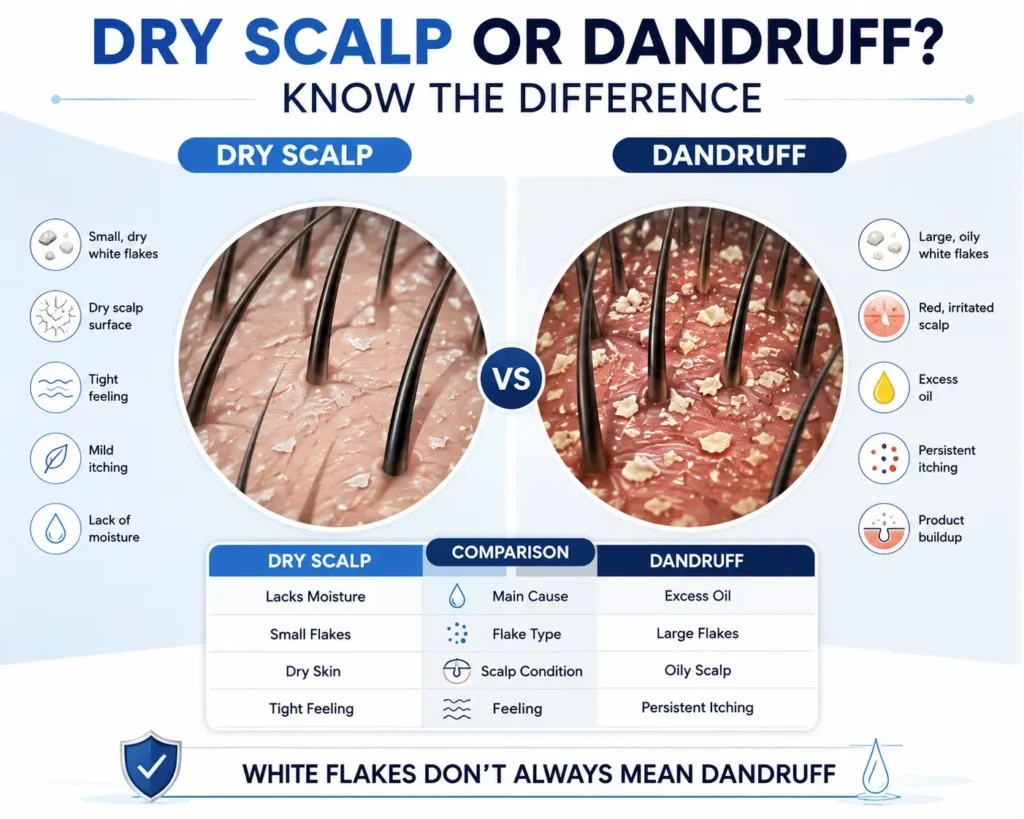
Dry Scalp vs Dandruff is one of the most common scalp care questions, yet many people struggle to tell the difference. White flakes, itching, and scalp discomfort can look similar, but the causes and care needed are often completely different.
Have you ever noticed white flakes on your shoulders and immediately assumed you had dandruff?
Maybe your scalp feels itchy after washing your hair. Perhaps you see small white flakes when brushing your hair, but anti-dandruff shampoo doesn’t seem to help.
If this sounds familiar, you’re not alone.
Many people confuse a dry scalp with dandruff because both conditions can produce white flakes. However, they have different causes and often require different approaches. Using the wrong hair care routine may even make the problem worse.
Understanding the difference between Dry Scalp vs Dandruff can help you choose better hair care habits and maintain a healthier scalp.
Dry Scalp vs Dandruff: What’s the Real Difference?
Many people believe all white flakes are dandruff, but Dry Scalp vs Dandruff is an important distinction. A dry scalp usually lacks moisture, while dandruff is often linked to excess oil and scalp irritation. Knowing the difference helps you choose the right hair care routine instead of treating the wrong problem.
White Flakes on Scalp: Why Do They Appear?
White flakes are not always a sign of dandruff.
Small Flakes Can Have Different Causes
Some flakes appear because the scalp lacks moisture, while others develop because of excess oil and irritation.
How to Tell the Difference
Dry scalp usually produces small, dry flakes, while dandruff often creates larger flakes that may stick to oily hair.
Itching Isn’t Always Dandruff
An itchy scalp can happen for many reasons.
Common Triggers
- Dry weather
- Harsh shampoos
- Product buildup
- Oily scalp
- Skin irritation
Identifying the underlying cause is more important than treating every flaky scalp as dandruff.
Dry Scalp Causes You Should Know
A dry scalp develops when the skin on your scalp loses too much moisture.
Cold or Dry Weather
Less Moisture in the Air
Seasonal changes can reduce moisture levels, making the scalp feel tight, dry, and flaky.
Harsh Hair Products
Cleansing Too Aggressively
Strong shampoos and frequent washing may remove the natural oils that keep your scalp comfortable.
Hot Water
Strips Away Natural Oils
Very hot water can dry out your scalp and increase irritation over time.
Dandruff Symptoms That Are Often Misunderstood
Dandruff is different from a dry scalp.
Larger White or Yellow Flakes
Oily Appearance
Dandruff flakes are often larger and may stick to your scalp or hair because of excess oil.
Persistent Itching
Ongoing Scalp Irritation
People with dandruff often experience continuous itching that doesn’t improve with simple moisturizing.
Excess Oil
Imbalance on the Scalp
An oily scalp combined with flakes may indicate dandruff rather than dryness.
Healthy Scalp Care: Daily Habits That Help
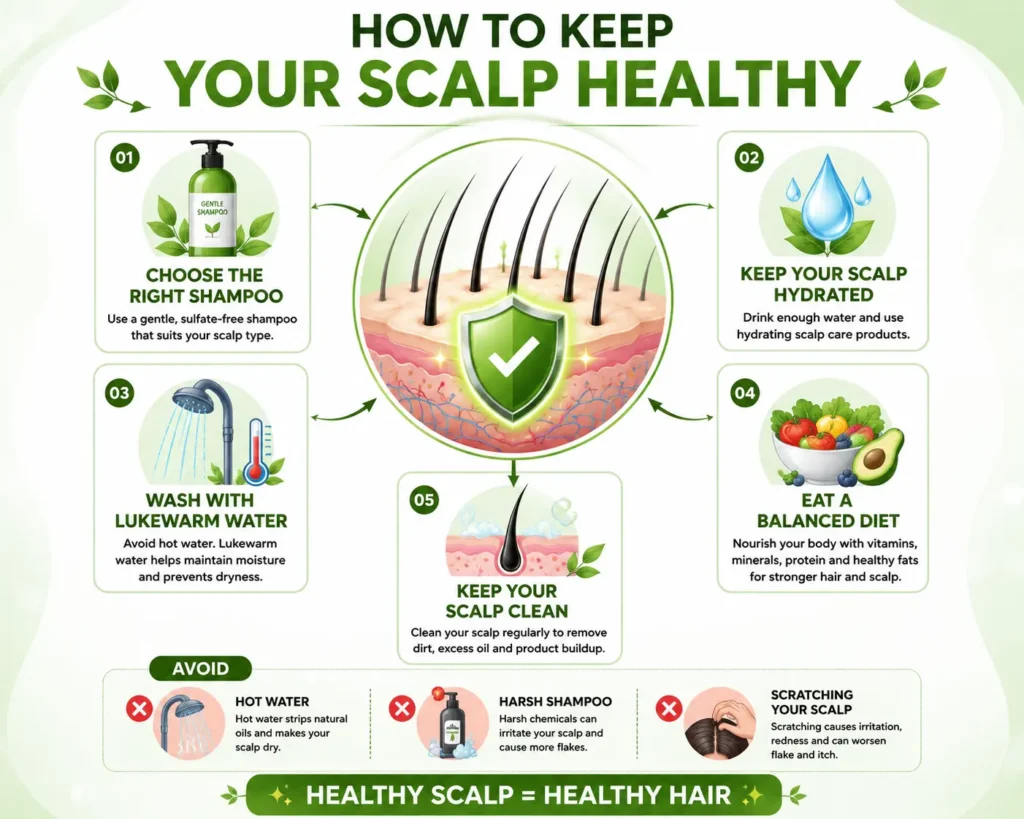
Keeping your scalp healthy is one of the best ways to reduce flakes over time.
Choose the Right Shampoo
Match It to Your Scalp
Use a shampoo suitable for your scalp type instead of selecting products based only on visible flakes.
Wash Your Hair Properly
Don’t Overwash
Washing too often may dry the scalp, while washing too little may allow oil and buildup to accumulate.
Protect Your Scalp
Avoid Excess Heat
Limit very hot water and excessive heat styling to help maintain your scalp’s natural balance.
Eat a Balanced Diet
Support Scalp Health From Within
Protein, vitamins, healthy fats, and adequate hydration all contribute to healthier-looking hair and scalp.
Common Mistakes That Make Flakes Worse
Scratching Your Scalp
More Irritation
Frequent scratching may damage the scalp and increase discomfort.
Using the Wrong Shampoo
Treating Every Flake as Dandruff
Using medicated anti-dandruff shampoos unnecessarily may dry out an already dry scalp.
Ignoring Early Symptoms
Small Problems Can Grow
Addressing flakes early may help prevent additional irritation and discomfort.
When Should You See a Dermatologist?
Consider professional advice if you experience:
- Persistent flakes
- Severe itching
- Redness or inflammation
- Scalp pain
- Flakes that continue despite changing your hair care routine
A dermatologist can identify the underlying cause and recommend the most appropriate treatment.
Final Thoughts
White flakes don’t always mean dandruff. Sometimes the real issue is a dry scalp that simply needs better moisture and gentler care.
By understanding the difference between dry scalp and dandruff, choosing products suitable for your scalp type, and following consistent hair care habits, you can support a healthier scalp and more comfortable hair care routine.
Paying attention to early signs and avoiding common mistakes can make a noticeable difference over time.