
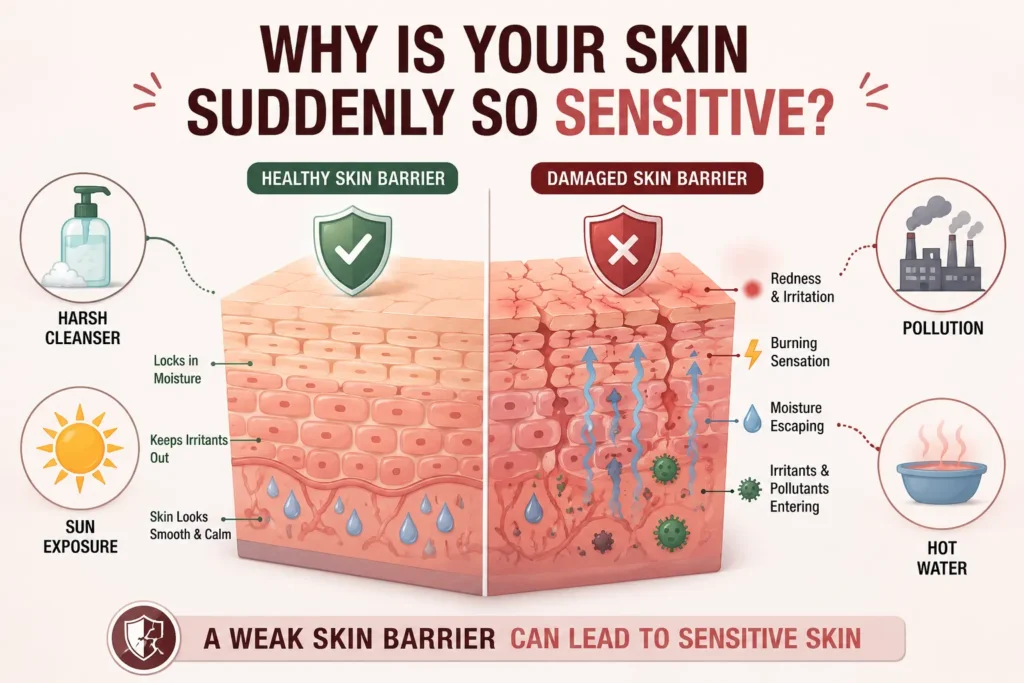
Sensitive Skin Causes are becoming more common as daily skincare habits, environmental stress, and a weakened skin barrier gradually affect your skin. Understanding these causes can help you protect your skin and build a healthier skincare routine.
Have you ever noticed that skincare products you used for years suddenly begin to sting or irritate your skin?
Maybe your face becomes red after washing. Perhaps your favorite moisturizer now causes a burning sensation. Or maybe your skin reacts to weather changes much more than it used to.
If this sounds familiar, you’re not alone.
Many people experience increasing skin sensitivity over time without realizing that small daily habits, environmental factors, and changes in their skin barrier may be responsible.
Understanding why your skin reacts differently today than it did a few years ago is the first step toward improving your skincare routine and protecting your skin’s natural barrier.
Sensitive Skin Causes: Why Is My Skin So Sensitive?
Sensitive skin doesn’t always happen overnight.
In many cases, the skin gradually becomes more reactive because its protective barrier weakens over time.
Your skin barrier acts like a shield, helping retain moisture while protecting your skin from pollution, bacteria, and environmental stress.
When this barrier becomes damaged, your skin may react more easily to products and external factors.
Skin Barrier Damage: The Hidden Reason Behind Sensitive Skin
What Is the Skin Barrier?
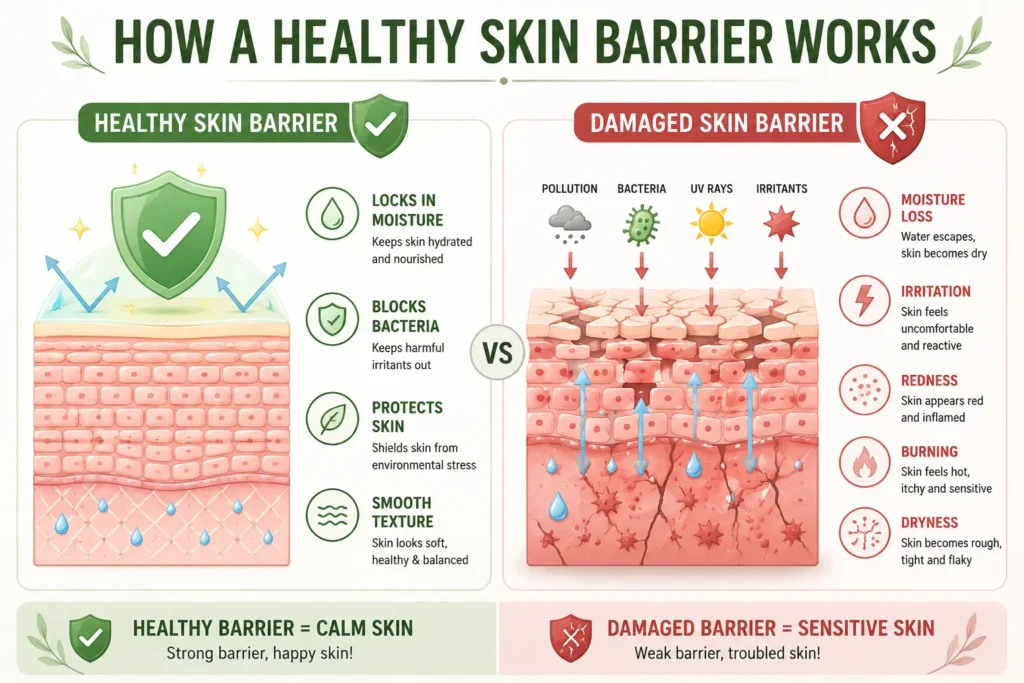
The skin barrier is the outermost layer of your skin.
Its primary job is to:
- Lock in moisture
- Keep harmful irritants out
- Support healthy skin
- Protect against environmental damage
When this barrier weakens, your skin becomes more vulnerable to irritation.
Common Causes of Skin Barrier Damage
Several daily habits can gradually weaken your skin barrier, including:
- Over-cleansing
- Using harsh exfoliants
- Frequent use of hot water
- Skipping moisturizer
- Excessive sun exposure
- Using too many active skincare ingredients
Even though these habits seem harmless, they can slowly make your skin more reactive and uncomfortable over time.
Sensitive Skin Symptoms You Shouldn’t Ignore
Redness
Persistent redness after cleansing or applying skincare products may indicate increased skin sensitivity.
Burning or Stinging
If products that once felt comfortable now sting your skin, your skin barrier may need extra care.
Dry, Tight Skin
Skin that constantly feels tight or uncomfortable often lacks adequate hydration and protection.
Flaking
Small flaky patches may appear when your skin struggles to retain moisture.
Increased Irritation
Environmental changes such as wind, sunlight, pollution, or air conditioning may suddenly affect your skin more than before.aily Habits That Can Increase Skin Sensitivity
Washing Your Face Too Often
Cleansing several times a day may remove natural oils that help protect your skin.
Using Very Hot Water
Hot water can weaken your skin barrier and increase moisture loss.
Trying Too Many Products
Using multiple active ingredients together may overwhelm your skin.
Skipping Sunscreen
Daily UV exposure may gradually weaken your skin’s protective barrier.
Poor Sleep and Stress
Your skin repairs itself while you sleep. Long-term stress and poor sleep may affect your skin’s natural recovery process.
How to Reduce Skin Sensitivity Naturally
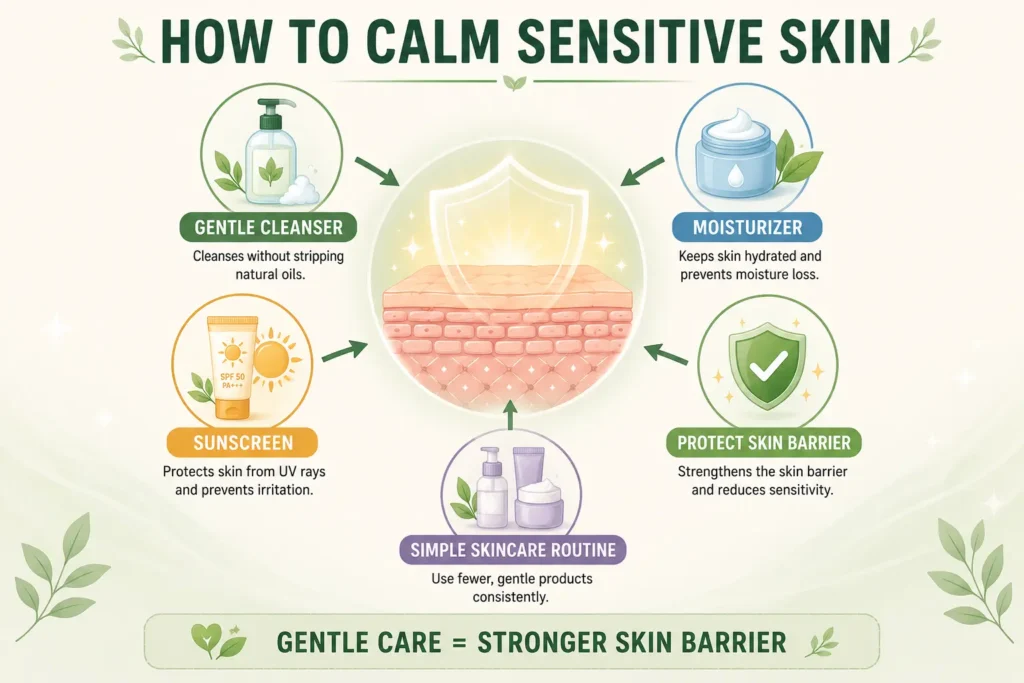
Cleanse Gently
Choose a gentle cleanser that removes dirt without stripping away natural moisture.
Moisturize Every Day
Keeping your skin hydrated supports a stronger skin barrier.
Protect Your Skin From the Sun
Daily sunscreen helps reduce environmental stress on your skin.
Introduce New Products Slowly
Adding several new skincare products at once makes it difficult to identify potential irritants.
Keep Your Routine Simple
A consistent routine with fewer products is often more effective than constantly changing skincare.
Common Skincare Mistakes That Make Sensitive Skin Worse
Over-Exfoliating
Too much exfoliation may weaken your skin barrier.
Ignoring Dryness
Dry skin often becomes more sensitive if left untreated.
Using Products Not Suitable for Your Skin Type
Following social media trends doesn’t always benefit your individual skin needs.
Frequently Switching Products
Your skin usually needs time to adjust before visible improvements appear.
When Should You See a Dermatologist?
Consider professional advice if you experience:
- Persistent redness
- Burning sensations
- Frequent irritation
- Skin that reacts to nearly every product
- Severe dryness or inflammation
A dermatologist can help determine whether an underlying skin condition is contributing to your symptoms. Final Thoughts
Skin sensitivity often develops gradually rather than overnight. Small daily habits, environmental exposure, and a weakened skin barrier can all contribute to irritation over time.
By following a gentle skincare routine, protecting your skin barrier, and avoiding harsh products, you can help keep your skin healthier, calmer, and more comfortable.
Consistency is one of the most important parts of skincare. Paying attention to your skin’s needs and making small improvements today can support healthier-looking skin in the long run.