Can diet affect your dandruff, or is it purely a scalp-level problem best left to shampoo? The honest answer sits somewhere in between. Dandruff itself is primarily driven by yeast overgrowth and oil production on the scalp, but what you eat directly influences both of those factors, making diet a meaningful supporting piece of the puzzle rather than a standalone cure.
Can Diet Affect Your Dandruff? What the Connection Really Looks Like
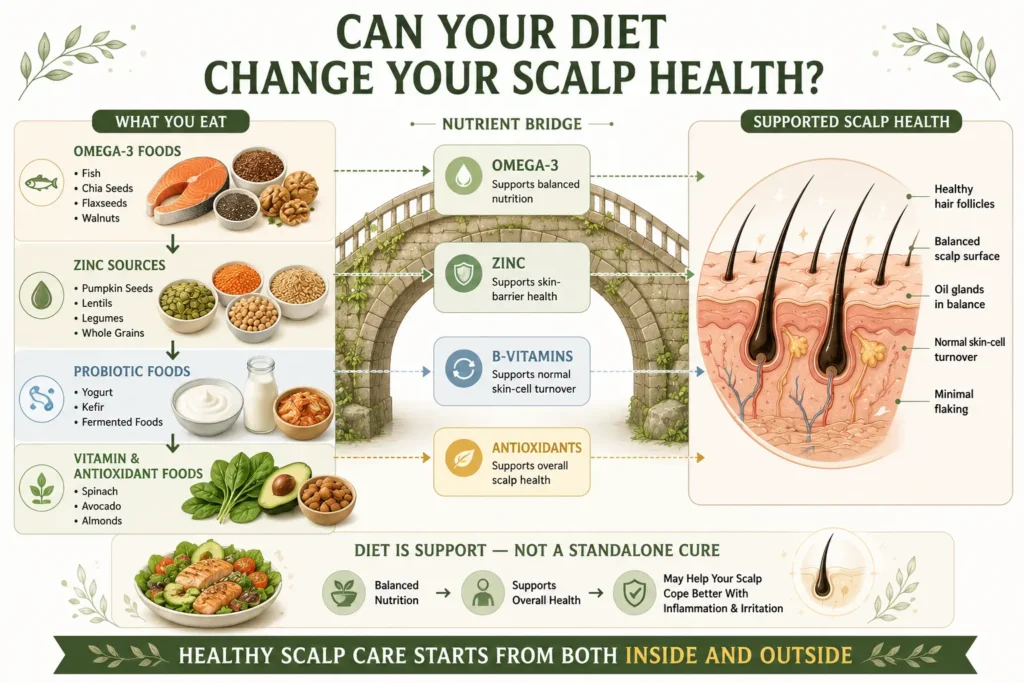
Diet doesn’t cause or cure dandruff on its own, but it shapes the internal conditions — inflammation, oil production, and immune response — that determine how severe your flaking becomes. A nutrient-rich diet supports a more balanced scalp environment, while a diet lacking key nutrients can make an already sensitive scalp more reactive.
Foods That Help Scalp Health
Here are the most effective foods that help scalp balance and reduce flaking:
1. Omega-3 Rich Foods
Fatty fish, chia seeds, flaxseeds, and walnuts are rich in omega-3s, known for their anti-inflammatory properties that help manage dandruff symptoms and keep the scalp moisturized from within, reducing the dryness that often leads to flaking.
2. Zinc-Rich Foods
Zinc deficiency has been linked to seborrheic dermatitis and dandruff, making pumpkin seeds, lentils, legumes, and wholegrains valuable additions for protecting both hair and scalp health.
3. Probiotic Foods
Yogurt, kefir, and fermented foods support a balanced gut microbiome, which research increasingly connects to reduced scalp inflammation and irritation, helping keep dandruff-triggering conditions in check.
4. Biotin and B-Vitamin Foods
Eggs, spinach, almonds, and sweet potato provide biotin and B2, nutrients that support healthy skin cell turnover and reduce the excessive shedding associated with dandruff.
5. Antioxidant-Rich Foods
Spinach, avocado, and almonds are packed with antioxidants and vitamin E, which promotes better circulation, ensuring hair follicles receive the nutrients they need for a healthier scalp.
6. Iron-Rich Foods
Leafy greens like spinach provide iron, an essential nutrient for overall scalp health that supports stronger hair alongside a more balanced, less irritation-prone scalp environment.
Foods That Cause Dandruff to Watch For
On the flip side, certain foods that cause dandruff symptoms to worsen include:
- Sugar and refined carbs – can increase inflammation and feed the oily environment yeast thrives in
- Fried and high-fat foods – disrupt natural oil balance, leading to excess greasiness or dryness
- Excess dairy – can trigger inflammation and irritation in people sensitive to it
- Alcohol – depletes zinc levels, a key mineral for scalp health
- High-mercury fish – like certain tuna and swordfish varieties, best consumed in moderation
Understanding the Diet and Dandruff Connection
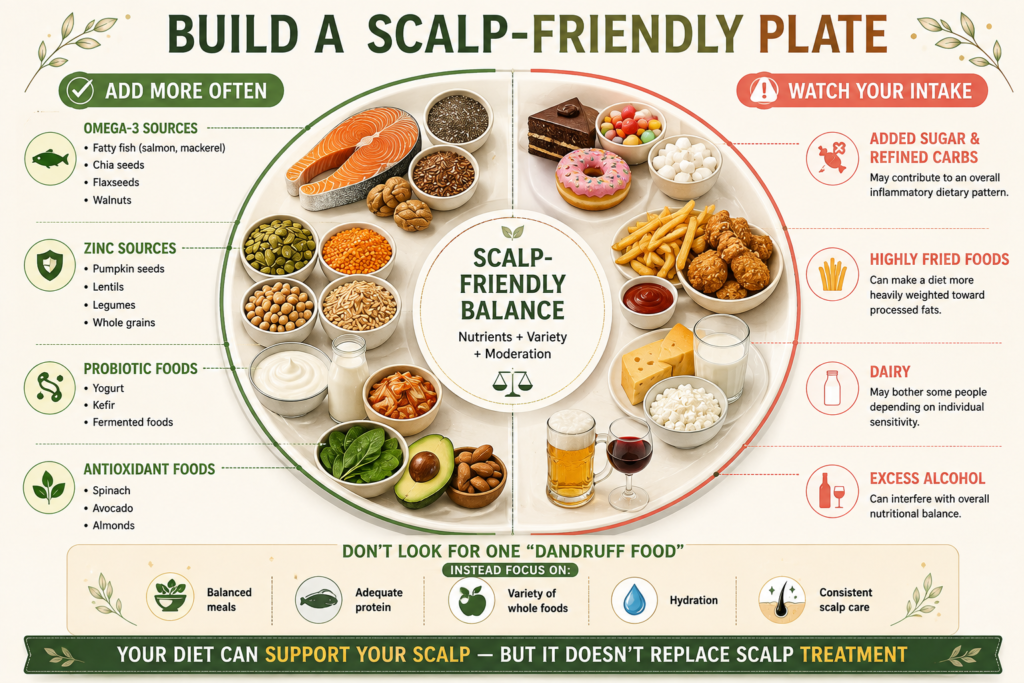
The diet and dandruff connection isn’t about following one strict “dandruff diet” — it’s about supporting your body’s overall inflammatory and immune response through consistent, balanced nutrition. Since dandruff is largely driven by Malassezia yeast that feeds on scalp oil, diets that help regulate oil production and inflammation tend to show the most noticeable improvement over time.
Key Nutrients for Healthy Scalp
A quick reference for the core nutrients for healthy scalp balance:
- Omega-3 fatty acids – reduces inflammation and dryness
- Zinc – supports skin barrier function
- Biotin – regulates skin cell turnover
- Probiotics – balances gut-skin connection
- Vitamin E – improves circulation to follicles
Support Your Diet With Rosemary Dandruff Gel
While the right diet works from within, pairing it with a targeted topical routine often brings faster, more noticeable results. A Rosemary Dandruff Gel complements these dietary changes well, since rosemary is known for its natural antimicrobial and anti-inflammatory properties that help calm scalp irritation and create an environment where Malassezia struggles to overgrow. Unlike heavy oils or harsh medicated shampoos, this lightweight gel formula works gently alongside your body’s internal efforts, supporting scalp balance from the outside while your improved diet works on inflammation and oil regulation from within — giving you a more complete, two-sided approach to managing dandruff long-term
Final Thoughts
Can diet affect your dandruff? While it isn’t a replacement for proper scalp treatment, nutrition plays a real supporting role in how your scalp responds to yeast, oil, and inflammation. Combining a balanced diet rich in omega-3s, zinc, and probiotics with a consistent topical routine gives your scalp the best chance at staying calm and flake-free.