
If you’ve ever wondered whether does wearing a helmet cause dandruff, the short answer is: not directly, but it can absolutely create the perfect conditions for it. Dandruff itself is triggered by oil, yeast overgrowth, and scalp irritation — and daily helmet use happens to check almost every one of those boxes without you realizing it.
Does Wearing a Helmet Cause Dandruff? The Real Connection
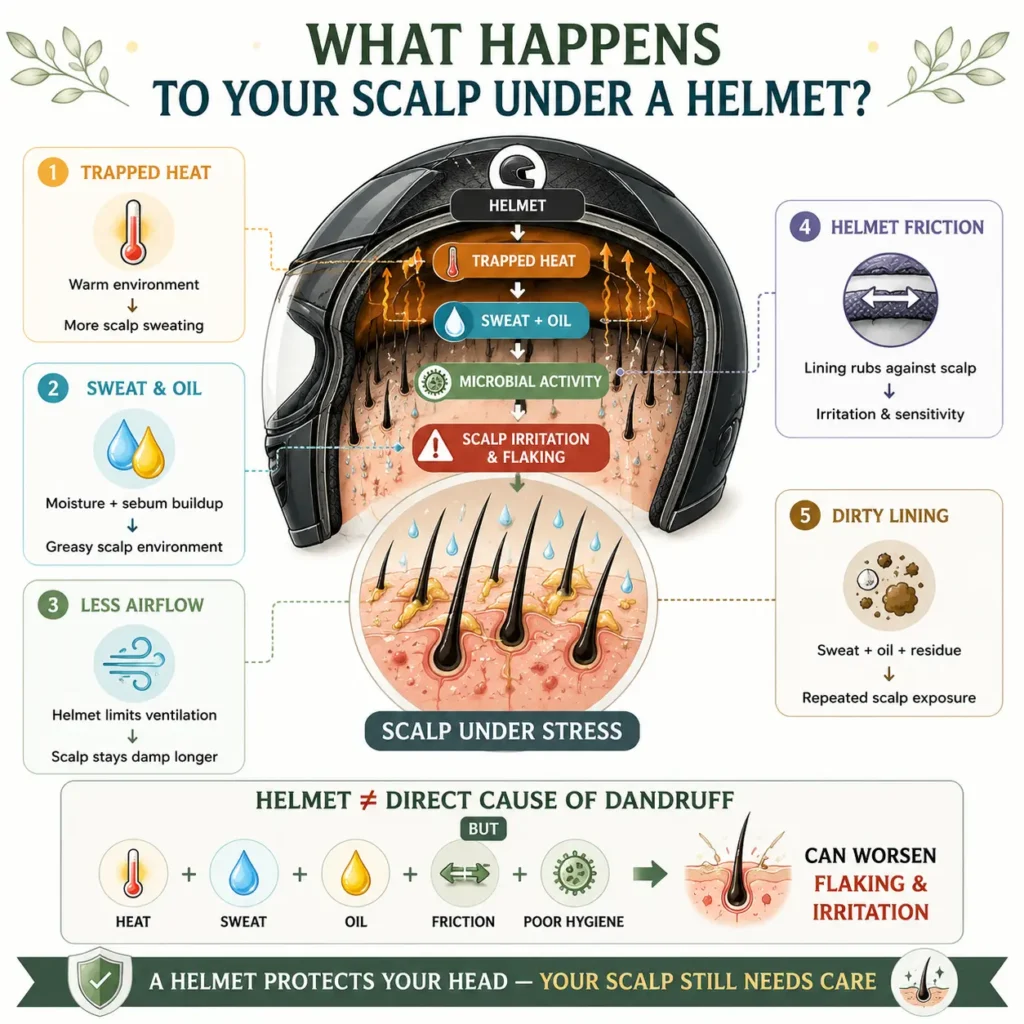
Wearing a helmet doesn’t directly cause dandruff, but the environment it creates on your scalp can contribute to conditions that trigger flakes. Helmets trap heat, sweat, and moisture close to the scalp for extended periods, and this warm, humid setting happens to be exactly what dandruff-causing yeast needs to thrive.
How Helmets Create Helmet Dandruff Causes
Here’s how daily helmet use turns into one of the more common helmet dandruff causes:
1. Trapped Heat and Poor Airflow
Wearing helmets for extended periods creates a warm, humid environment on your scalp, which is the perfect breeding ground for microbes like Malassezia globosa, a fungus linked to dandruff. Without proper ventilation, this trapped heat disrupts your scalp’s natural moisture balance.
2. Sweat and Oil Buildup
Prolonged headgear use leads to sweat and oil buildup, which can clog hair follicles and irritate the skin, causing flaking and an itchy scalp. This is one of the most direct sweat and scalp irritation triggers linked to daily riders and commuters.
3. Friction From the Helmet Lining
Constant rubbing between the helmet’s inner lining and your scalp can weaken hair roots and irritate the skin barrier over time, making the scalp more reactive to oil and yeast buildup.
4. Dirty or Unwashed Helmet Interiors
By the end of every day, your scalp accumulates dirt, dust, oil, sweat, and dead cells — and if the helmet’s inner lining isn’t cleaned regularly, bacteria and residue transfer straight back onto your scalp every time you wear it.
5. Scratching Making It Worse
Scratching with fingertips causes microscopic lesions in the scalp’s delicate surface, and wearing a helmet afterward allows bacteria from the lining to enter through these lesions, intensifying itchiness with each ride.
Signs You’re Dealing With Helmet-Related Dandruff
- Flaking that seems to worsen specifically after helmet use
- Increased itchiness or scalp odor by the end of the day
- Oily roots combined with dry, flaky patches
- Symptoms that improve on days you don’t wear the helmet
How to Prevent Dandruff From Helmet Use
Practical steps for how to prevent dandruff from helmet wear:
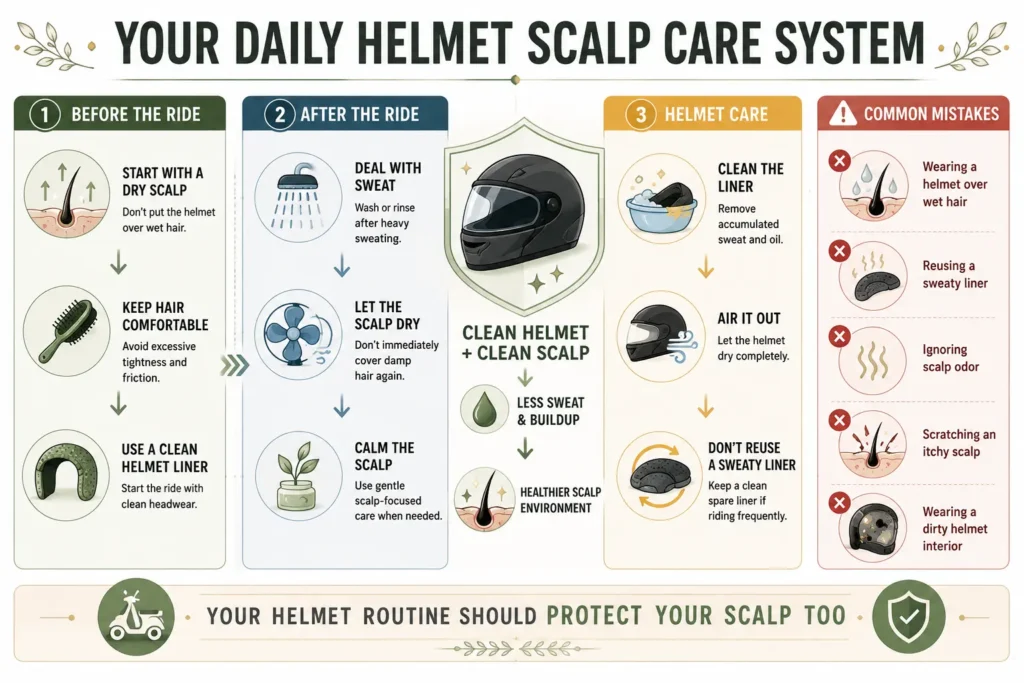
- Shampoo 3–5 times a week if you wear a helmet daily, adjusting based on scalp oiliness and sweat levels
- Clean your helmet’s inner lining regularly with a mild antimicrobial solution
- Let your scalp fully dry before putting the helmet back on
- Avoid wearing the same sweaty helmet lining for multiple days without washing it
- Choose a well-ventilated helmet design where possible
Helmet Scalp Care Routine to Follow
A simple helmet scalp care routine for daily riders:
- Wash hair with a gentle, sulphate-free anti-dandruff shampoo after sweaty rides
- Avoid tying hair too tightly under the helmet to reduce added friction
- Keep a spare, clean liner or scarf to wear underneath if riding daily
- Air out your helmet fully between uses instead of storing it closed up
Try Rosemary Dandruff Gel for Daily Helmet Wearers
If your scalp feels irritated or flaky by the end of each ride, a Rosemary Dandruff Gel can help support a calmer, more balanced scalp environment. Rosemary is known for its natural antimicrobial and anti-inflammatory properties, which help address the exact combination of yeast overgrowth and irritation that helmet-trapped heat and sweat tend to trigger.
Unlike heavy oils that can add to the greasy buildup already caused by helmet use, a lightweight gel formula won’t clog follicles further. With consistent use, it may help:
- Calm irritation caused by friction and trapped sweat
- Support a scalp environment less favorable to yeast overgrowth
- Reduce flaking without adding extra oiliness
- Fit easily into a post-ride scalp care routine
Final Thoughts
Does wearing a helmet cause dandruff? Not on its own — but the trapped heat, sweat, and friction it creates can absolutely trigger or worsen it for people prone to flaking. Regular helmet hygiene, a consistent wash routine, and a soothing formula like rosemary dandruff gel can help daily riders keep their scalp healthy without giving up their commute.