
If you’ve noticed your flaking gets worse during busy work periods, exams, or major life changes, you’re not imagining it. Does stress make dandruff worse? The short answer is yes — stress doesn’t directly cause dandruff, but it can absolutely trigger or intensify it in people already prone to flaking.
Does Stress Make Dandruff Worse? Understanding the Real Link
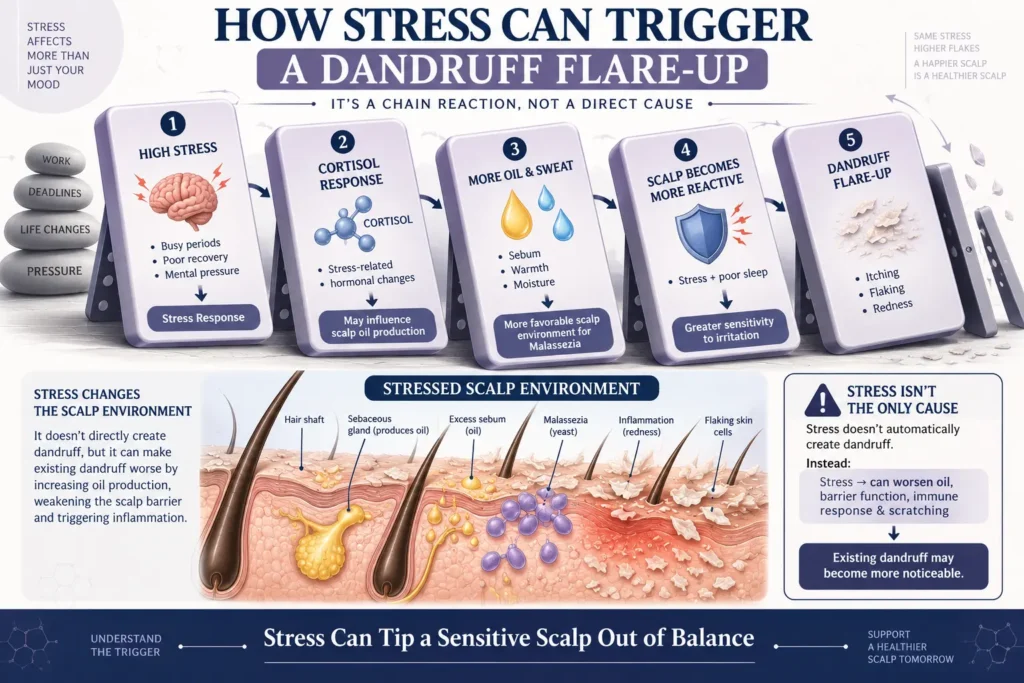
Dandruff is primarily caused by Malassezia globosa, a yeast naturally present on everyone’s scalp that feeds on oil (sebum). Stress doesn’t introduce this yeast, but it changes the internal environment that allows it to thrive — which is why so many people notice flare-ups specifically during stressful periods, even without changing their hair care routine.
The Stress and Dandruff Connection Explained
Here’s how the stress and dandruff connection actually works, step by step:
1. Cortisol and Scalp Health
When you’re stressed, your body releases cortisol, a hormone tied to your fight-or-flight response. Cortisol and scalp health are closely linked, since elevated cortisol stimulates the sebaceous glands to produce more oil — giving Malassezia yeast more fuel to break down and multiply.
2. Weakened Immune Response
High stress levels weaken your immune system’s ability to regulate yeast levels on the scalp. A less effective immune response means Malassezia can overgrow more easily, leading to increased inflammation, itching, and flaking.
3. Overheating and Sweating
Stress often triggers physical symptoms like overheating and excess sweating. This creates a warmer, more humid scalp environment — exactly the conditions Malassezia needs to thrive and multiply faster than usual.
4. Weakened Skin Barrier
Poor sleep and elevated cortisol from prolonged stress impair the scalp’s natural barrier function. A weaker barrier means the scalp becomes more reactive to yeast, irritants, and inflammation, making existing dandruff appear worse.
5. Increased Touching and Scratching
Stress often leads to unconscious habits like scratching or touching the scalp more frequently. This transfers oils and dirt from your hands, aggravates irritation, and can even cause small skin breaks that intensify flaking.
6. The Stress-Dandruff Cycle
This creates a frustrating loop: stress hair and scalp effects show up as flaking, the flaking causes self-consciousness, and that added stress can trigger even more flaking — a cycle that’s hard to break without addressing both sides.
How to Manage Stress Related Dandruff
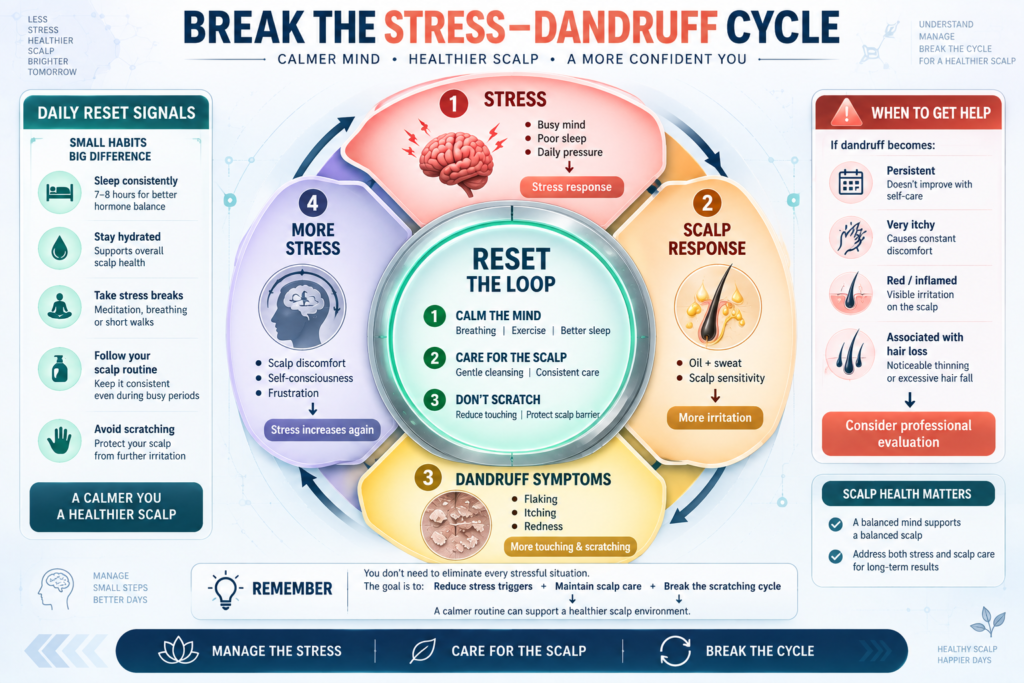
Practical steps for how to manage stress related dandruff, addressing both the stress and the flaking:
- Practice stress-reduction techniques like meditation, deep breathing, or regular exercise
- Prioritize consistent sleep, since poor sleep worsens both cortisol levels and scalp barrier function
- Avoid touching or scratching your scalp, even when stressed
- Stick to a gentle, consistent anti-dandruff routine rather than skipping it during busy periods
- Reduce excessive caffeine or stimulants that can heighten stress responses
Managing the Scalp Side of the Cycle
While managing stress takes time, supporting your scalp directly can reduce how much flaking shows up during stressful periods. A consistent, gentle scalp care routine matters even more when stress is elevated, since the scalp is already more vulnerable to yeast overgrowth and irritation during these times.
Try Rosemary Dandruff Gel During Stressful Periods
A Rosemary Dandruff Gel can be particularly useful during high-stress phases, since rosemary is known for its natural antimicrobial and anti-inflammatory properties — directly addressing the yeast overgrowth and irritation that stress tends to accelerate. Unlike harsh medicated shampoos that can further strip an already stressed scalp barrier, a lightweight gel formula works gently, supporting balance rather than adding to irritation.
With consistent use, especially during demanding periods, it may help:
- Calm inflammation linked to elevated cortisol and stress
- Support a scalp environment less favorable to yeast overgrowth
- Soothe irritation without over-drying an already sensitive scalp
- Fit easily into a routine you can maintain even during busy weeks
Final Thoughts
Does stress make dandruff worse? Yes — through a combination of increased oil production, weakened immunity, and a compromised skin barrier. While managing stress at its source takes time, pairing stress-reduction habits with a consistent, gentle scalp routine like rosemary dandruff gel can help break the cycle and keep flaking under control, even during your busiest periods.