
Learning how to repair damaged hair at home starts with understanding that most salon treatments are just concentrated versions of things you can do consistently yourself — restoring moisture, sealing the cuticle, and protecting hair from further harm. You don’t need an expensive keratin treatment to see real improvement; you need the right routine, done consistently.
Repair Damaged Hair at Home: Start With the Root Cause
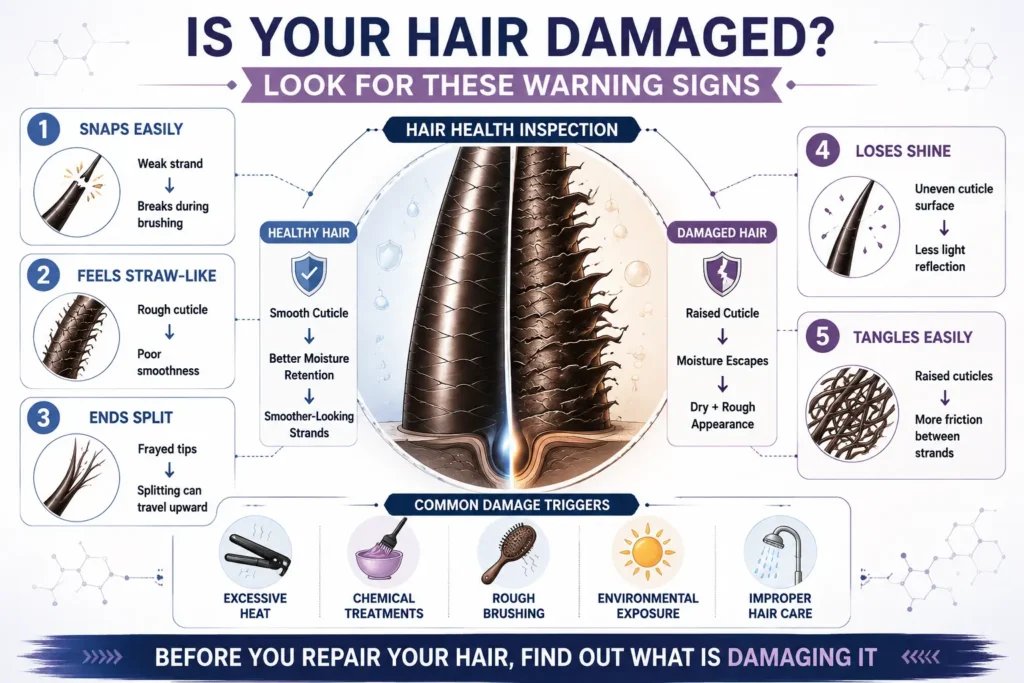
Before trying any treatment, it helps to identify what’s actually causing the damage. Hair doesn’t become weak or brittle overnight — it’s usually the buildup of heat exposure, chemical processing, harsh brushing, or environmental stress over months. Fixing the surface without addressing the cause means you’ll be repairing the same damage on repeat.
Signs Your Hair Is Damaged
Common signs your hair is damaged include:
- Hair that snaps easily instead of stretching slightly before breaking
- A rough, straw-like texture that doesn’t soften with regular conditioner
- Split ends multiplying faster than usual
- Noticeable dullness, even right after washing
- Tangling easily, especially at the ends
Affordable Hair Repair Tips You Can Start Today
Here are practical affordable hair repair tips that mirror what salon treatments actually do, minus the cost:
1. Deep Condition With Extended Contact Time
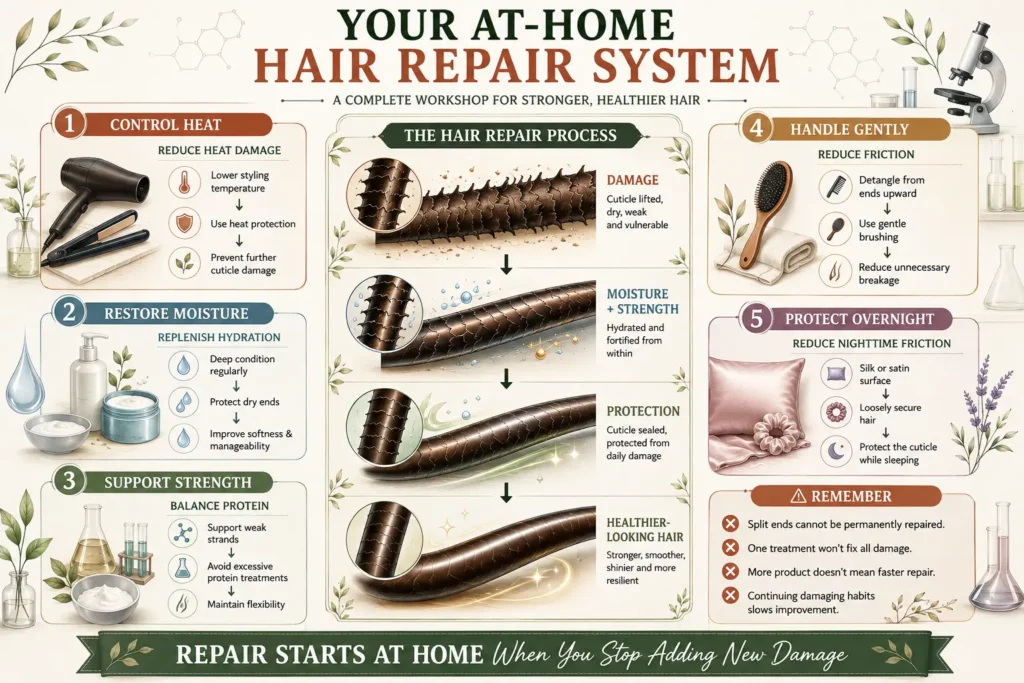
Salon treatments work partly because they leave products on longer, sometimes with heat, to allow deeper penetration. You can replicate this by leaving a deep conditioner on for 20–30 minutes at home, optionally covering hair with a warm towel to help it absorb better.
2. Balance Protein and Moisture
Damaged hair usually needs a specific balance of protein and moisture, not just one or the other. If hair feels mushy or overly soft when wet, it likely needs more protein. If it feels stiff and snaps easily, it needs more moisture instead.
3. Reduce Heat Exposure Immediately
Every heat styling session adds incremental damage to already weakened hair. Air-drying whenever possible, or using the lowest effective heat setting with a protectant spray, prevents new damage while your repair routine works on existing damage.
4. Detangle the Right Way
Always start detangling from the ends and work upward with a wide-tooth comb, especially on wet hair, which is at its weakest and most prone to snapping under tension.
5. Protect Hair Overnight
Cotton pillowcases create friction that roughens the cuticle overnight, undoing progress made during the day. Switching to silk or satin reduces this friction significantly.
DIY Hair Treatment for Damaged Hair
A simple DIY hair treatment for damaged hair you can do weekly at home:
- Apply a nourishing hair mask or oil treatment to damp hair
- Cover with a shower cap for 20–30 minutes to allow better absorption
- Rinse with lukewarm water, followed by a cool rinse to help seal the cuticle
- Follow with a lightweight leave-in product to lock in moisture
How to Strengthen Weak Hair Long-Term
Steps for how to strengthen weak hair beyond a single treatment:
- Get trims every 6–8 weeks to prevent split ends from traveling upward
- Avoid overwashing, which strips natural oils needed for repair
- Maintain a protein-rich diet to support hair structure from within
- Be consistent — real improvement typically shows within 4–6 weeks
Try Hibiscus & Onion Hair Gel as Part of Your Routine
For ongoing, everyday support, a Hibiscus & Onion Hair Gel can complement your repair routine without the cost or time commitment of salon visits. Onion is rich in sulphur, which supports collagen production and strengthens hair from the root, while hibiscus provides antioxidants that nourish the scalp and help reduce breakage over time.
Used consistently, it may help:
- Strengthen fragile, damage-prone strands from the root
- Add lightweight nourishment without heavy buildup
- Support a healthier scalp environment for new growth to come in stronger
- Fit easily into a simple, low-cost weekly routine
Final Thoughts
You don’t need expensive salon visits to genuinely repair damaged hair — you need a consistent routine built around moisture, protein balance, and gentle handling. Paired with a nourishing formula like hibiscus onion hair gel, small, consistent efforts at home can deliver results that rival costly treatments over time.