Early Signs of Hair Problems are easy to miss because hair changes happen gradually. Most people only notice a problem when hair fall increases, thinning becomes visible, or their hair suddenly feels weaker than before.
Have you ever looked at your hair one day and wondered, “When did my hair become this thin?”
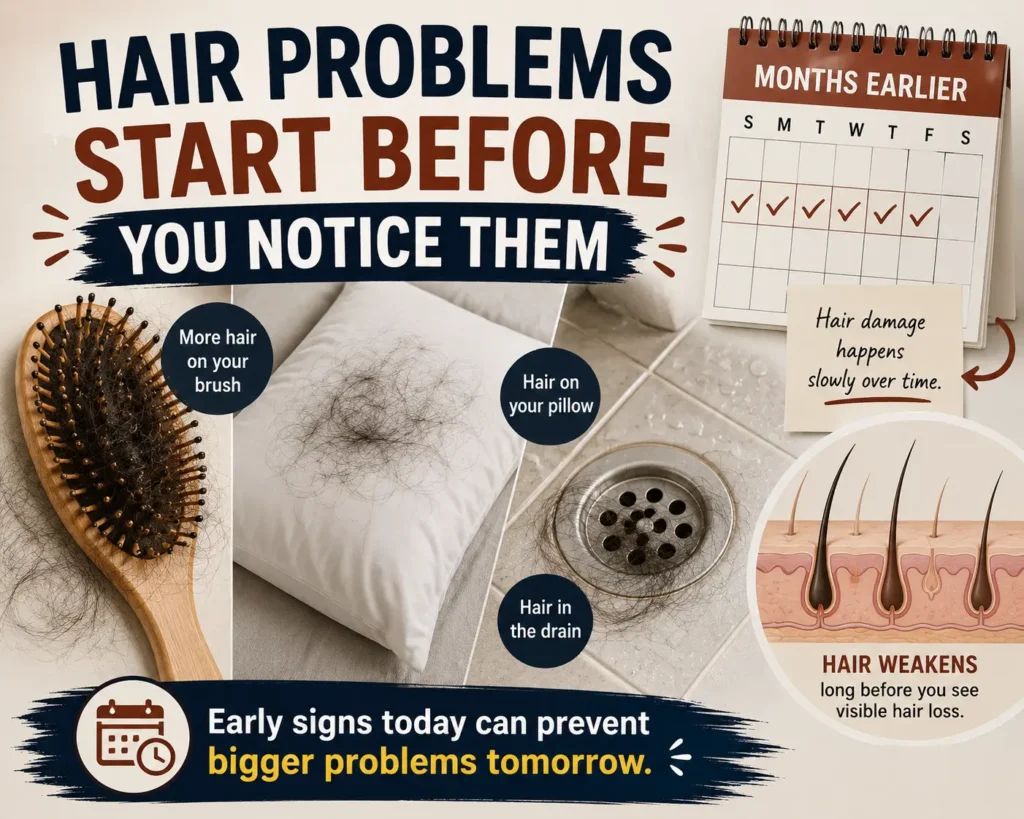
Or perhaps you’ve noticed more hair on your pillow, in your shower drain, or on your hairbrush lately.
The truth is that most hair problems don’t appear overnight. In many cases, the damage begins months before visible symptoms show up.
Understanding the Early Signs of Hair Problems can help you take action sooner and support healthier-looking hair before the issue becomes more noticeable.
Why Hair Problems Develop Slowly
Hair grows in cycles, and each strand follows its own timeline.
The hair growth cycle includes:
- Growth phase (Anagen)
- Transition phase (Catagen)
- Resting phase (Telogen)
- Shedding phase (Exogen)
Because these stages occur over several months, changes in scalp health, stress levels, nutrition, and daily habits may affect your hair long before visible symptoms appear.
This delayed response is one reason why many people struggle to identify the real cause of their hair concerns.
Common Early Signs of Hair Problems
Increased Hair Shedding
Finding a few hairs on your brush is completely normal.
However, if you begin noticing significantly more hair than usual on your pillow, bathroom floor, or shower drain, it may be one of the Early Signs of Hair Problems.
Hair Feels Thinner
Hair volume often decreases before obvious thinning becomes visible.
Your ponytail may feel smaller, your hair may appear flatter, or styling your hair may become more difficult.
Loss of Shine
Healthy hair naturally reflects light and appears vibrant.
When hair starts losing moisture and strength, it may begin to look dull, dry, and lifeless.
Increased Breakage
Hair that snaps easily while brushing, combing, or styling often signals underlying weakness.
Breakage can sometimes be mistaken for hair fall, making it important to pay attention to changes in hair texture.
Itchy or Unhealthy Scalp
Scalp health plays a major role in overall hair health.
Persistent itchiness, irritation, excessive oiliness, or visible flakes may indicate that your scalp needs attention before larger hair concerns develop.
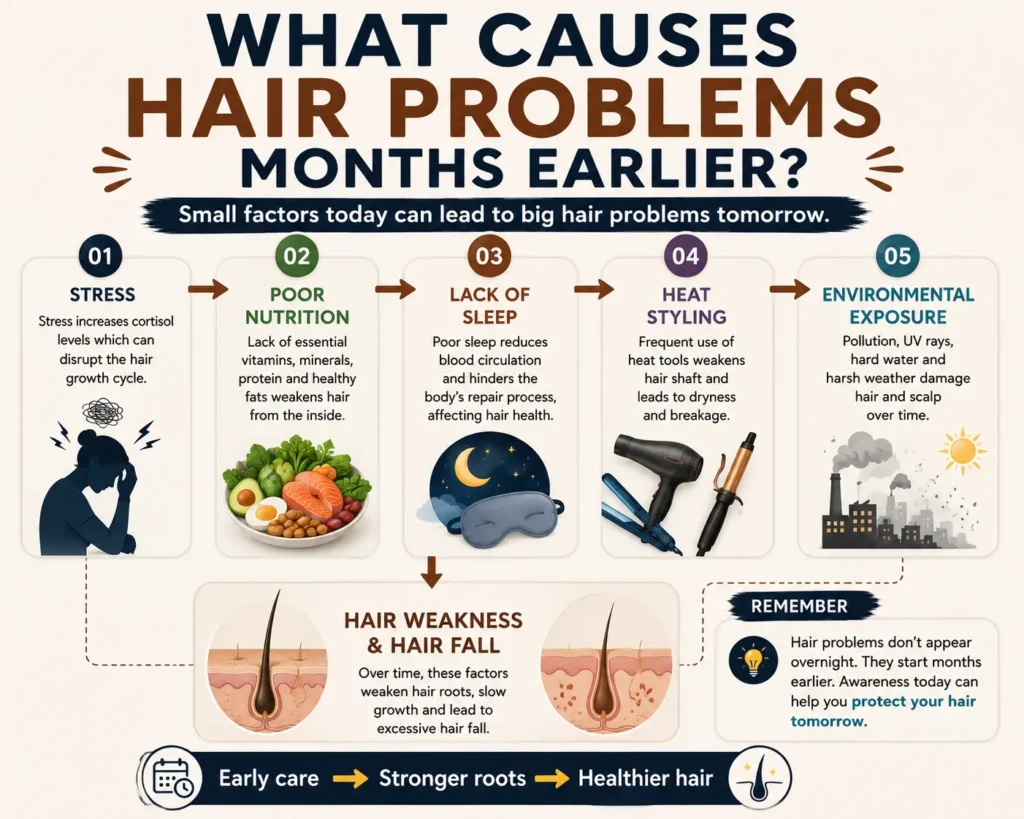
What Causes Hair Problems Months Earlier?
Stress
Stress is one of the most overlooked factors affecting hair health.
Major life changes, work pressure, emotional stress, and ongoing anxiety can disrupt the hair growth cycle and contribute to increased shedding.
Poor Nutrition
Hair relies on nutrients to grow and remain healthy.
A diet lacking essential vitamins, minerals, protein, and healthy fats may gradually weaken hair over time.
Lack of Sleep
Poor sleep affects the body’s natural recovery processes.
Since hair follicles rely on proper recovery and nourishment, long-term sleep deprivation can impact hair quality.
Heat Styling
Frequent use of:
- Hair dryers
- Straighteners
- Curling tools
may gradually weaken the hair shaft and increase breakage.
Environmental Exposure
Sun exposure, pollution, hard water, and harsh weather conditions can affect both hair and scalp health over time.
Signs of Unhealthy Hair You Shouldn’t Ignore
Excessive Dryness
Hair that constantly feels dry despite conditioning may require additional care and protection.
Split Ends
Split ends are more than a cosmetic issue. If ignored, they can travel upward along the hair shaft and contribute to further damage.
Tangling More Frequently
Hair that becomes difficult to manage or tangles easily may be showing early signs of weakness.
Reduced Hair Volume
A noticeable decrease in fullness often develops gradually rather than suddenly, making it one of the most commonly overlooked warning signs.
How to Prevent Hair Problems Early
Pay Attention to Small Changes
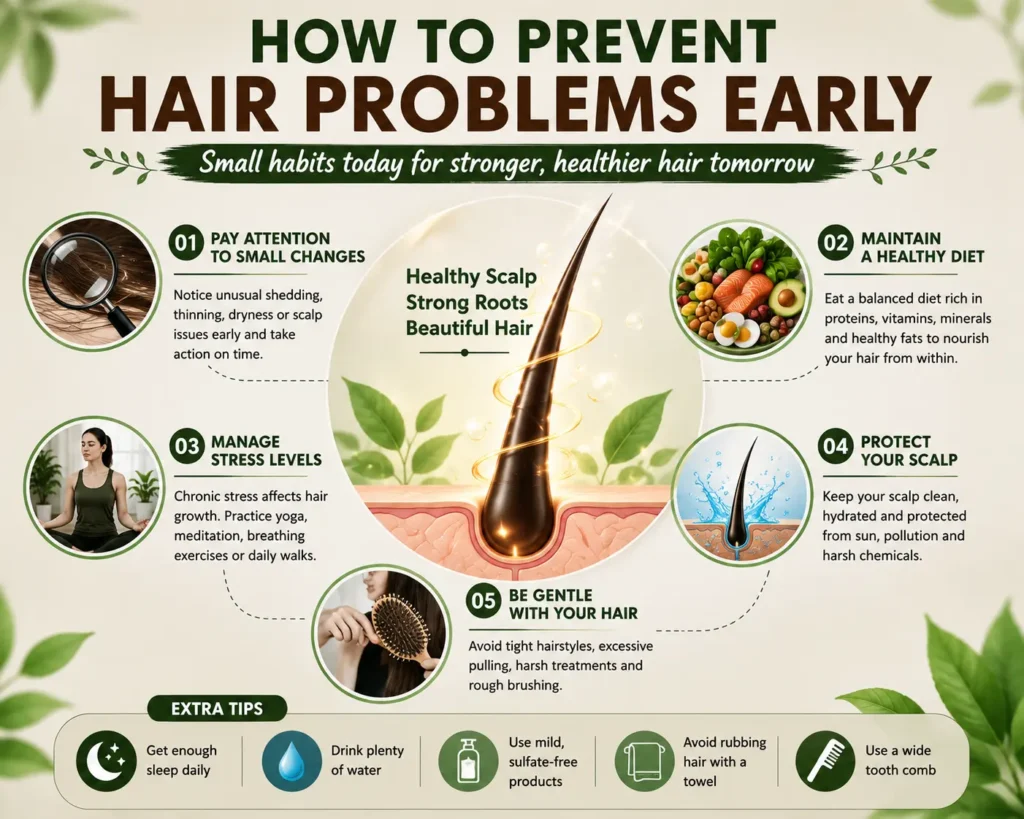
The sooner you notice unusual changes, the easier it becomes to adjust your routine and address potential concerns.
Maintain a Healthy Diet
Balanced nutrition supports overall hair wellness and helps provide the building blocks necessary for healthy hair growth.
Manage Stress Levels
Regular exercise, meditation, deep breathing, and relaxation techniques may help support healthier hair habits.
Protect Your Scalp
A healthy scalp creates a better environment for stronger, healthier-looking hair.
Be Gentle With Your Hair
Avoid excessive pulling, tight hairstyles, aggressive brushing, and harsh chemical treatments whenever possible.
Common Mistakes That Make Hair Problems Worse
Ignoring Early Symptoms
Many people wait until hair thinning becomes obvious before taking action.
Overusing Styling Tools
Excessive heat exposure can contribute to long-term damage and breakage.
Following Social Media Trends
Not every viral hair care trend is suitable for your hair type or scalp condition.
Switching Products Too Often
Consistency is often more effective than constantly changing routines and experimenting with multiple products.
When Should You Seek Professional Advice?
Consider speaking with a professional if you notice:
- Sudden hair loss
- Significant thinning
- Persistent scalp irritation
- Excessive shedding lasting several months
Early guidance may help identify potential causes before the problem progresses further.
Final Thoughts
The most important thing to remember about the Early Signs of Hair Problems is that they often appear long before visible hair loss or thinning becomes obvious.
Small changes such as increased shedding, loss of shine, scalp discomfort, breakage, or reduced volume can be early signals that your hair needs attention.
By paying attention to these warning signs and maintaining healthy hair care habits, you can better support stronger, healthier-looking hair over time.
The earlier you recognize potential issues, the easier it becomes to make positive changes before they become more noticeable and difficult to manage.