
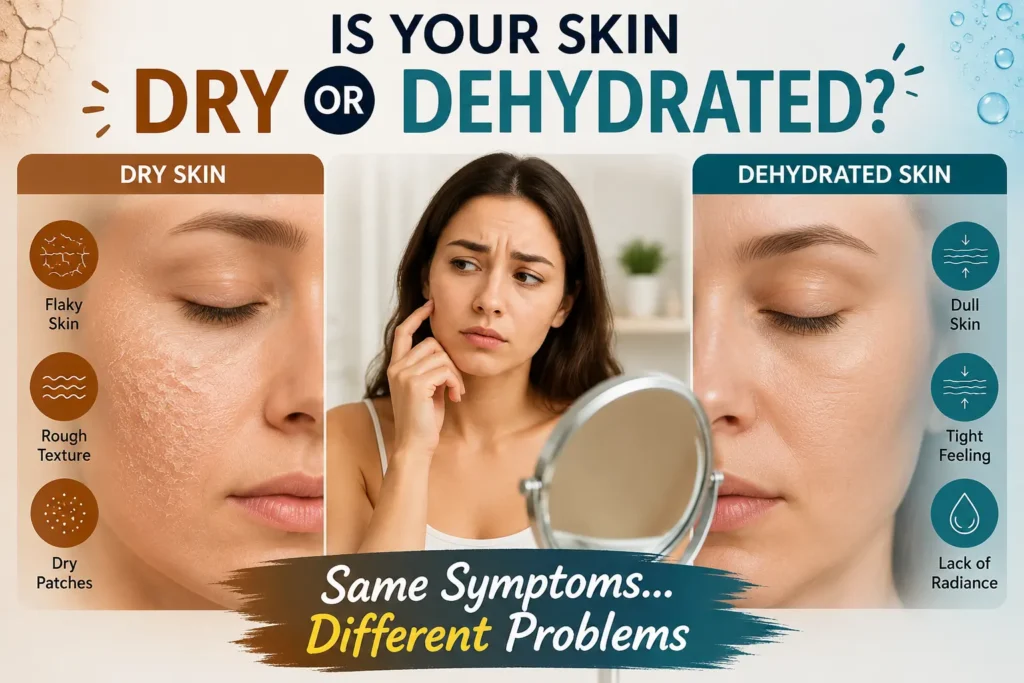
Dry Skin vs Dehydrated Skin is one of the most misunderstood topics in skincare. Many people assume they have dry skin because their face feels tight, rough, or dull. However, the real problem may actually be dehydration.
Have you ever applied moisturizer several times a day but still felt like your skin wasn’t comfortable?
Maybe your skin looks flaky during winter. Perhaps your makeup appears patchy by afternoon. Or maybe your face feels tight after cleansing even though you have oily skin.
If this sounds familiar, you’re not alone.
Many people spend months or even years using the wrong skincare products because they don’t understand the difference between dry skin and dehydrated skin.
Choosing the right skincare routine is equally important. You may also like to read our guide on recurring pimples in the same spot and what causes them.
Understanding this difference can help you choose products that actually support your skin’s needs.
What Is Dry Skin?
Dry skin is a skin type.
People with dry skin naturally produce less oil than other skin types.
Because the skin lacks enough natural oils, it may struggle to maintain a healthy protective barrier.
Common Signs of Dry Skin
Signs Include:
- Rough texture
- Flaky patches
- Itchiness
- Redness
- Tight feeling throughout the day
- Increased sensitivity
Dry Skin Causes
Common Causes Include:
- Genetics
- Aging
- Cold weather
- Hot showers
- Harsh skincare products
People with dry skin often need products that help replenish moisture and support the skin barrier.
What Is Dehydrated Skin?
Unlike dry skin, dehydrated skin is not a skin type.
It is a temporary skin condition caused by a lack of water.
Even oily skin can become dehydrated.
This is why many people are surprised when they discover their oily skin still feels tight and uncomfortable.
Signs of Dehydrated Skin
Common Symptoms Include:
- Dull appearance
- Tightness after cleansing
- Increased sensitivity
- Fine lines appearing more visible
- Tired-looking complexion
- Lack of radiance
Understanding the Signs of Dehydrated Skin can help you identify the real issue behind your skin concerns.
Many people with dehydrated skin also struggle with dull and tired-looking skin. Learn how to identify common skincare mistakes that affect your skin’s appearance.
Dry Skin vs Dehydrated Skin: Key Differences
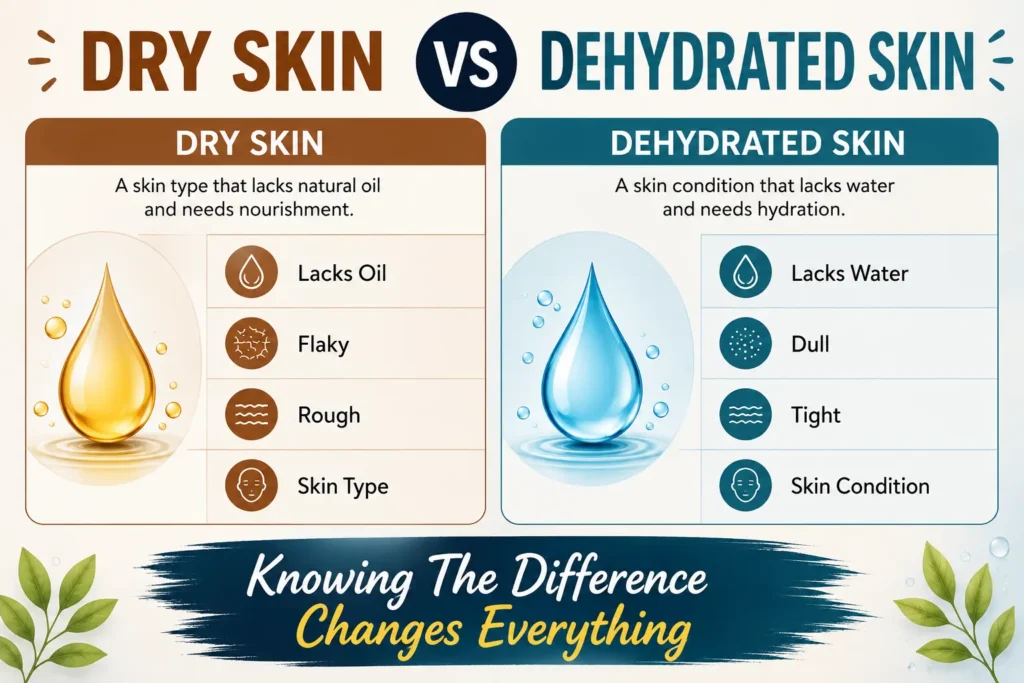
The easiest way to understand Dry Skin vs Dehydrated Skin is to remember this:
Dry Skin
Characteristics
- Lacks oil
- Often feels rough
- May become flaky
- Usually a long-term skin type
Dehydrated Skin
Characteristics
- Lacks water
- Appears dull
- Feels tight
- Can affect any skin type
A person can also experience both conditions at the same time.
Why People Often Get Confused
Many symptoms overlap.
Similar Symptoms
Examples Include:
- Tight skin
- Rough texture
- Sensitivity
- Dullness
These symptoms can appear in both conditions.
As a result, people often assume they need heavier moisturizers when their skin may actually need hydration instead.
How to Hydrate Dehydrated Skin
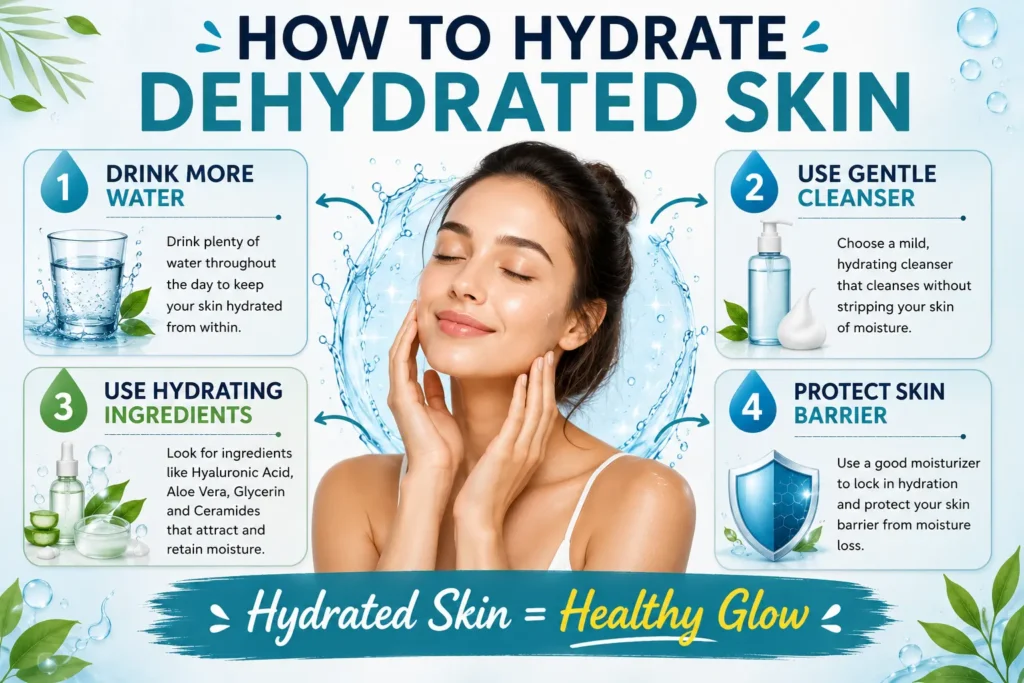
Drink Enough Water
Hydration starts from within.
Use Gentle Cleansers
Harsh cleansers may contribute to moisture loss.
Avoid Overwashing
Excessive cleansing can disrupt the skin barrier.
Choose Hydrating Ingredients
Look for ingredients that help attract and retain moisture.
Protect Your Skin Barrier
A healthy skin barrier helps prevent excessive water loss.
Common Habits That Make Skin Worse
Using Harsh Products
Strong cleansers and exfoliants can worsen both dryness and dehydration.
Skipping Moisturizer
Even oily skin benefits from proper hydration.
Taking Hot Showers
Hot water can strip moisture from the skin.
Ignoring Environmental Factors
Air conditioning, heating systems, and weather changes can affect skin hydration.
When Should You Adjust Your Skincare Routine?
Warning Signs
Watch For:
- Tight skin
- Dull complexion
- Sensitivity
- Rough patches
It may be time to evaluate whether you’re experiencing dehydration rather than dryness.
Final Thoughts
Understanding Dry Skin vs Dehydrated Skin is one of the most important steps in building an effective skincare routine.
Dry skin is a skin type that lacks oil, while dehydrated skin is a condition caused by a lack of water.
Although the symptoms can appear similar, the solutions are often different.
By recognizing the signs, identifying the underlying cause, and making small adjustments to your routine, you can better support healthier-looking skin and achieve a more balanced complexion over time.