
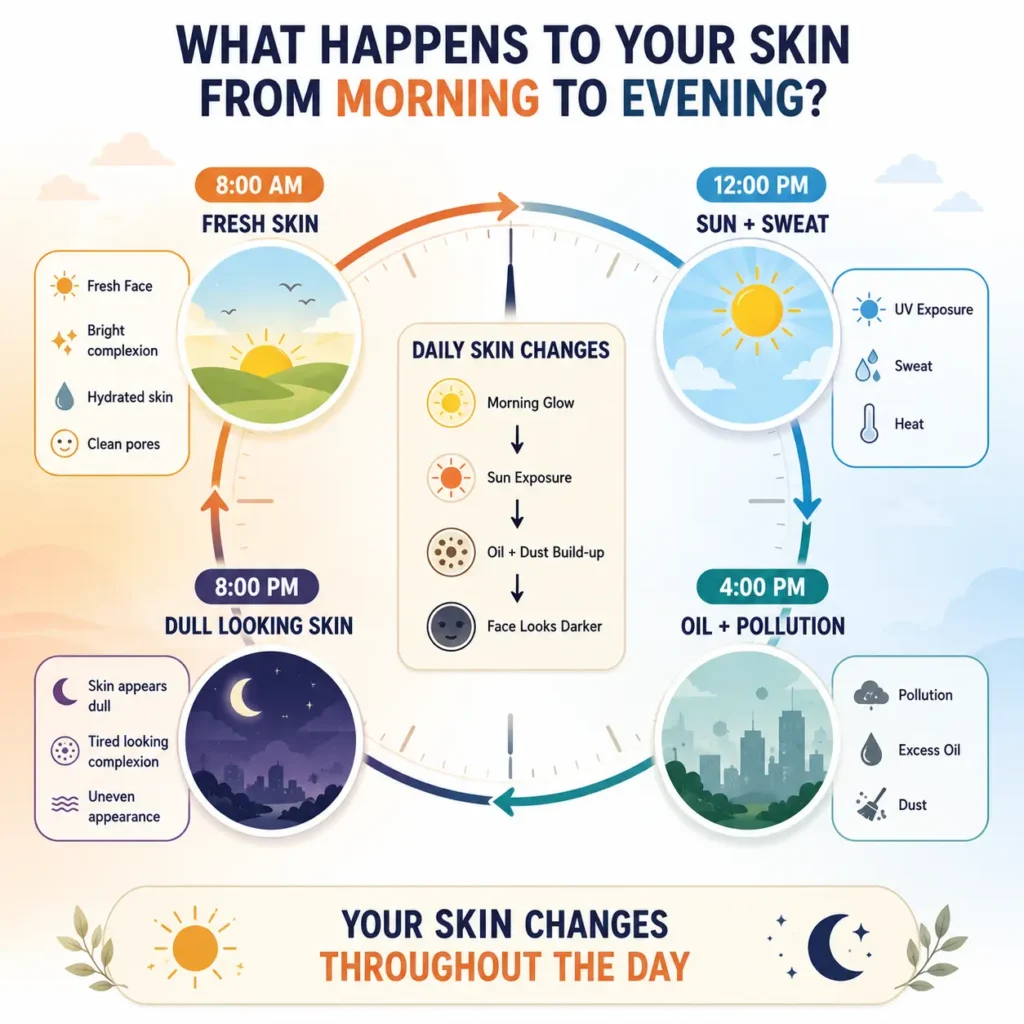
Face Looks Darker by Evening is a concern many people notice but rarely understand. You may start your day with fresh, glowing skin, only to feel that your face looks dull, oily, or darker by the evening. While this change can be frustrating, it is often influenced by everyday factors rather than permanent skin damage.
Have you ever looked in the mirror after a long day and wondered why your skin doesn’t look as bright as it did in the morning?
Maybe your face appears tired after spending hours outdoors. Perhaps your skin feels oily, dusty, or uneven even though you followed your usual skincare routine.
If this sounds familiar, you’re not alone.
Throughout the day, your skin is exposed to sunlight, pollution, sweat, excess oil, and environmental impurities. These factors can make your complexion appear darker or less radiant by evening.
Understanding the reasons behind this daily change is the first step toward maintaining healthier-looking skin.
Skin Dullness Causes: Why Does Your Face Look Darker?
Several everyday factors may affect your skin’s appearance by the end of the day.
Excess Oil Build-Up
Your skin naturally produces oil to protect itself.
Why It Matters
As oil mixes with dust, sweat, and pollution, your face may appear greasy and less radiant.
Pollution and Dust
Your skin comes into contact with environmental particles every day.
The Result
These impurities settle on the skin’s surface, making it appear dull or darker until properly cleansed.
Sun Exposure
Spending time outdoors increases your skin’s exposure to UV rays.
What Happens
Prolonged sun exposure may contribute to temporary tanning and uneven skin tone over time.
Healthy Skincare Routine: Daily Habits That Help
A consistent skincare routine supports healthier-looking skin throughout the day.
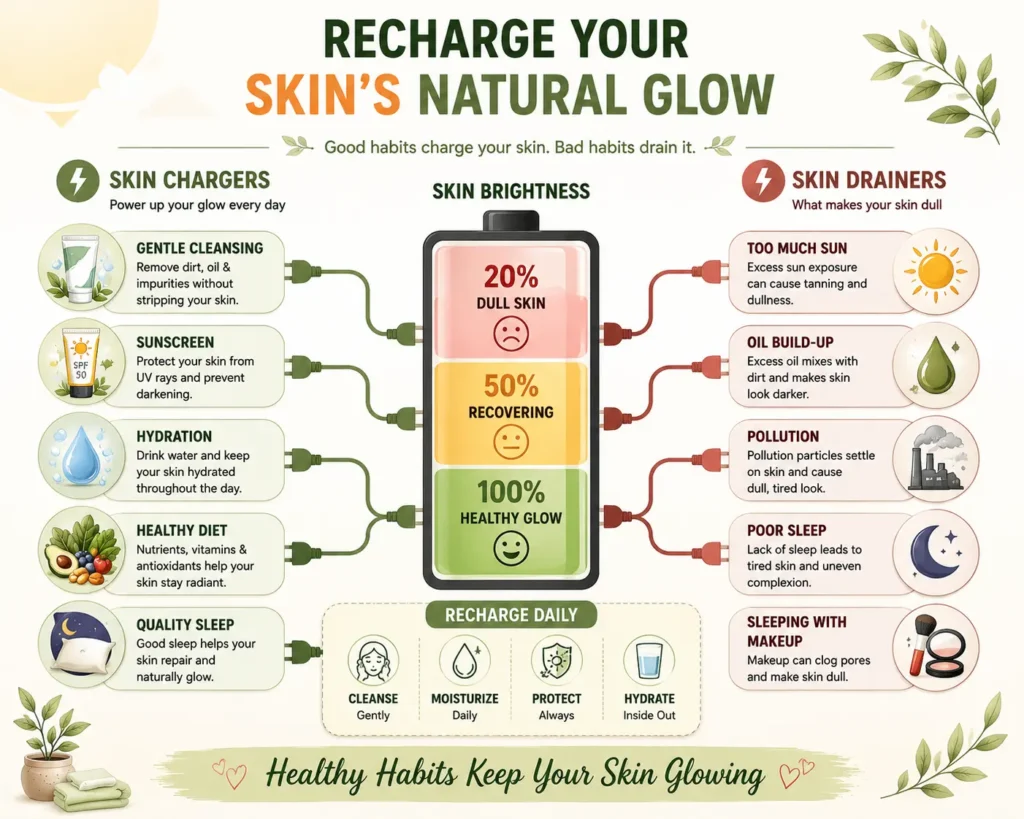
Cleanse Gently
Remove Daily Build-Up
Wash your face with a gentle cleanser to remove excess oil, dirt, and pollution without over-drying your skin.
Moisturize Regularly
Maintain Skin Hydration
Keeping your skin moisturized helps support its natural protective barrier.
Wear Sunscreen Every Day
Protect Against UV Rays
Daily sunscreen helps protect your skin from the effects of sun exposure and supports a more even-looking complexion.
Glowing Skin Tips: Support Your Skin Naturally
Simple lifestyle habits can improve your skin’s overall appearance.
Stay Hydrated
Healthy Skin Starts Within
Drinking enough water helps support your body’s normal functions and contributes to healthy-looking skin.
Eat a Balanced Diet
Nourish Your Skin
Fruits, vegetables, healthy fats, and vitamins contribute to normal skin health.
Get Enough Sleep
Give Your Skin Time to Recover
Your skin naturally repairs itself while you sleep, making rest an important part of skincare.
Uneven Skin Tone: How to Maintain a Brighter Look
Daily care plays an important role in supporting an even complexion.
Avoid Touching Your Face Frequently
Reduce Dirt Transfer
Hands can transfer oil and impurities that may affect your skin throughout the day.
Remove Makeup Before Bed
Let Your Skin Breathe
Sleeping with makeup may contribute to clogged pores and dull-looking skin.
Be Consistent With Your Routine
Small Habits Matter
Healthy-looking skin is often the result of consistent daily care rather than occasional treatments.
When Should You Consult a Dermatologist?
Consider seeking professional advice if you notice:
- Sudden changes in skin color
- Persistent pigmentation
- Uneven skin tone that worsens
- Dark patches that do not improve
- Skin irritation or recurring inflammation
A dermatologist can identify the underlying cause and recommend appropriate treatment based on your skin type.
Final Thoughts
Understanding Face Looks Darker by Evening helps you recognize that daily environmental exposure, excess oil, sun exposure, and skincare habits can all influence how your skin looks at the end of the day.
Instead of focusing only on temporary changes in skin tone, build a consistent skincare routine that includes gentle cleansing, moisturizing, sun protection, and healthy lifestyle habits.
Remember that healthy-looking skin is built through regular care and patience. Small daily habits can make a noticeable difference in maintaining a brighter, fresher complexion over time.