
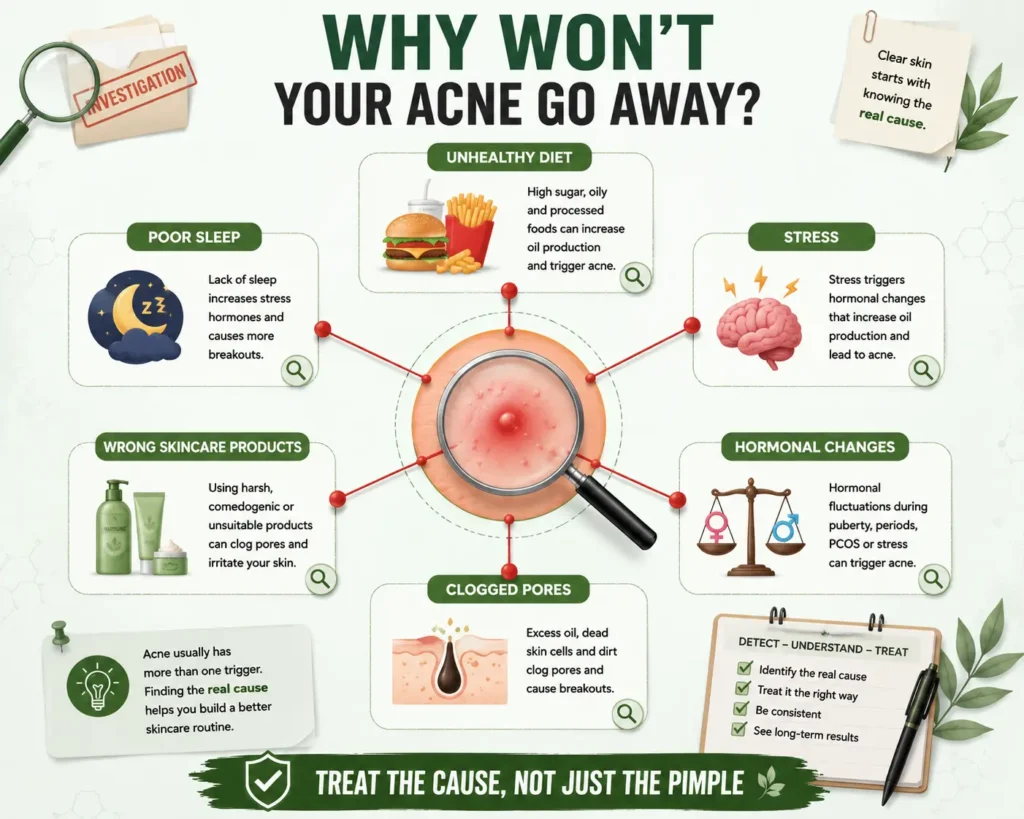
Persistent Acne can be frustrating, especially when you’ve tried different face washes, creams, home remedies, and skincare routines without seeing lasting results. Many people believe acne is caused by just oily skin, but the truth is often more complicated.
Have you ever noticed that your pimples disappear for a few days only to come back again?
Maybe you’ve changed your skincare products several times, yet your breakouts continue. Perhaps you’ve followed skincare advice from social media, but your skin still doesn’t improve.
If this sounds familiar, you’re not alone.
Many people unknowingly make daily mistakes that keep acne returning. Sometimes the problem isn’t the product you’re using—it could be your skincare habits, lifestyle, hormones, or even using too many products at once.
Understanding the real reasons behind recurring acne is the first step toward healthier-looking skin.
Acne Causes: Why Does Acne Keep Coming Back?
Acne develops when several factors affect your skin at the same time.
Excess Oil Production
Your skin naturally produces oil to stay healthy.
Why It Matters
Too much oil can mix with dead skin cells and clog pores, increasing the chance of breakouts.
Clogged Pores
Healthy skin continuously sheds dead skin cells.
What Happens
When these cells aren’t removed properly, they can block pores and create an environment where pimples are more likely to develop.
Hormonal Changes
Hormones influence your skin throughout life.
Common Triggers
Hormonal fluctuations during puberty, stress, or adulthood may contribute to recurring acne.
Acne Treatment Tips: Mistakes That Can Delay Clear Skin
Many people unintentionally make acne worse.
Changing Products Too Often
Give Products Time
Most skincare products need several weeks before visible improvements appear.
Constantly switching products may irritate the skin and make it difficult to know what actually works.
Over-Cleansing
Washing Too Frequently
Cleaning your face too many times a day may weaken your skin barrier and trigger excess oil production.
Picking Pimples
Avoid Touching Your Skin
Squeezing or picking acne may increase inflammation and raise the risk of acne marks.
Healthy Skincare Routine: Build Better Daily Habits
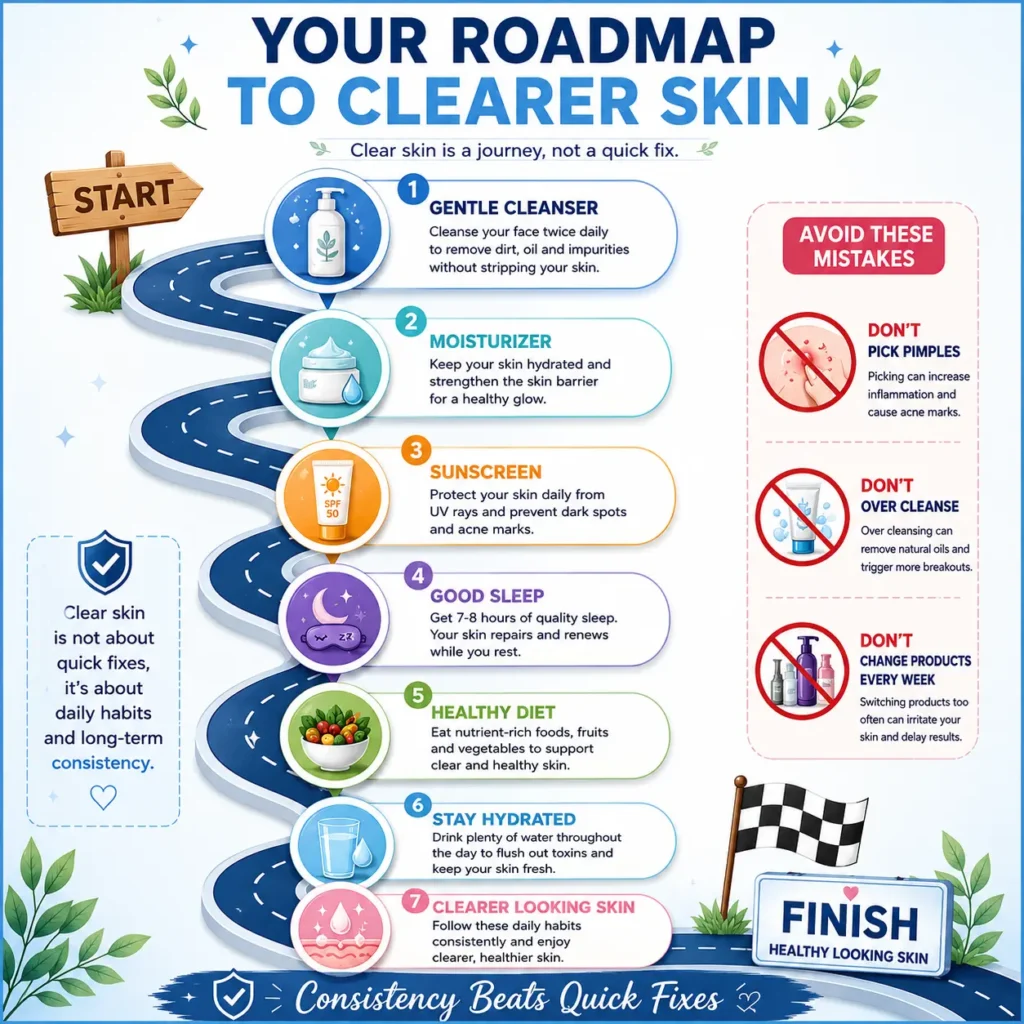
A consistent routine often works better than a complicated one.
Cleanse Gently
Remove Dirt Without Over-Drying
Use a gentle cleanser that removes impurities while helping maintain your skin’s natural balance.
Moisturize Every Day
Hydration Still Matters
Even oily or acne-prone skin benefits from proper hydration.
Wear Sunscreen
Protect Healing Skin
Daily sun protection may help reduce the appearance of post-acne marks and protect your skin from UV damage.
Be Patient
Consistency Wins
Healthy-looking skin develops gradually through regular care rather than overnight treatments.
Clear Skin Habits: Lifestyle Changes That Support Healthier Skin
Daily habits also influence your skin.
Get Enough Sleep
Give Your Skin Time to Recover
Your skin repairs itself while you sleep.
Eat a Balanced Diet
Support Overall Skin Health
A balanced diet provides nutrients that contribute to normal skin function.
Manage Stress
Reduce Daily Stress
Long-term stress may contribute to acne flare-ups in some individuals.
Keep Pillowcases and Phones Clean
Reduce Surface Buildup
Regularly cleaning items that touch your face may help reduce dirt and oil buildup.
When Should You See a Dermatologist?
Consider consulting a dermatologist if you experience:
- Persistent acne that lasts for several months
- Painful cystic acne
- Frequent acne scars
- Acne that doesn’t improve with a consistent skincare routine
- Sudden severe breakouts
A dermatologist can help identify the underlying cause and recommend a treatment plan suitable for your skin.
Final Thoughts
Understanding Persistent Acne helps you look beyond temporary fixes and focus on long-term skin health.
Rather than constantly changing products or following every skincare trend, build a consistent routine, practice healthy lifestyle habits, and give your skin time to improve.
Small daily changes often lead to healthier, clearer-looking skin over time.