
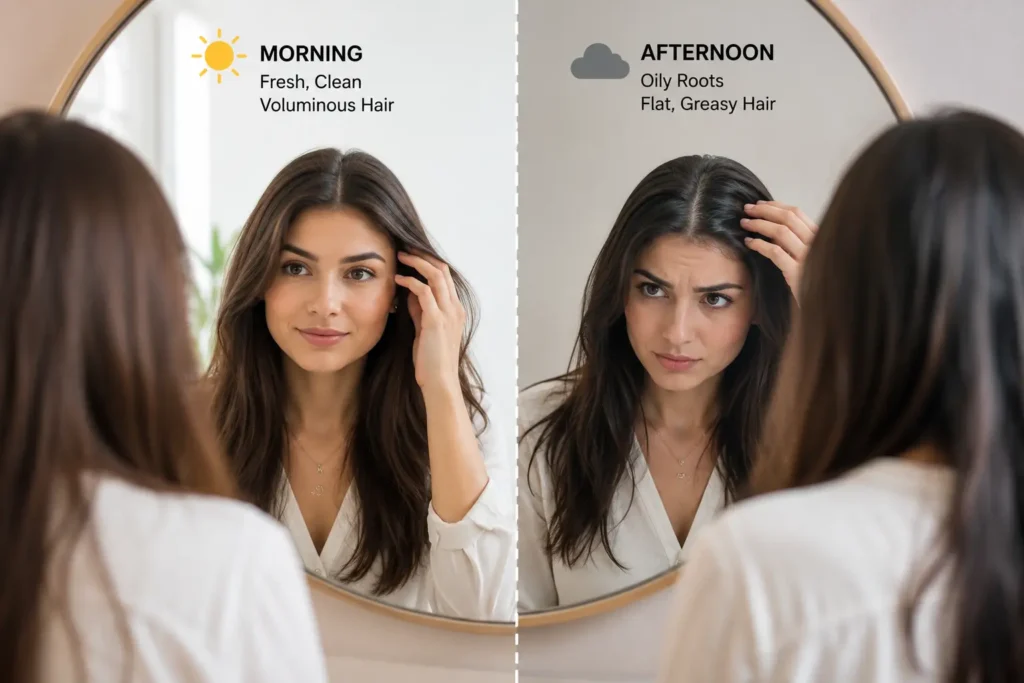
You wake up, wash your hair, style it carefully, and leave home feeling confident. Your hair looks clean, fresh, and full of volume. But by lunchtime, something changes. Your roots start looking oily, your hairstyle loses its bounce, and your hair suddenly feels flat and lifeless.
If you’ve ever checked your reflection in the afternoon and wondered, “Why does my hair already look greasy?” you’re not alone. Many people experience Greasy Hair By Afternoon, even after washing their hair regularly.
This problem can be frustrating because it affects your confidence and makes you feel like your hair never stays fresh for long. The good news is that understanding the causes behind oily hair can help you take the right steps toward healthier-looking hair and a balanced scalp.
What Does Greasy Hair By Afternoon Really Mean?
A small amount of oil on the scalp is completely normal. Your scalp naturally produces sebum, which helps protect and moisturize your hair.
However, when too much oil is produced, hair begins to look greasy much faster than expected. This often results in:
- Flat roots
- Oily scalp
- Hair sticking together
- Loss of volume
- Hair appearing dirty despite being freshly washed
People dealing with Greasy Hair By Afternoon often feel the need to wash their hair daily, creating a cycle that can sometimes worsen the issue.
Signs Your Hair Is Becoming Oily Too Quickly
Many people don’t notice excessive oil production until it starts affecting their appearance.
You may be experiencing Greasy Hair By Afternoon if:
- Your hair looks oily within a few hours of washing.
- Your roots lose volume quickly.
- Your scalp feels greasy when touched.
- Hairstyles don’t last throughout the day.
- Hair feels heavy and limp.
- You frequently use dry shampoo to refresh your hair.
These signs usually indicate that your scalp is producing more oil than necessary.
Why Does My Hair Get Greasy So Fast?
One of the most common questions people ask is:
Why Does My Hair Get Greasy So Fast?
There isn’t just one answer. Several factors can contribute to excess oil production.
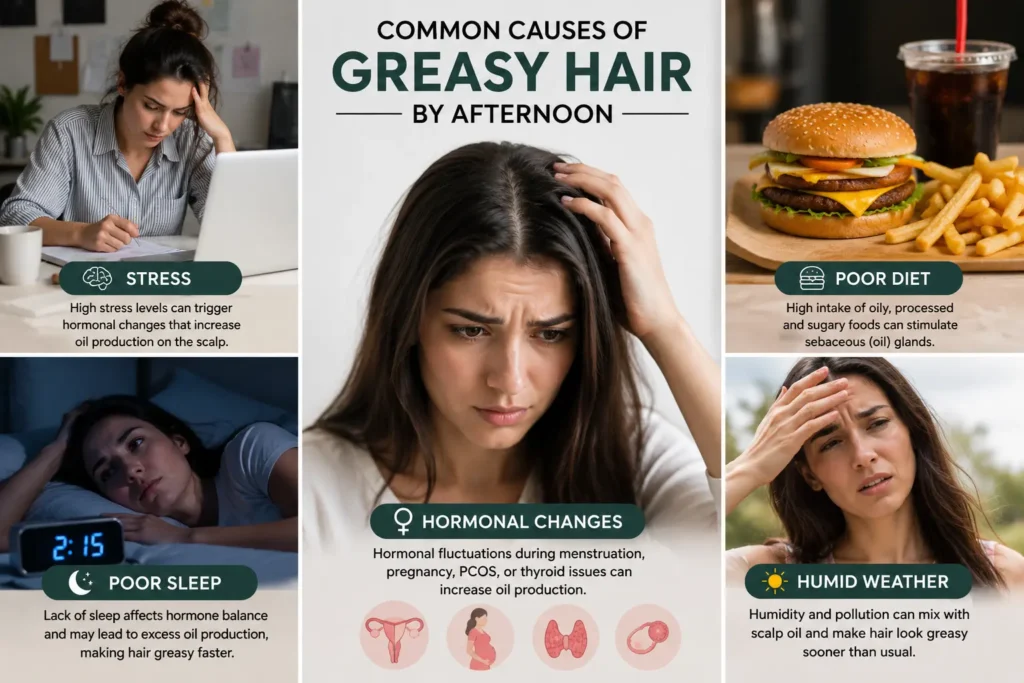
Overactive Oil Glands
Your scalp contains sebaceous glands that produce natural oils.
Some people naturally have more active glands than others. Genetics often play a major role in determining how much oil your scalp produces.
If oily skin runs in your family, you may also be more likely to experience Greasy Hair By Afternoon.
Washing Your Hair Too Often
It sounds strange, but overwashing can actually make hair oilier.
When shampoo strips away natural oils, your scalp may respond by producing even more oil to compensate.
This can create a cycle where hair becomes greasy faster and faster.
Hormonal Changes
Hormones significantly influence oil production.
Hormonal fluctuations caused by:
- Menstrual cycles
- Pregnancy
- PCOS
- Thyroid conditions
- Stress
can stimulate oil glands and increase sebum production.
This is one reason many women notice changes in scalp oiliness at different stages of life.
Oily Hair Causes and Solutions
Understanding both the causes and solutions helps create a long-term strategy for managing oily hair.
Product Buildup
Many styling products leave residue on the scalp.
Common examples include:
- Hair sprays
- Serums
- Mousses
- Dry shampoos
- Heavy conditioners
Over time, this buildup can make hair appear greasy and dull.
Poor Diet Choices
What you eat may influence your scalp health.
A diet high in:
- Processed foods
- Excess sugar
- Fried foods
may contribute to increased oil production in some individuals.
A balanced diet rich in vitamins and minerals supports healthier hair and scalp function.
Stress and Lifestyle
Stress affects hormone levels throughout the body.
When stress levels increase, oil production may also increase.
Many people notice worsening Greasy Hair By Afternoon during periods of work pressure, lack of sleep, or emotional stress.
Environmental Factors
Pollution, humidity, and dust can contribute to oily-looking hair.
These factors combine with natural scalp oils, making hair appear greasy sooner than expected.
How to Stop Hair From Getting Greasy
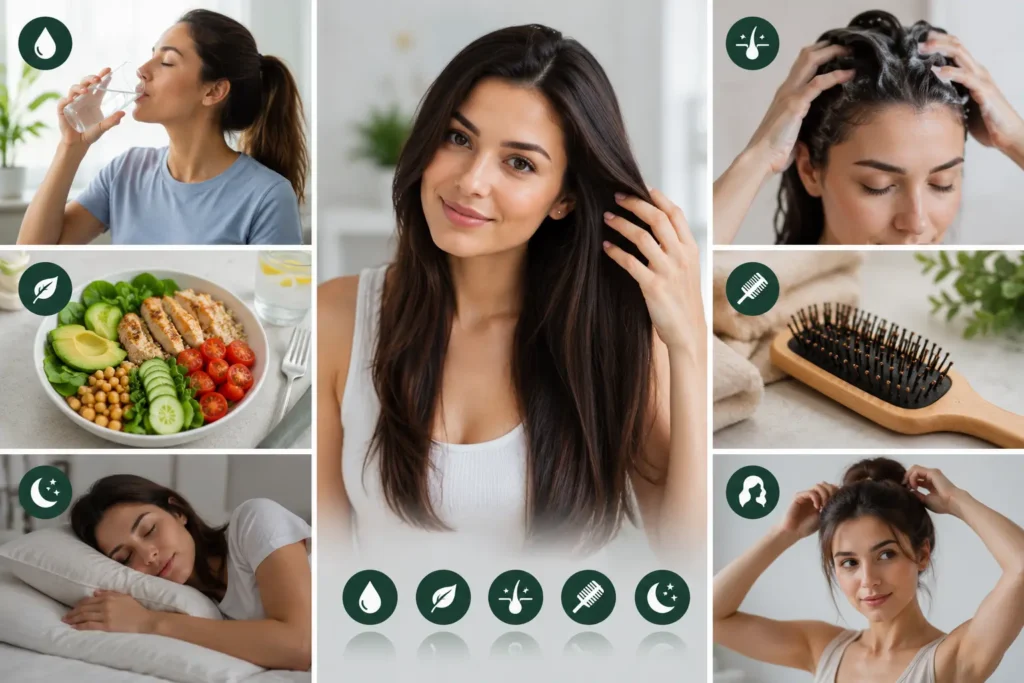
The good news is that small changes can often make a noticeable difference.
Choose a Gentle Shampoo
Using the right shampoo is one of the most important steps.
A gentle cleanser can help remove excess oil without overly drying the scalp.
Harsh shampoos may trigger even more oil production.
Wash the Scalp Properly
Many people focus on washing the hair strands instead of the scalp.
The scalp is where oil accumulates, so shampoo should primarily target the roots.
A thorough but gentle scalp cleanse can help reduce Greasy Hair By Afternoon.
Avoid Heavy Conditioners
Conditioner is important, but applying it directly to the scalp can weigh hair down.
Instead:
- Apply conditioner to mid-lengths.
- Focus on hair ends.
- Avoid the root area.
This helps maintain volume and freshness.
Stop Touching Your Hair Constantly
Many people unconsciously touch their hair throughout the day.
Each time you touch your hair, oils and dirt from your hands transfer to the strands.
Reducing this habit can help keep hair fresher for longer.
Clean Your Hairbrush Regularly
Hairbrushes collect:
- Oil
- Dust
- Product residue
- Dead skin cells
Using a dirty brush on freshly washed hair can quickly transfer oil back onto the scalp.
Hair Gets Oily After Washing: Common Mistakes
Many people wonder why their Hair Gets Oily After Washing.
Several common mistakes may be responsible.
Using Water That Is Too Hot
Hot water may irritate the scalp and encourage increased oil production.
Lukewarm water is generally a better choice.
Applying Too Much Product
Using excessive amounts of:
- Leave-in conditioners
- Hair creams
- Styling products
can make hair appear greasy much sooner.
Skipping Scalp Care
Healthy hair starts with a healthy scalp.
Ignoring scalp health can contribute to persistent oiliness and discomfort.
Best Daily Hair Care Routine for Oily Hair
Step 1: Cleanse Properly
Use a mild shampoo that removes excess oil while maintaining scalp balance.
Step 2: Use Lightweight Hair Care Products
Choose lightweight formulations that don’t leave heavy residue.
Step 3: Stay Hydrated
Proper hydration supports overall skin and scalp health.
Step 4: Follow a Balanced Diet
Include:
- Fruits
- Vegetables
- Lean proteins
- Healthy fats
- Nuts and seeds
These nutrients support healthier hair growth.
Step 5: Get Enough Sleep
Sleep plays an important role in hormone regulation and overall scalp health.
Consistent sleep habits may help improve hair and skin balance.
Can Weather Make Hair Greasier?
Yes.
Humidity can cause hair to appear flatter and oilier.
Hot weather often increases sweating, which mixes with scalp oils and creates a greasy appearance.
During warmer months, people frequently notice worsening Greasy Hair By Afternoon.
Protecting the scalp and maintaining proper hygiene can help minimize these effects.
Herbal Hair Care for Greasy Hair By Afternoon
A healthy scalp often starts with choosing the right hair care products.
Many people prefer herbal hair care options because they focus on scalp nourishment while supporting overall hair health.
If you’re looking for herbal hair care solutions, explore the Nains Herbals Hair Care Collection:
Some popular options include:
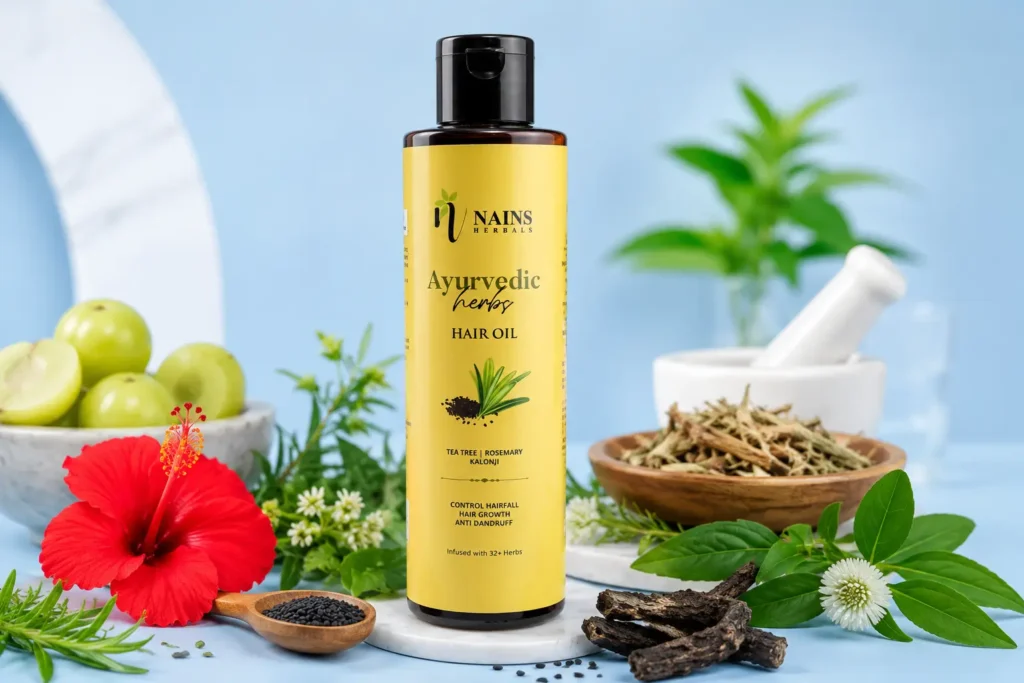
Nains Herbals 32 Herbs Ayurvedic Hair Oil
A healthy scalp is the foundation of healthy hair. Nains Herbals 32 Herbs Ayurvedic Hair Oil is formulated with a blend of traditional Ayurvedic herbs known for their nourishing properties. Regular scalp massage with herbal oil may help support scalp health, strengthen hair roots, and improve the overall appearance of your hair.
When combined with a balanced diet, proper hydration, and a consistent hair care routine, herbal scalp care can become an important part of maintaining fresher, healthier-looking hair.
If you’re looking for a herbal hair care solution, you can explore Nains Herbals 32 Herbs Ayurvedic Hair Oil as part of your regular hair care routine.
When Should You Seek Professional Advice?
While oily hair is common, you should consider consulting a healthcare professional if you experience:
- Sudden excessive oil production
- Severe scalp irritation
- Persistent itching
- Hair loss combined with oily scalp
- Scalp infections
Professional guidance can help identify any underlying conditions affecting scalp health.
Conclusion
Experiencing Greasy Hair By Afternoon can be frustrating, especially when your hair looks fresh in the morning but becomes flat and oily only a few hours later.
Factors such as overactive oil glands, hormonal changes, product buildup, stress, humidity, and hair care habits can all contribute to the problem.
Understanding Why Does My Hair Get Greasy So Fast is the first step toward healthier scalp care. By making simple lifestyle adjustments, following a proper hair care routine, and choosing suitable products, you can help reduce excess oil and maintain fresher-looking hair throughout the day.
If you’re looking for herbal hair care options, explore the Nains Herbals Hair Care Collection and choose products that best suit your hair care needs.