
You buy a new skincare product hoping for glowing, healthy skin. You carefully follow the instructions, apply it to your face, and wait for the results.
But instead of feeling refreshed, your skin starts to sting.
Within minutes, you notice a burning sensation. Your face feels warm, uncomfortable, and sometimes even red. You begin wondering if the product is working, if it’s normal, or if something is wrong.
If you’ve ever experienced Skin Burns After Applying Skincare Products, you’re not alone.
Many people experience temporary irritation, stinging, or burning after applying skincare products. Sometimes it’s harmless and short-lived. Other times, it may indicate that your skin barrier is damaged or that your skin is reacting to certain ingredients.
Understanding why this happens can help you avoid further irritation and choose products that better support your skin’s health.
What Does It Mean When Your Skin Burns After Applying Skincare Products?
A mild tingling sensation from certain active ingredients can occasionally occur. However, persistent burning, redness, itching, or discomfort is usually a sign that your skin is unhappy.
When Skin Burns After Applying Skincare Products, it often means:
- Your skin barrier may be weakened.
- Certain ingredients may be too strong.
- Your skin may be dehydrated.
- You may be experiencing irritation.
- An allergic reaction could be developing.
Recognizing the difference between normal adjustment and harmful irritation is important.
Signs That Your Skincare Product Is Irritating Your Skin
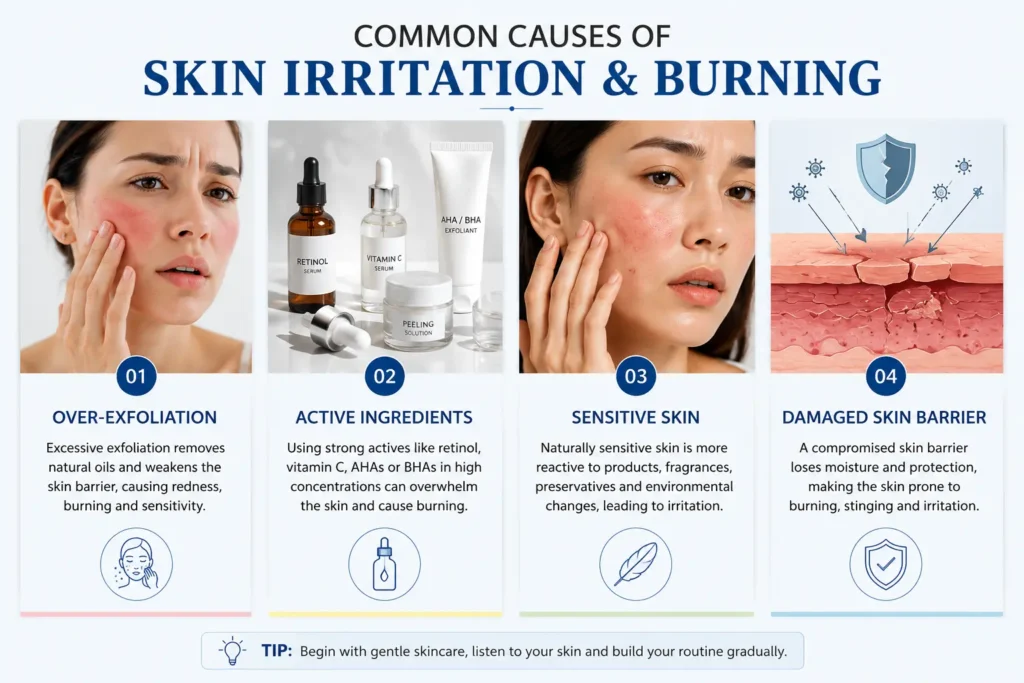
Many people ignore early warning signs.
Common symptoms include:
- Burning sensation
- Redness
- Itching
- Tightness
- Dry patches
- Increased sensitivity
- Peeling skin
- Warm feeling on the face
If these symptoms occur frequently, it may be time to reevaluate your skincare routine.
Why Does My Skin Burn After Skincare?
One of the most common questions people ask is:
Why Does My Skin Burn After Skincare?
There are several possible reasons.
A Damaged Skin Barrier
Your skin barrier acts as a protective shield.
It helps:
- Retain moisture
- Protect against irritants
- Defend against environmental stressors
When the barrier becomes damaged, even gentle skincare products may cause discomfort.
Common causes of barrier damage include:
- Over-exfoliation
- Harsh cleansers
- Excessive sun exposure
- Dry weather
- Overuse of active ingredients
A compromised barrier is one of the leading reasons why Skin Burns After Applying Skincare Products.
Using Too Many Active Ingredients
Many skincare products contain powerful ingredients designed to improve skin concerns.
Examples include:
- Retinol
- Vitamin C
- Glycolic Acid
- Salicylic Acid
- Lactic Acid
While beneficial when used properly, combining multiple active ingredients can overwhelm the skin.
This often results in a Burning Sensation After Applying Skincare.
Over-Exfoliation
Exfoliation helps remove dead skin cells.
However, excessive exfoliation can strip away the skin’s natural protection.
Signs of over-exfoliation include:
- Redness
- Burning
- Sensitivity
- Dryness
- Flaking
Many people unknowingly over-exfoliate by using multiple exfoliating products simultaneously.
Skincare Products Irritating Skin: Common Ingredients
Certain ingredients are more likely to trigger irritation.
Fragrances
Artificial fragrances are among the most common causes of skin sensitivity.
People with sensitive skin often react to heavily scented products.
Alcohol-Based Ingredients
Some products contain high concentrations of drying alcohols.
These ingredients may leave the skin feeling tight, dry, and irritated.
Strong Acids
Acids can be effective when used correctly.
However, high concentrations may trigger:
- Burning
- Redness
- Peeling
especially for beginners.
Essential Oils
While often considered natural, essential oils may still cause irritation in sensitive individuals.
Can Sensitive Skin Cause Burning?
Yes.
People with naturally sensitive skin often experience stronger reactions to skincare products.
Sensitive skin may react to:
- Fragrances
- Preservatives
- Active ingredients
- Environmental changes
This makes product selection particularly important.
Burning Sensation After Applying Skincare: When Is It Serious?
Not every reaction is dangerous.
However, you should stop using a product immediately if you experience:
- Severe burning
- Swelling
- Rash
- Blistering
- Difficulty breathing
- Persistent redness
These symptoms may indicate an allergic reaction that requires medical attention.
How to Stop Skin Burning After Skincare
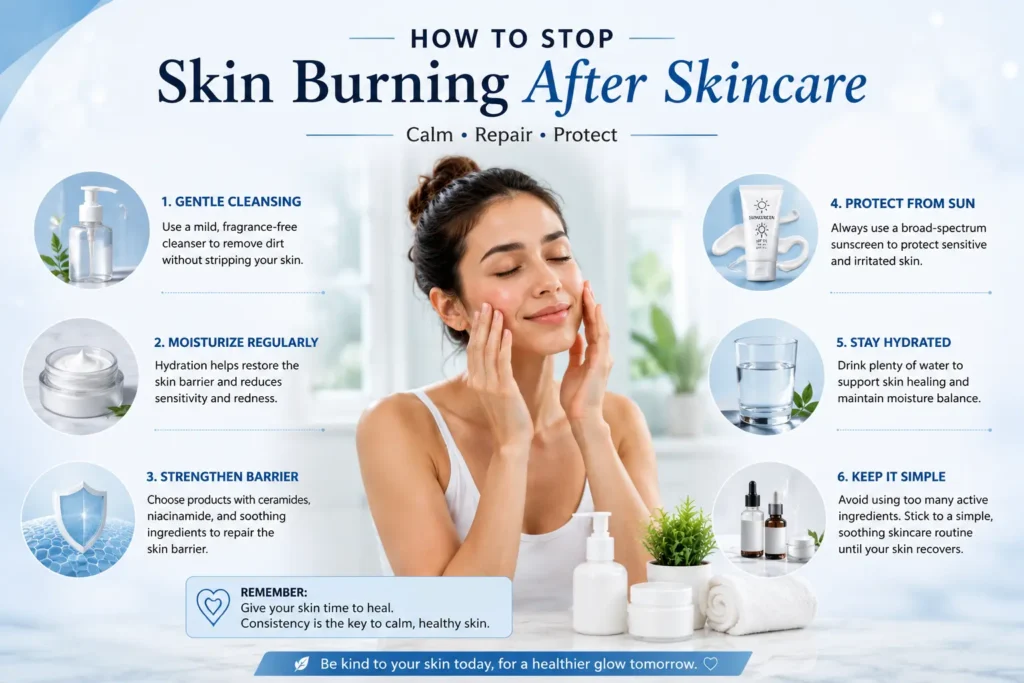
The good news is that there are several ways to calm irritated skin.
Simplify Your Routine
When irritation occurs, temporarily reduce the number of products you use.
Focus on:
- Gentle cleansing
- Moisturizing
- Sun protection
Avoid introducing new products until your skin recovers.
Avoid Harsh Ingredients
Pause products containing:
- Retinol
- Strong acids
- Exfoliants
- High-strength vitamin C
Allow your skin barrier time to heal.
Moisturize Regularly
Hydration is essential for repairing the skin barrier.
A good moisturizer helps:
- Lock in moisture
- Reduce sensitivity
- Improve skin comfort
Protect Your Skin From the Sun
Irritated skin becomes more vulnerable to sun damage.
Use a suitable sunscreen whenever you go outdoors.
Common Skincare Mistakes That Trigger Burning
Layering Too Many Products
Using multiple active ingredients at the same time can overwhelm your skin.
Trying New Products Too Frequently
Many people switch products before giving their skin time to adjust.
This makes it difficult to identify what is causing irritation.
Ignoring Patch Testing
Patch testing helps identify potential reactions before applying products to the entire face.
Skipping this step increases the risk of irritation.
Best Daily Routine for Sensitive Skin
Step 1: Gentle Cleansing
Choose a mild cleanser that removes dirt without stripping the skin.
Step 2: Hydration
Apply products that help maintain moisture levels.
Step 3: Barrier Support
Focus on ingredients that support skin barrier health.
Step 4: Sun Protection
Daily sunscreen use helps protect vulnerable skin.
Step 5: Consistency
Consistency often produces better results than constantly changing products.
How Lifestyle Factors Affect Skin Sensitivity
Skincare isn’t the only factor influencing your skin.
Lack of Sleep
Poor sleep may affect skin recovery and increase sensitivity.
Stress
Stress can weaken the skin barrier and contribute to irritation.
Dehydration
Insufficient water intake may leave skin feeling dry and uncomfortable.
Poor Nutrition
A balanced diet supports overall skin health.
Face Care for Sensitive and Irritated Skin
When your skin feels irritated, choosing gentle products becomes especially important.
Many people prefer herbal face care products because they focus on nourishing the skin while supporting overall skin wellness.
If you’re looking for face care solutions, explore the Nains Herbals Face Care Collection:
Nains Herbals Kamal Kesar Skin Brightening Face Serum
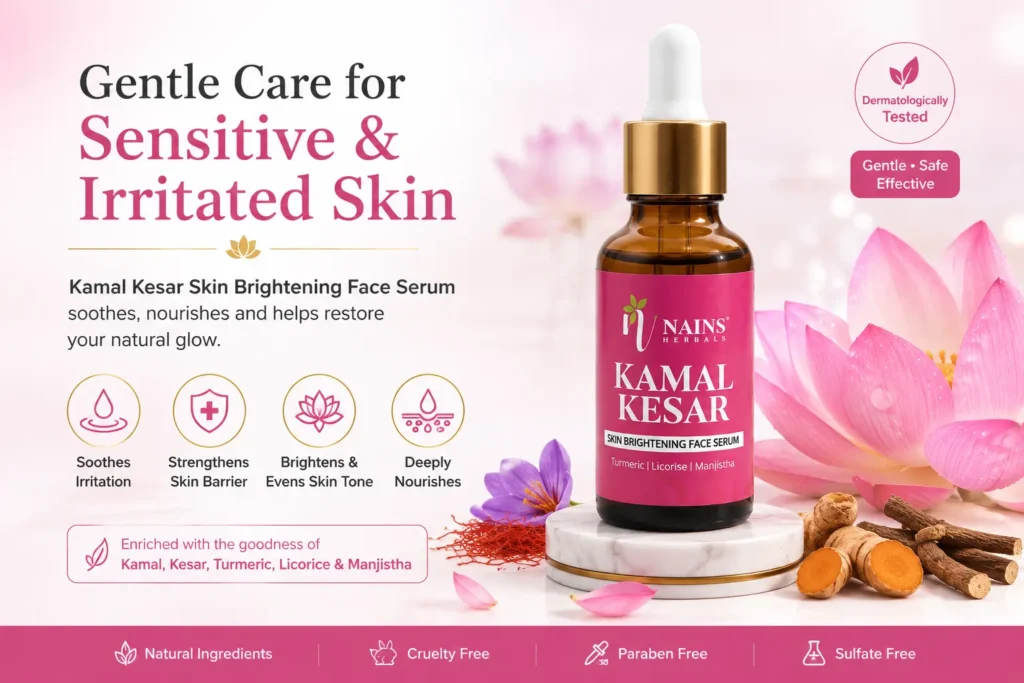
Formulated with herbal ingredients, Nains Herbals Kamal Kesar Skin Brightening Face Serum helps support skin hydration and promotes a healthy-looking glow. Its lightweight formula can be incorporated into your daily skincare routine to help maintain softer, smoother, and more radiant-looking skin.
A consistent skincare routine combined with gentle products may help maintain healthier-looking skin and support overall skin comfort
A consistent skincare routine combined with gentle products may help maintain healthier-looking skin and support overall skin comfort.
How to Choose the Right Face Care Products
When selecting skincare products, consider:
- Your skin type
- Ingredient list
- Sensitivity level
- Existing skin concerns
Look for products that focus on:
- Hydration
- Skin barrier support
- Gentle cleansing
- Long-term skin health
Avoid constantly switching products, as this may increase irritation.
When Should You See a Dermatologist?
Consider consulting a dermatologist if:
- Burning persists for several days
- Reactions become severe
- You develop rashes
- Products consistently cause irritation
- Skin conditions worsen
Professional guidance can help identify the underlying cause and recommend appropriate treatment.
Conclusion
Experiencing Skin Burns After Applying Skincare Products can be uncomfortable and concerning, especially when you’re trying to improve your skin.
Factors such as a damaged skin barrier, over-exfoliation, harsh ingredients, active skincare ingredients, and sensitive skin can all contribute to irritation.
Understanding Why Does My Skin Burn After Skincare is the first step toward building a healthier skincare routine. By simplifying your routine, avoiding harsh ingredients, focusing on hydration, and choosing gentle face care products, you can help support your skin’s natural barrier and reduce discomfort.
If you’re looking for face care solutions, explore the Nains Herbals Face Care Collection and choose products that best suit your skin’s needs.