
Certain everyday habits that make dandruff worse are so routine that most people never connect them to their flaking scalp. You might be using the right shampoo and still seeing flakes simply because of small daily habits working against your treatment. Here are 10 common mistakes — and what to do instead.
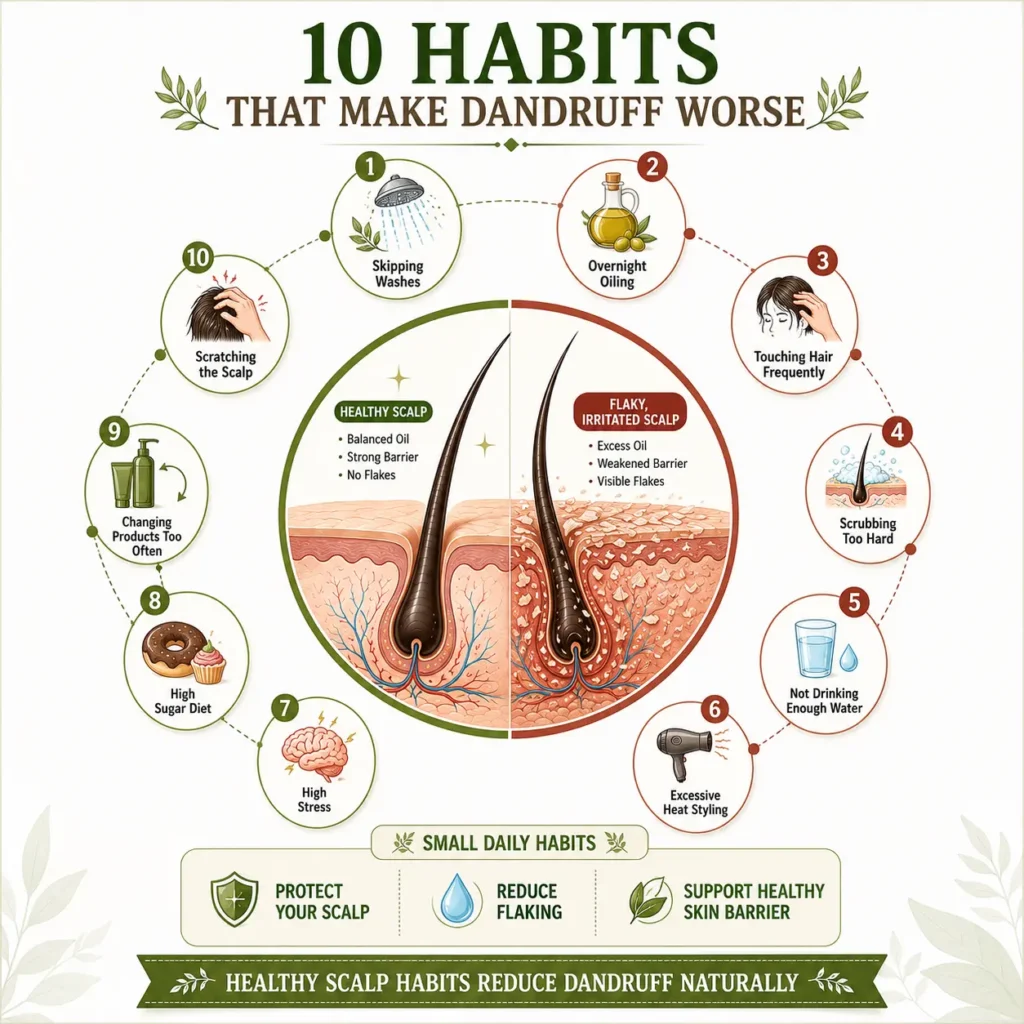
Habits That Make Dandruff Worse: Where Most People Go Wrong
1. Skipping Washes Too Often
Going too long between washes lets oil build up, feeding the Malassezia yeast responsible for most dandruff. Even people with dry hair can worsen flaking by under-washing, since oil accumulation happens regardless of hair type.
2. Overnight Oiling
Leaving oil on your scalp overnight is one of the most common dandruff causes hiding in plain sight. Extended oil exposure creates a warm, moist environment where fungus thrives, often making flaking worse by morning instead of better.
3. Touching Your Hair Frequently
Constantly running your hands through your hair stimulates oil-producing glands. More oil means more fuel for the yeast behind dandruff — a habit most people don’t even realize they’re doing throughout the day.
4. Scrubbing Too Hard While Washing
Aggressive scrubbing with strong detergents strips too much natural oil, triggering a rebound effect where the scalp overproduces sebum to compensate — ironically worsening the very flaking you’re trying to wash away.
5. Not Drinking Enough Water
Dehydration disrupts your scalp’s moisture balance, and a dry scalp is one of the most common triggers of flaking. If you’re searching for how to stop dandruff, checking your daily water intake is an easy first step.
6. Excessive Heat Styling
Frequent blow-drying, straightening, or curling weakens the scalp barrier over time. While heat alone doesn’t directly cause dandruff, it can dry out an already sensitive scalp and intensify existing flaking.
7. High Stress Levels
Stress raises cortisol levels, which alters immune function and weakens the scalp’s protective barrier. Clinical research links stress directly to flare-ups of seborrheic dermatitis, making stress management an underrated part of any dandruff treatment tips list.
8. A Sugar-Heavy Diet
Diets high in sugar and processed foods can worsen scalp inflammation and oil production. Without enough zinc, biotin, or omega-3s, your scalp struggles to regulate normal skin cell turnover, making flaking more frequent.
9. Switching Products Too Often
Jumping between shampoos every few weeks doesn’t give any single treatment enough time to work. Most anti-dandruff formulas need 4–6 weeks of consistent use before showing real results.
10. Scratching an Itchy Scalp
Scratching feels like instant relief but damages the skin barrier further, increasing inflammation and sometimes leading to secondary irritation. This habit alone can undo weeks of progress from an otherwise effective routine.
Simple Flaky Scalp Remedies to Start Today
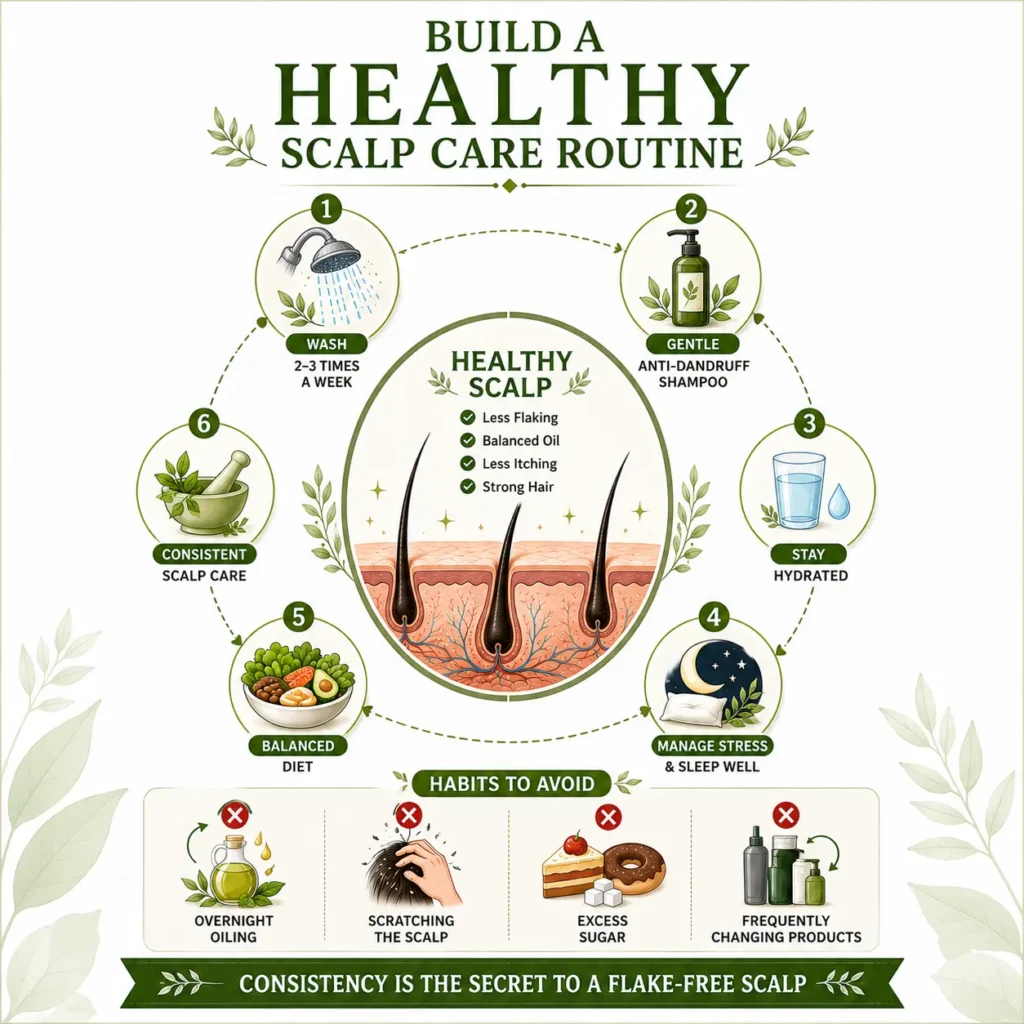
A few practical flaky scalp remedies to counter these habits:
- Wash 2–3 times a week with a gentle anti-dandruff formula
- Avoid overnight oiling — limit oil application to 1–2 hours before washing
- Stay hydrated and reduce sugar intake
- Manage stress through better sleep and routine
- Give any new product at least a month before switching
Try Rosemary Dandruff Gel for a Gentler Routine
If your current routine feels harsh or inconsistent, a Rosemary Dandruff Gel offers a gentler way to break these habits without shocking your scalp. Rosemary is known for its natural antimicrobial and anti-inflammatory properties, helping calm irritation while creating an environment where Malassezia struggles to overgrow.
Unlike heavy oils or harsh medicated shampoos, a lightweight gel formula won’t clog follicles or strip natural moisture — making it easier to stick to a consistent routine instead of falling back into the same habits. With regular use, it can help:
- Calm itchiness without encouraging scratching
- Balance scalp oil without over-drying
- Support scalp health between wash days
- Fit easily into a low-maintenance routine
Final Thoughts
Dandruff often isn’t just about which shampoo you use — it’s about the small daily habits working against your treatment. Fixing overnight oiling, stress, diet, and washing frequency, paired with a gentle formula like rosemary dandruff gel, gives your scalp the consistency it needs to actually heal.