
If you’ve tried shampoo after shampoo but white flakes keep coming back, you’re probably wondering what you’re doing wrong. Many people believe that simply using an anti-dandruff shampoo is enough to solve the problem, yet the flakes, itchiness, and scalp irritation return within days. The truth is that dandruff is rarely caused by one factor alone. Washing habits, product choices, scalp hygiene, stress, diet, and consistency all play important roles.
Building the right anti dandruff hair care routine is about creating healthy daily habits that support your scalp instead of relying on quick fixes. Once you understand what your scalp really needs, managing dandruff becomes much easier.
Why Does Dandruff Keep Coming Back?
Dandruff is often linked to excess oil, Malassezia yeast, product buildup, and an unhealthy scalp barrier. Even if you use an anti-dandruff shampoo occasionally, inconsistent habits may allow flakes to return.
Common reasons include:
- Irregular hair washing
- Excess scalp oil
- Product buildup
- Stress
- Poor diet
- Overuse of styling products
- Inconsistent scalp care
Understanding these triggers helps you create a routine that works long term.
Dandruff Treatment Routine Starts With Proper Cleansing
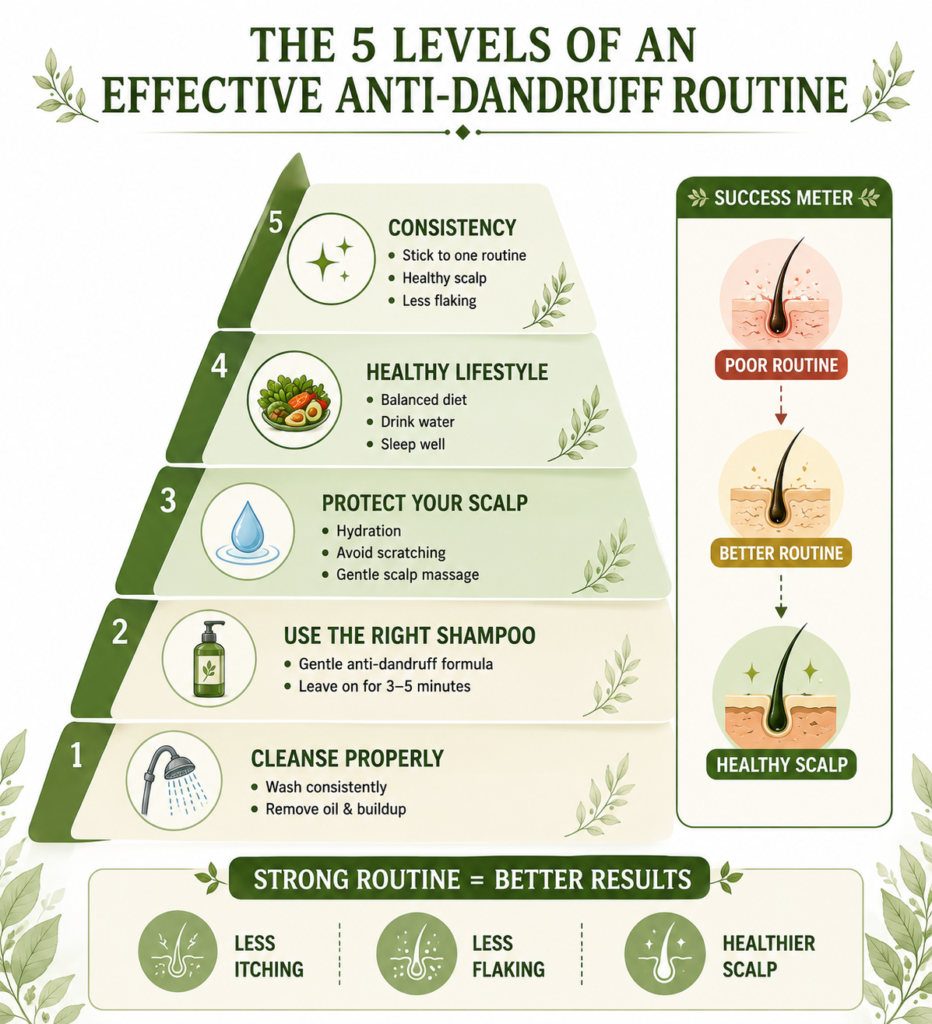
Wash Your Hair Consistently
One of the biggest mistakes is waiting too long between washes. Regular cleansing helps remove excess oil, sweat, dirt, and dead skin cells that can worsen dandruff.
Use a Gentle Anti-Dandruff Shampoo
Choose a shampoo designed for your scalp condition. Massage it gently into the scalp and allow it to remain for 3–5 minutes before rinsing so the active ingredients have enough contact time.
Avoid Overwashing
Washing too frequently with harsh products may strip natural oils and leave the scalp irritated. Find a washing schedule that suits your scalp type.
Scalp Care Routine for a Healthy Scalp
Keep Your Scalp Clean
A clean scalp creates a healthier environment for hair follicles and helps reduce excess oil buildup.
Avoid Scratching
Although scratching may provide temporary relief, it can damage the scalp barrier and increase irritation.
Massage Your Scalp Gently
A light scalp massage during shampooing may improve circulation while helping distribute natural oils evenly.
Limit Heavy Oiling
Leaving heavy oils on the scalp overnight may encourage buildup and worsen dandruff in some people. If you oil your hair, wash it out within a few hours.
How to Prevent Dandruff Through Daily Habits
Stay Hydrated
Proper hydration supports healthy skin, including your scalp.
Eat a Balanced Diet
Foods rich in protein, zinc, iron, omega-3 fatty acids, and vitamins help support normal scalp function.
Reduce Stress
Stress may contribute to dandruff flare-ups. Regular exercise, meditation, and adequate sleep can help manage stress levels.
Clean Hair Accessories
Wash combs, brushes, towels, pillowcases, and hats regularly to reduce the transfer of dirt and oil back to the scalp.
Dandruff Shampoo Routine: Tips for Better Results
Don’t Change Products Too Quickly
Many people stop using a shampoo before it has enough time to work. Give your routine at least 4–6 weeks unless irritation develops.
Use the Correct Amount
Using more shampoo doesn’t necessarily improve results. Focus on cleaning the scalp rather than the hair length.
Rinse Thoroughly
Leftover shampoo residue may irritate the scalp, so rinse your hair completely after every wash.
Lifestyle Habits That Support a Healthy Scalp
Healthy hair starts with healthy daily habits.
- Get enough quality sleep.
- Stay physically active.
- Avoid excessive heat styling.
- Reduce the use of heavy styling products.
- Protect your scalp from excessive sun exposure.
- Follow a consistent hair care routine instead of constantly changing products.
Small improvements every day often produce better long-term results than trying multiple products at once.
When Should You See a Dermatologist?
Seek professional advice if you experience:
- Severe itching
- Thick yellow or silvery flakes
- Persistent redness
- Painful scalp irritation
- Hair loss with dandruff
- Dandruff that doesn’t improve after several weeks of consistent care
A dermatologist can determine whether the problem is dandruff, seborrheic dermatitis, psoriasis, eczema, or another scalp condition.
Final Thoughts
Following a consistent anti dandruff hair care routine is often more effective than relying on a single product. Regular cleansing, proper scalp hygiene, balanced nutrition, stress management, and patience all contribute to a healthier scalp. Instead of switching treatments frequently, focus on building a routine that suits your scalp and stick with it consistently. Over time, these healthy habits can help reduce flakes, calm irritation, and support long-term scalp health.