
Hair Care Myths have been passed down through generations, and many people still believe them without questioning whether they’re actually true. While some advice comes from good intentions, not all of it is supported by science.
Have you ever been told that shaving your head makes your hair grow thicker?
Maybe someone advised you to leave hair oil on overnight to stop hair fall.
Or perhaps you’ve heard that plucking one grey hair causes several more to grow in its place.
If you’ve believed any of these, you’re not alone.
Many people unknowingly follow outdated hair advice that can lead to unrealistic expectations and poor hair care habits. Understanding the difference between myths and facts is the first step toward building a healthier hair care routine.
Hair Care Myths You Should Stop Believing
Many traditional hair care beliefs continue to circulate today. Let’s separate myths from facts.
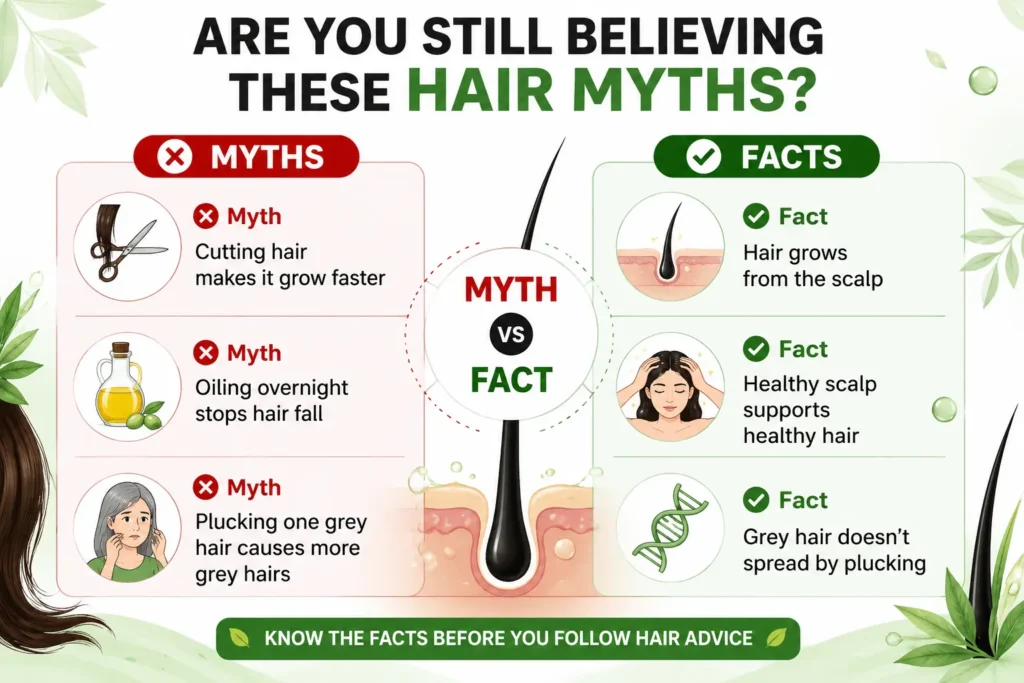
Myth: Cutting Hair Makes It Grow Faster
Many people believe frequent haircuts speed up hair growth.
The Real Truth
Hair grows from the follicles beneath your scalp—not from the ends. Trimming removes split ends and helps hair look healthier, but it doesn’t increase the rate of hair growth.
Myth: Oiling Overnight Stops Hair Fall
Hair oil is often treated as a cure for every hair problem.
What You Should Know
Hair oil helps nourish and condition the scalp, but leaving it overnight isn’t necessary for everyone. Hair fall can also be influenced by genetics, hormones, nutrition, stress, and scalp health.
Myth: Plucking One Grey Hair Causes More Grey Hair
This is one of the oldest beliefs many people still follow.
The Scientific Fact
Each hair follicle grows independently. Plucking one grey hair does not cause nearby follicles to produce more grey hairs.
Hair Fall Myths That Confuse Most People
Hair fall is normal to some extent, but many misconceptions cause unnecessary worry.
Losing Hair Every Day Means You’re Going Bald
Normal Hair Shedding Happens
Most people naturally shed hair every day as part of the normal hair growth cycle. Occasional shedding isn’t always a sign of permanent hair loss.
Washing Hair Causes Hair Fall
Hair Already in the Shedding Phase Falls Out
Hair washing doesn’t create hair fall. It simply removes strands that have already completed their natural growth cycle.
Common Hair Care Mistakes That Damage Your Hair
Some daily habits can affect your hair more than you realize.
Washing Hair With Very Hot Water
Why Hot Water Can Be Harmful
Hot water strips away natural oils, leaving the scalp dry and the hair more prone to breakage.
Overusing Heat Styling Tools
Heat Damage Builds Up Slowly
Frequent use of straighteners, curling irons, and hair dryers weakens the hair shaft and increases breakage over time.
Following Every Social Media Trend
Every Hair Type Is Different
Not every viral hair hack works for everyone. Choosing products based on your own hair type is usually more effective than following trends blindly.
Hair Growth Facts Everyone Should Know
Healthy hair growth depends on consistency rather than quick fixes.
Hair Growth Takes Time
Patience Is Important
Hair grows gradually, so noticeable improvements often take weeks or even months.
Nutrition Supports Healthy Hair
Eat a Balanced Diet
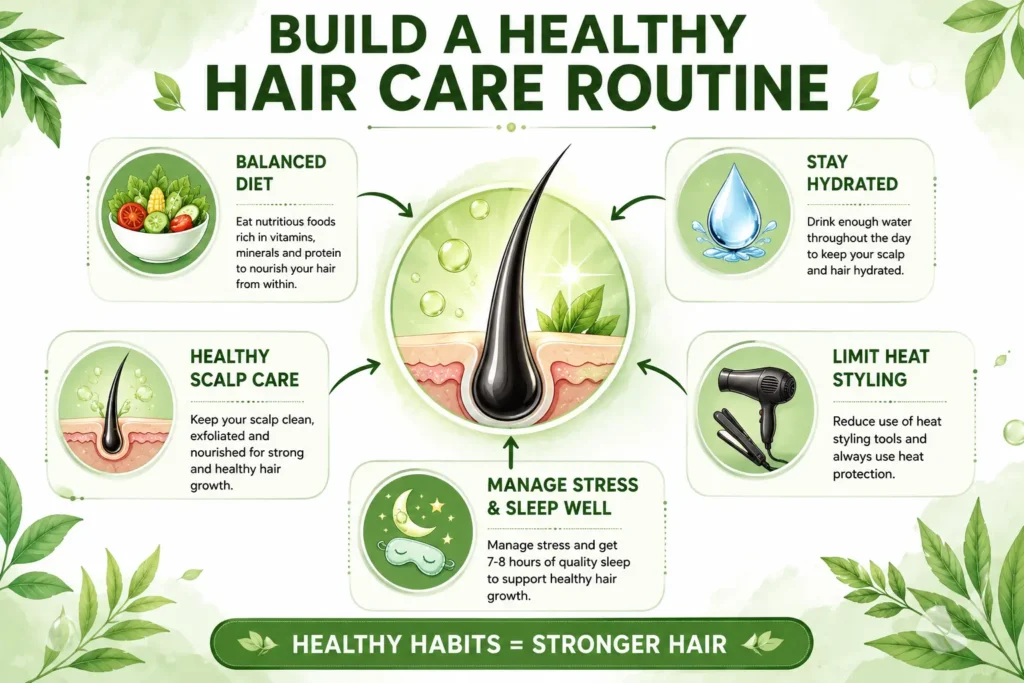
Protein, iron, zinc, healthy fats, and vitamins all contribute to stronger, healthier-looking hair.
A Healthy Scalp Supports Healthy Hair
Scalp Care Matters
Keeping your scalp clean and balanced creates a healthier environment for hair growth.
Healthy Hair Tips for Stronger Hair
Simple habits often make the biggest difference.
Clean Your Scalp Regularly
Remove Excess Oil and Dirt
Regular cleansing helps maintain scalp health without stripping away natural moisture.
Protect Hair From Heat
Reduce Styling Damage
Use heat styling tools only when necessary and apply heat protection whenever possible.
Manage Stress
Support Overall Hair Health
Long-term stress may affect the normal hair growth cycle. Exercise, meditation, and quality sleep may help support healthier hair.
Eat Nutritious Foods
Nourish Hair From Within
A balanced diet provides the nutrients your hair needs to stay healthy and strong.
When Should You Consult a Hair Specialist?
Consider seeking professional advice if you notice:
- Sudden hair loss
- Persistent scalp itching
- Severe dandruff
- Bald patches
- Hair thinning that continues for several months
Early diagnosis can help identify the underlying cause and provide appropriate guidance.
Final Thoughts
Hair myths can easily influence the way we care for our hair, but understanding the facts helps you make better decisions.
Instead of relying on outdated advice or social media trends, focus on maintaining a healthy scalp, eating a balanced diet, managing stress, and following a consistent hair care routine.
Small daily habits often have a greater impact than miracle solutions. By separating myths from facts, you can build a routine that supports healthier, stronger, and better-looking hair over time.