
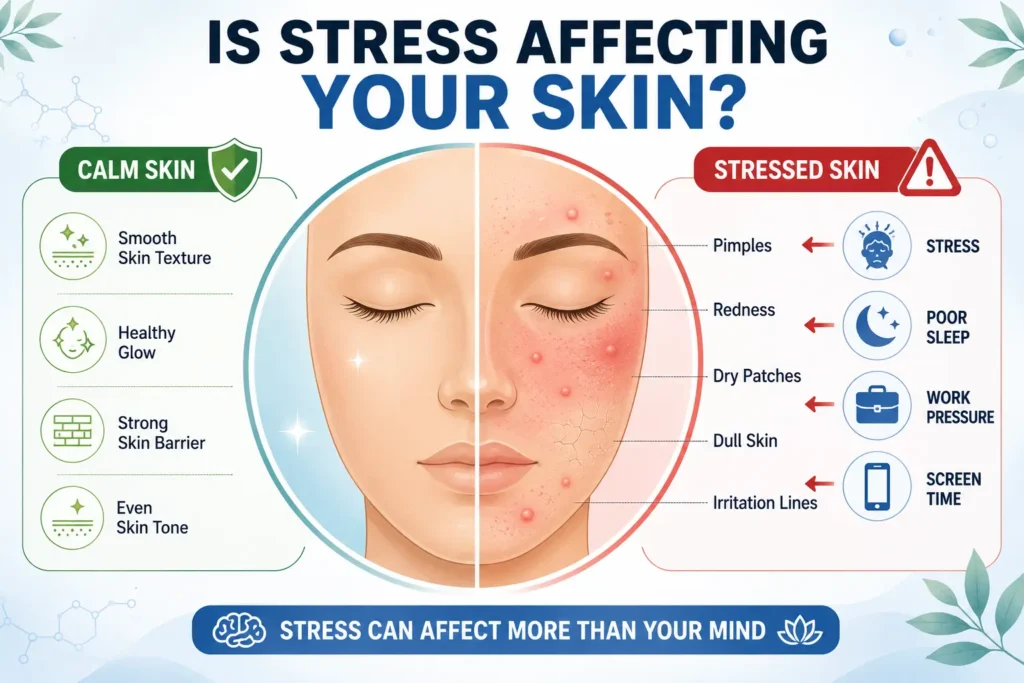
Stress and Skin are more closely connected than many people realize. While stress is often thought of as something that affects your mind, it can also influence the appearance and overall health of your skin.
Have you ever noticed a sudden breakout before an important meeting?
Maybe your skin feels dull during busy weeks at work. Perhaps you develop redness, itching, or irritation even though you haven’t changed your skincare routine.
If this sounds familiar, you’re not alone.
Many people experience skin changes during stressful periods without realizing that emotional stress may be one of the contributing factors.
Understanding this connection is the first step toward building healthier habits for both your skin and your overall well-being.
Stress and Skin: Understanding the Connection
Stress and Skin are closely connected because emotional stress can affect oil production, weaken the skin barrier, and make your skin more reactive. Understanding this relationship helps you recognize early skin changes and build healthier daily habits.
Stress Acne: Why Breakouts Increase During Stress
Stress can influence several natural processes inside the body.
How Stress Affects Oil Production
When you’re under stress, your body releases hormones that may increase oil production.
Why This Matters
Excess oil can combine with dead skin cells and impurities, making pores more likely to become clogged.
Why Pimples Often Appear Before Important Events
Many people notice breakouts before exams, interviews, weddings, or deadlines.
The Connection
Stress doesn’t always directly cause acne, but it may worsen existing skin concerns by affecting oil production and skin balance.
Stress Rash: Why Your Skin May Feel Irritated
Not everyone’s skin reacts to stress in the same way.
Redness and Itching
Some people experience temporary redness or itching during stressful situations.
What Happens
Stress may weaken the skin’s natural protective barrier, making it more sensitive to environmental factors.
Increased Skin Sensitivity
Your favorite skincare product may suddenly feel irritating.
Why It Happens
A weakened skin barrier may react more easily to weather changes, harsh cleansers, or active skincare ingredients.
Stress Effects on Skin You Should Know
Stress may affect your skin in several different ways over time.
Dull Looking Skin
Reduced Skin Radiance
Long-term stress may affect your sleep and daily habits, making your skin appear tired and less vibrant.
Dryness and Tightness
Moisture Loss
Stress may influence your skin barrier, allowing moisture to escape more easily and making your skin feel dry or tight.
Slower Skin Recovery
Healing Takes Longer
Small blemishes or irritation may seem to take longer to improve during periods of ongoing stress.
Healthy Skin Tips to Support Your Skin Naturally
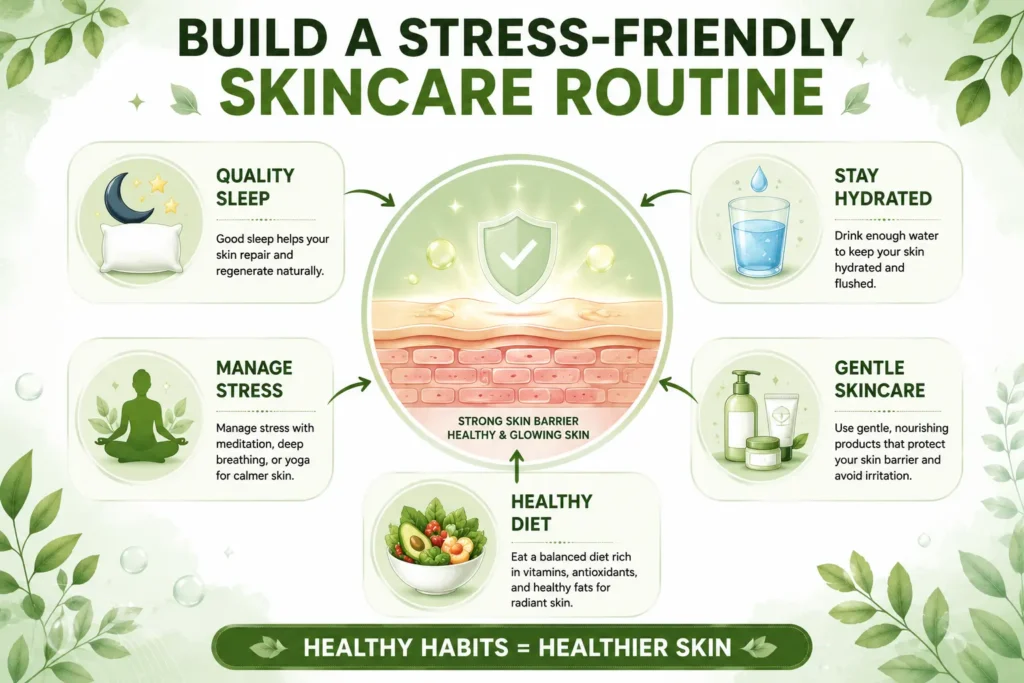
Healthy skin is influenced by both skincare and lifestyle habits.
Get Enough Sleep
Give Your Skin Time to Recover
Your skin repairs itself while you sleep, making quality rest an important part of skin health.
Stay Hydrated
Support Skin Hydration
Drinking enough water helps support your body’s normal functions and contributes to healthy-looking skin.
Follow a Simple Skincare Routine
Avoid Overloading Your Skin
Using too many products at once may irritate your skin. A gentle, consistent routine is often more effective.
Manage Daily Stress
Small Habits Make a Difference
Walking, meditation, deep breathing, and regular exercise may help reduce stress and support overall wellness.
When Should You Seek Professional Advice?
Consider consulting a dermatologist if you notice:
- Persistent acne
- Severe redness
- Ongoing itching
- Skin irritation that doesn’t improve
- Frequent flare-ups despite proper skincare
A healthcare professional can help determine whether an underlying skin condition may be contributing to your symptoms.
Final Thoughts
Stress affects more than your mood—it can also influence how your skin looks and feels.
By understanding the connection between stress and your skin, recognizing early changes, and following healthy daily habits, you can better support calmer, healthier-looking skin over time.
Remember that consistency matters. Caring for both your mental well-being and your skin can help you build a routine that supports long-term skin health.