
Losing 50 to 100 strands a day is completely normal — it’s part of your hair’s natural growth cycle. But when you start noticing clumps on your pillow, in the shower drain, or on your hairbrush, it’s a sign that something deeper may be going on. Understanding the real hair fall reasons behind this shift is the first step toward fixing it. Here are 9 hidden excessive hair fall causes most people overlook.
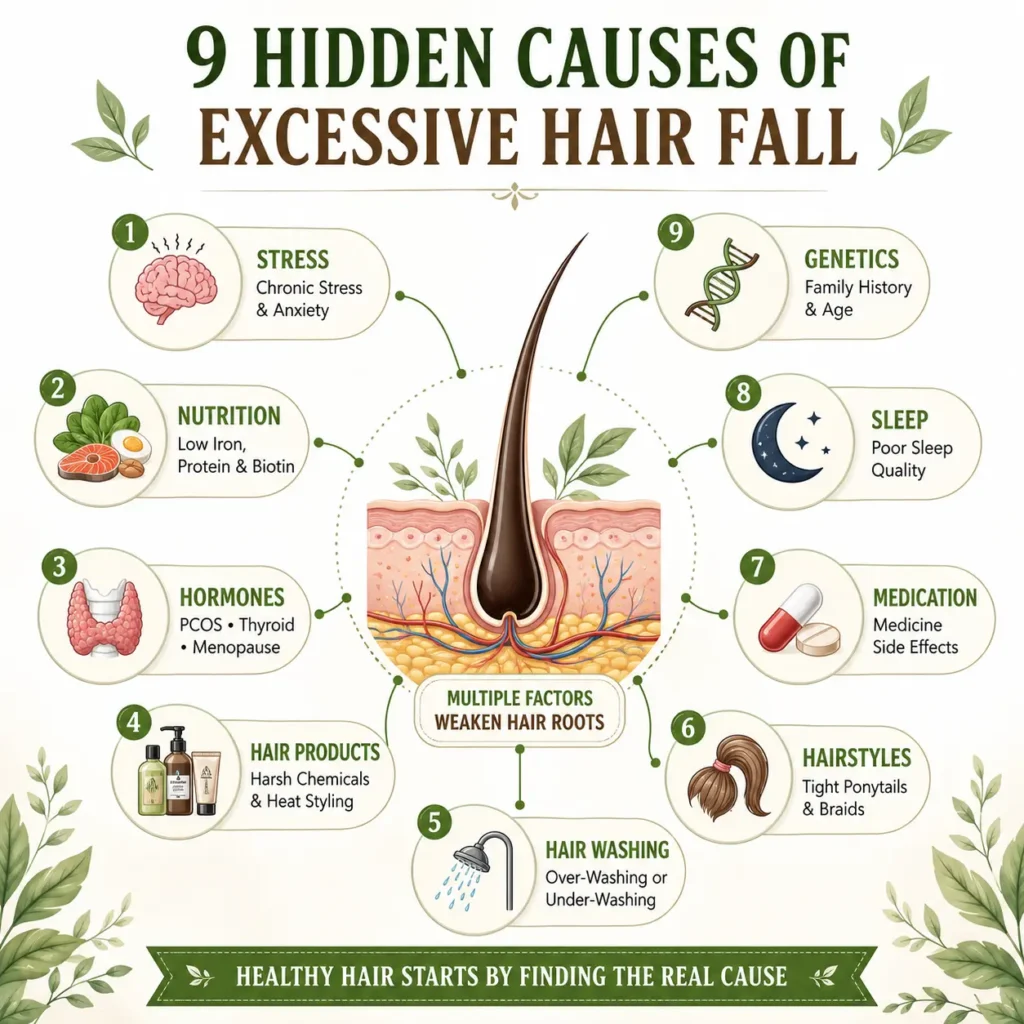
1. Chronic Stress and Anxiety
One of the most common hair fall reasons is prolonged stress. When your body stays in a constant state of tension, it pushes hair follicles into a resting phase earlier than usual, causing noticeable shedding within a few months of the stressful period.
2. Nutritional Deficiencies
Low iron, zinc, protein, or biotin levels are frequent triggers when people ask why is hair falling out despite a normal routine. Your hair needs a steady nutrient supply to stay in its growth phase, and deficiencies quietly starve the follicles.
3. Hormonal Imbalances
Thyroid issues, PCOS, pregnancy, and menopause all disrupt hormone levels that directly control hair growth cycles. This is one of the more hidden causes of hair loss, since symptoms often build up slowly and go unnoticed until shedding becomes severe.
4. Harsh Hair Care Products
Sulphates, parabens, and heavy chemical treatments weaken the hair shaft over time. Frequent heat styling combined with harsh shampoos is a major contributor to excessive hair fall causes that most people blame on genetics instead.
5. Over-Washing or Under-Washing Hair
Both extremes disturb your scalp’s natural oil balance. Over-washing strips essential moisture, while under-washing clogs follicles with product buildup — both accelerating shedding.
6. Tight Hairstyles
Constant pulling from tight ponytails, braids, or extensions causes traction alopecia. This mechanical stress on the roots is one of the lesser-known hair fall reasons, especially among people who wear the same style daily.
7. Medications and Medical Treatments
Certain medications — including antidepressants, blood thinners, and blood pressure drugs — list hair thinning as a side effect. If you’ve started new medication and noticed shedding, this could be why is hair falling out more than usual for you.
8. Poor Sleep Quality
Sleep is when your body repairs cells, including hair follicles. Chronic poor sleep disrupts this repair cycle, silently accelerating hair thinning over time — an often-ignored piece of the hidden causes of hair loss puzzle.
9. Genetics and Age
Androgenetic alopecia, or pattern hair loss, is hereditary and progresses gradually with age. Unlike other excessive hair fall causes, genetic thinning tends to follow a predictable pattern along the crown or hairline.
How To Stop Hair Fall Naturally
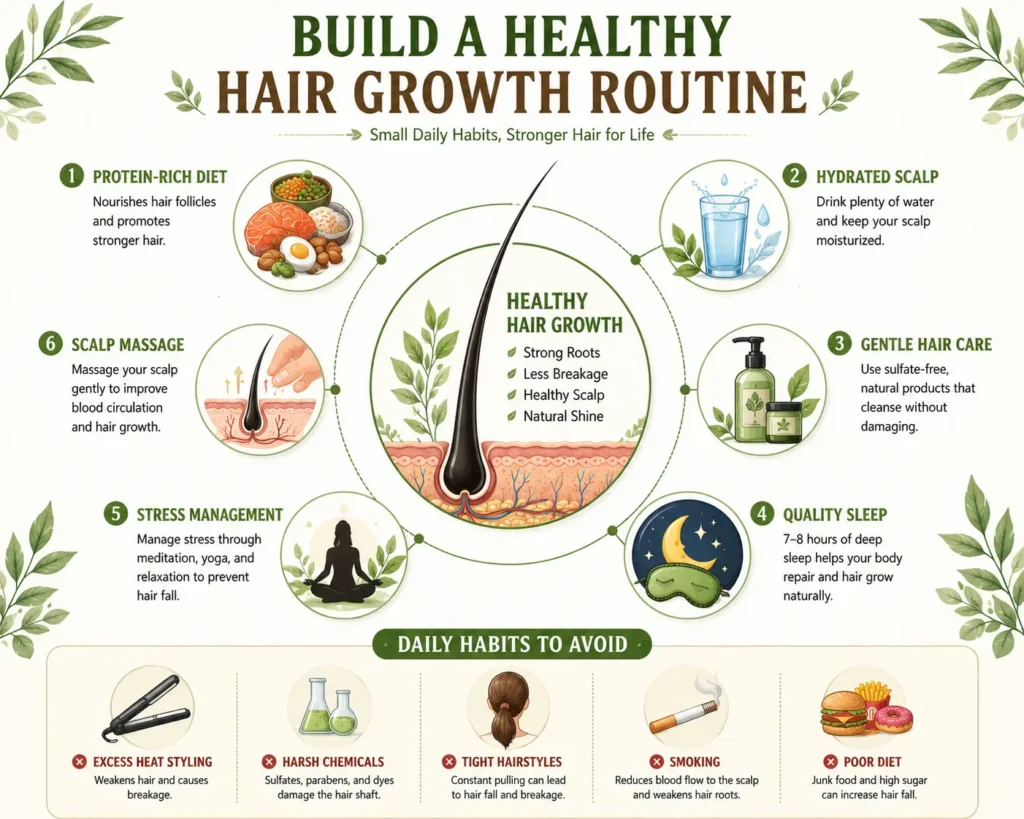
Once you identify your specific trigger, here’s how to stop hair fall effectively:
- Eat a protein and iron-rich diet
- Use sulphate-free, gentle hair care products
- Manage stress through sleep and relaxation routines
- Avoid tight hairstyles and excessive heat styling
- Consult a dermatologist for hormonal or medical causes
Try Hibiscus Onion Gel for Stronger Hair
If you’re looking for a natural way to support these fixes, a Hibiscus Onion Gel can be a powerful addition to your hair care routine. Onion is rich in sulphur, which boosts collagen production and strengthens hair follicles from the root, while hibiscus is packed with antioxidants and amino acids known to nourish the scalp and reduce breakage.
Together, this combination works well for:
- Strengthening weak, thinning strands
- Reducing hair fall caused by nutrient deficiency or scalp stress
- Promoting healthier regrowth over consistent use
- Soothing an irritated or dry scalp naturally
Apply a small amount to the scalp 2–3 times a week, gently massaging it in to improve blood circulation — which further supports the natural hair growth cycle discussed earlier in this blog. Unlike harsh chemical treatments, a hibiscus onion gel offers a gentler, Ayurvedic-backed alternative that works with your hair’s natural repair process rather than against it.
When Should You See a Doctor?
Not all hair fall requires medical attention, but certain signs mean it’s time to stop guessing and get a professional opinion. If you notice sudden bald patches, thinning that runs in your family, or shedding that continues for more than 3–4 months without improvement, it’s best to consult a dermatologist or trichologist.
A doctor can run simple tests — like blood work to check iron, thyroid, and vitamin D levels — to rule out hidden causes of hair loss that aren’t visible on the surface. Early diagnosis makes a real difference, since conditions like telogen effluvium or hormonal imbalance are far easier to reverse when caught early rather than after months of unchecked shedding.
If you’re already following a healthy routine — good diet, gentle hair care, low stress — but still seeing excessive fall, that’s usually your body’s way of signaling something needs medical attention rather than another home remedy.
Final Thoughts
Excessive shedding is rarely random — it’s your body signaling an underlying imbalance. By identifying the true hair fall reasons behind your shedding, you can take targeted action instead of guessing. If the problem persists beyond a few months, consulting a dermatologist is the safest way to get a proper diagnosis and treatment plan.