
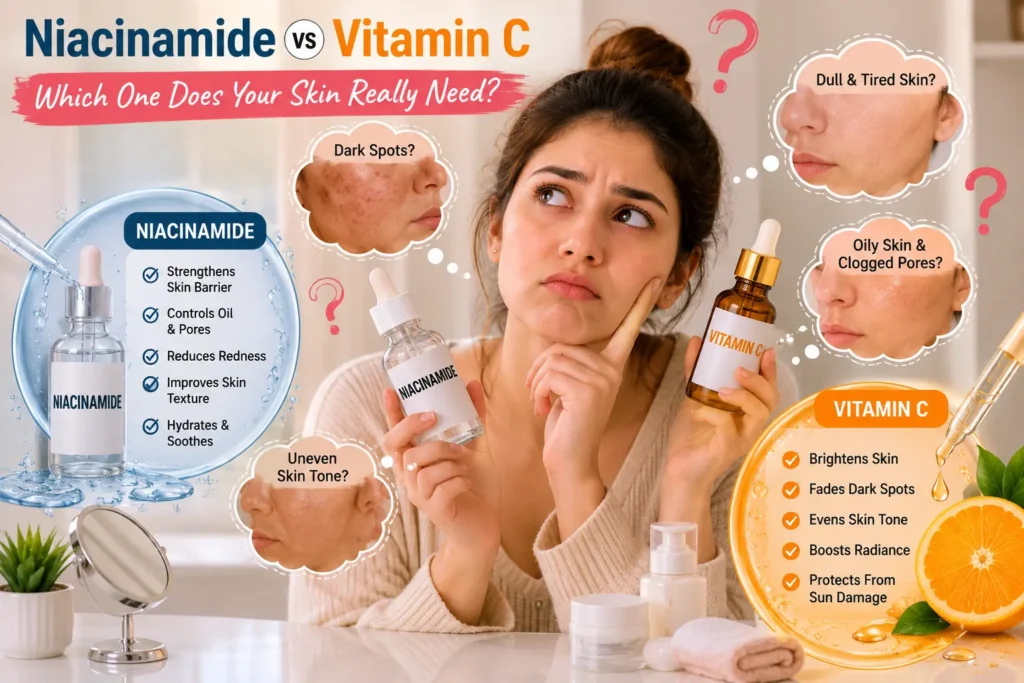
Niacinamide vs Vitamin C for Skin is one of the most common skincare comparisons people search for when dealing with dull skin, dark spots, uneven skin tone, or a lack of glow.
Have you ever looked in the mirror and wondered why your skin still doesn’t look the way you want, even after trying different skincare products?
Maybe you’re dealing with dark spots that refuse to fade.
Perhaps your skin looks dull and tired despite following a skincare routine.
Or maybe social media has left you confused because one person says Vitamin C is the secret to glowing skin, while another swears by Niacinamide.
If you’ve been searching for answers, you’re not alone.
The debate around Niacinamide vs Vitamin C for Skin has become one of the most discussed topics in skincare.
The truth is that both ingredients offer unique benefits, but choosing the wrong one for your specific concern may leave you feeling disappointed.
Understanding what each ingredient does can help you make a better decision for your skin.
Why Are So Many People Confused?
Walk into any skincare store and you’ll find dozens of serums claiming to brighten, hydrate, and improve skin texture.
Some contain Vitamin C.
Others contain Niacinamide.
Many people purchase products based on trends rather than their actual skin concerns.
This is why understanding Niacinamide vs Vitamin C for Skin is important.
The right ingredient depends on your skin’s needs, not on what’s currently popular online.
What Is Niacinamide?
Niacinamide is a form of Vitamin B3 that supports overall skin health.
It has become popular because it works well for many skin types and addresses multiple concerns at once.
Niacinamide Benefits for Skin
Niacinamide may help support:
- Skin barrier health
- Oil balance
- Smooth-looking skin
- Reduced appearance of enlarged pores
- Improved skin texture
- Better hydration retention
Many people with oily or combination skin prefer Niacinamide because it feels gentle and versatile.
What Is Vitamin C?
Vitamin C is known as a powerful antioxidant that helps protect the skin from environmental stress.
It is commonly used by people who want brighter and more radiant-looking skin.
Vitamin C Benefits for Skin
Vitamin C may help support:
- Brighter-looking skin
- More even skin tone
- Improved skin radiance
- Antioxidant protection
- Healthier-looking complexion
People struggling with dullness often look at Vitamin C Benefits for Skin when choosing a serum.
Niacinamide vs Vitamin C for Skin: The Main Difference
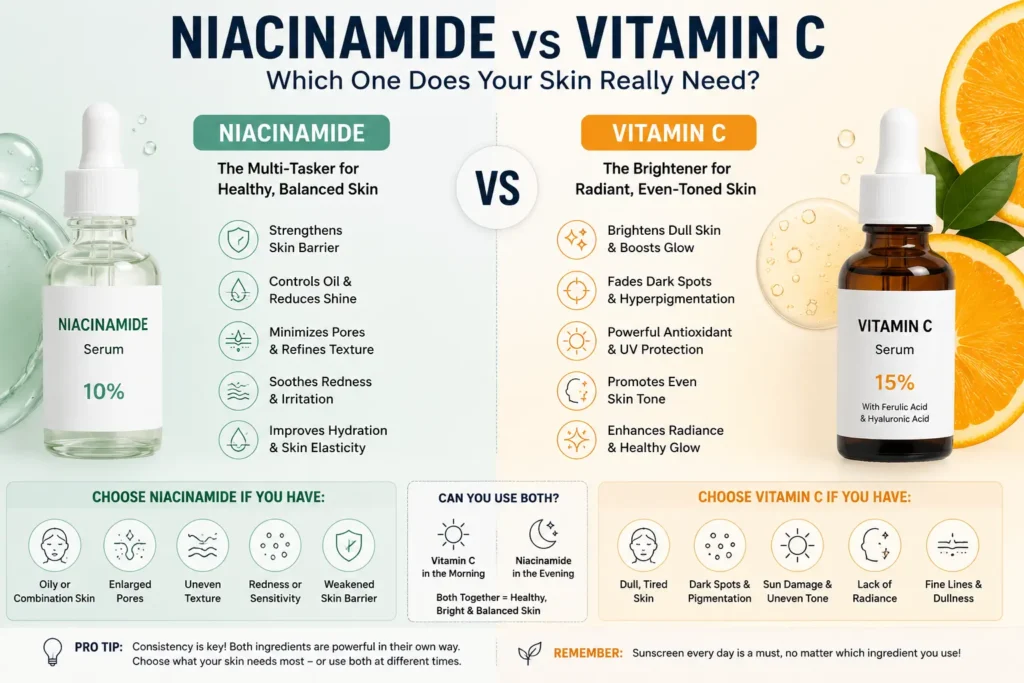
The biggest difference is the primary goal of each ingredient.
Choose Niacinamide If You Have:
- Oily skin
- Enlarged pores
- Uneven texture
- Mild redness
- A weakened skin barrier
Choose Vitamin C If You Have:
- Dull skin
- Uneven skin tone
- Dark spots
- Sun-related pigmentation
- Lack of radiance
Understanding these differences makes the decision much easier.
Which Ingredient Is Better For Dark Spots?
One of the most common skincare questions is:
Niacinamide or Vitamin C for Dark Spots?
The answer depends on your skin.
Vitamin C is often chosen for brightening concerns and supporting a more even-looking complexion.
Niacinamide may also support skin tone improvement while helping maintain skin barrier function.
Many skincare routines successfully include both ingredients.
Which Serum Is Better For Glowing Skin?
If your main goal is glow and radiance, Vitamin C is often the first ingredient people consider.
However, healthy-looking skin isn’t only about brightness.
Hydration, barrier health, and texture also play an important role.
That’s where Niacinamide can be beneficial.
When comparing Which Serum Is Better For Glowing Skin, the answer often depends on what’s causing your skin to look dull in the first place.
Can You Use Niacinamide And Vitamin C Together?
Years ago, many people believed these ingredients should never be used together.
Today, modern skincare formulations often combine both successfully.
Many people use:
- Vitamin C in the morning
- Niacinamide in the evening
Others use products that contain both ingredients.
The key is introducing new products gradually and paying attention to how your skin responds.
Common Mistakes People Make
Choosing Based On Trends
What works for influencers may not work for your skin.
Expecting Overnight Results
Healthy skin improvements take time and consistency.
Using Too Many Products
Layering multiple active ingredients at once may overwhelm your skin.
Ignoring Lifestyle Factors
Poor sleep, stress, dehydration, and sun exposure can affect skin appearance regardless of which serum you use.
Final Thoughts
The answer to Niacinamide vs Vitamin C for Skin depends entirely on your skin concerns.
If your focus is oil control, texture, and barrier support, Niacinamide may be a suitable option.
If your concern is dullness, pigmentation, and radiance, Vitamin C may be worth considering.
Remember that healthy-looking skin rarely comes from a single ingredient.
Consistency, hydration, sun protection, and a simple skincare routine often matter just as much as the products you choose.
Understanding your skin’s needs is the first step toward making the right skincare decision.