
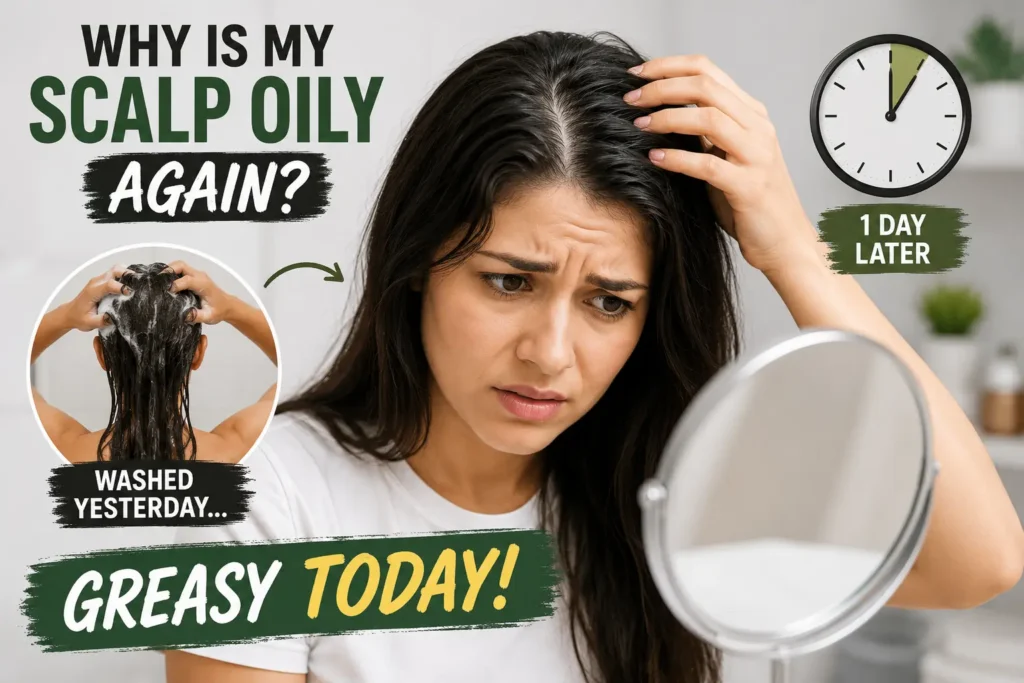
Oily Scalp After Washing is one of the most frustrating hair problems people experience. You spend time washing your hair, enjoy that clean and fresh feeling, and then wake up the next day only to find your scalp looking greasy again.
Sound familiar?
Maybe your hair feels heavy and flat by afternoon. Perhaps you’re constantly reaching for dry shampoo. Or maybe you’re washing your hair more often because you feel embarrassed by how quickly it becomes oily.
If you’re dealing with this problem, you’re not alone.
Many people struggle with an Oily Scalp After Washing, even when they believe they are doing everything right. The good news is that understanding the root cause can help you manage excess oil more effectively.
Why Does Your Scalp Produce Oil?
Your scalp contains sebaceous glands that naturally produce sebum.
Sebum is not the enemy.
In fact, it helps:
- Protect the scalp
- Prevent dryness
- Maintain healthy hair
- Support the scalp barrier
The problem begins when these glands produce too much oil.
When excess sebum mixes with sweat, dirt, and product buildup, your hair can start looking greasy much sooner than expected.
Common Causes of Oily Scalp
Overwashing Your Hair
One of the biggest mistakes people make is washing their hair too frequently.
When you strip away natural oils every day, your scalp may respond by producing even more oil to compensate.
This creates a cycle where washing leads to more oil production.
Hormonal Changes
Hormones play a major role in scalp health.
Changes in hormone levels can increase oil production, making your scalp feel greasy within a short period after washing.
Product Buildup
Heavy conditioners, styling creams, and serums can accumulate on the scalp.
Over time, this buildup mixes with natural oils and creates a greasy appearance.
Touching Your Hair Too Often
Many people unknowingly transfer oil from their hands to their hair throughout the day.
Frequent touching can make freshly washed hair look oily much faster.
Signs You Have an Oily Scalp
You may have an oily scalp if you notice:
- Hair becoming greasy within 24 hours
- Flat and lifeless hair
- Itchy scalp
- Excessive scalp shine
- Difficulty maintaining volume
- Hair sticking together near the roots
Recognizing these signs can help you choose the right scalp care routine.
How to Reduce Oily Scalp Naturally
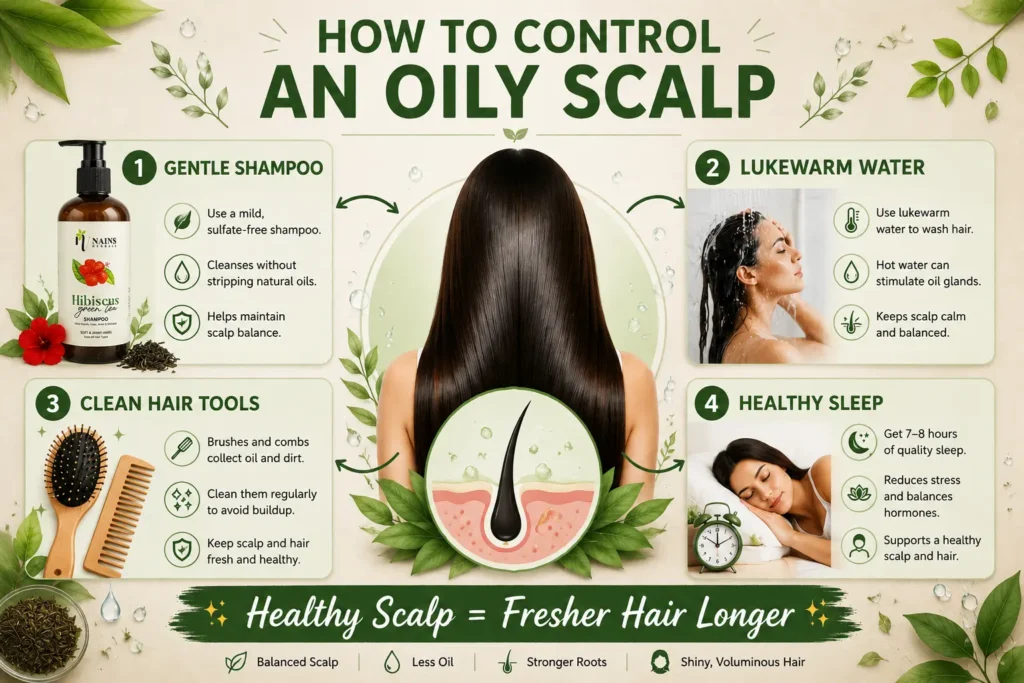
Use a Gentle Shampoo
Harsh shampoos can strip natural oils and encourage your scalp to produce even more sebum.
A gentle cleanser may help maintain balance.
Avoid Applying Conditioner to the Roots
Conditioner should primarily be applied to the mid-lengths and ends of the hair.
Applying it directly to the scalp can make hair appear greasy faster.
Wash Hair With Lukewarm Water
Hot water may stimulate oil production and irritate the scalp.
Lukewarm water is often a better choice.
Keep Hair Tools Clean
Hair brushes and combs collect:
- Oil
- Dust
- Product residue
Regular cleaning helps prevent buildup from returning to your scalp.
Lifestyle Habits That Affect Scalp Oil
Stress
Stress can influence hormone activity and may increase oil production.
Poor Sleep
Lack of quality sleep can affect overall scalp and hair health.
Diet Choices
Highly processed foods and excessive sugar may contribute to oil imbalance in some individuals.
A balanced diet rich in fruits, vegetables, and hydration supports overall wellness.
Common Mistakes That Make an Oily Scalp Worse
Using Too Many Hair Products
Layering multiple products can create buildup and weigh hair down.
Scratching the Scalp Frequently
Scratching may stimulate oil production and irritate the scalp.
Ignoring Scalp Hygiene
A healthy scalp requires regular cleansing and proper care.
Choosing the Wrong Shampoo
Not every shampoo is suitable for oily scalp concerns.
Finding a product appropriate for your scalp type is important.
When Should You Be Concerned?
While an Oily Scalp After Washing is common, consider seeking professional advice if you experience:
- Severe itching
- Persistent dandruff
- Scalp redness
- Hair thinning
- Excessive hair shedding
A dermatologist can help identify underlying scalp conditions.
Final Thoughts
If you’re dealing with an Oily Scalp After Washing, remember that you’re not alone. Excess oil can result from overwashing, hormonal changes, product buildup, stress, and everyday habits.
Instead of washing your hair more frequently, focus on understanding the cause of the problem.
Small changes such as using gentle hair care products, avoiding excessive product buildup, cleaning hair tools regularly, and maintaining healthy lifestyle habits can help support a fresher-looking scalp.
With consistency and the right routine, you can manage scalp oil more effectively and enjoy cleaner-looking hair for longer.