
A red and irritated scalp is your body’s way of signaling that something is disrupting its natural balance. When skin becomes irritated, blood flow increases to the area as part of a normal inflammatory response — but figuring out what’s triggering that response is where most people get stuck. Here’s a breakdown of the most common causes and how to actually calm things down.
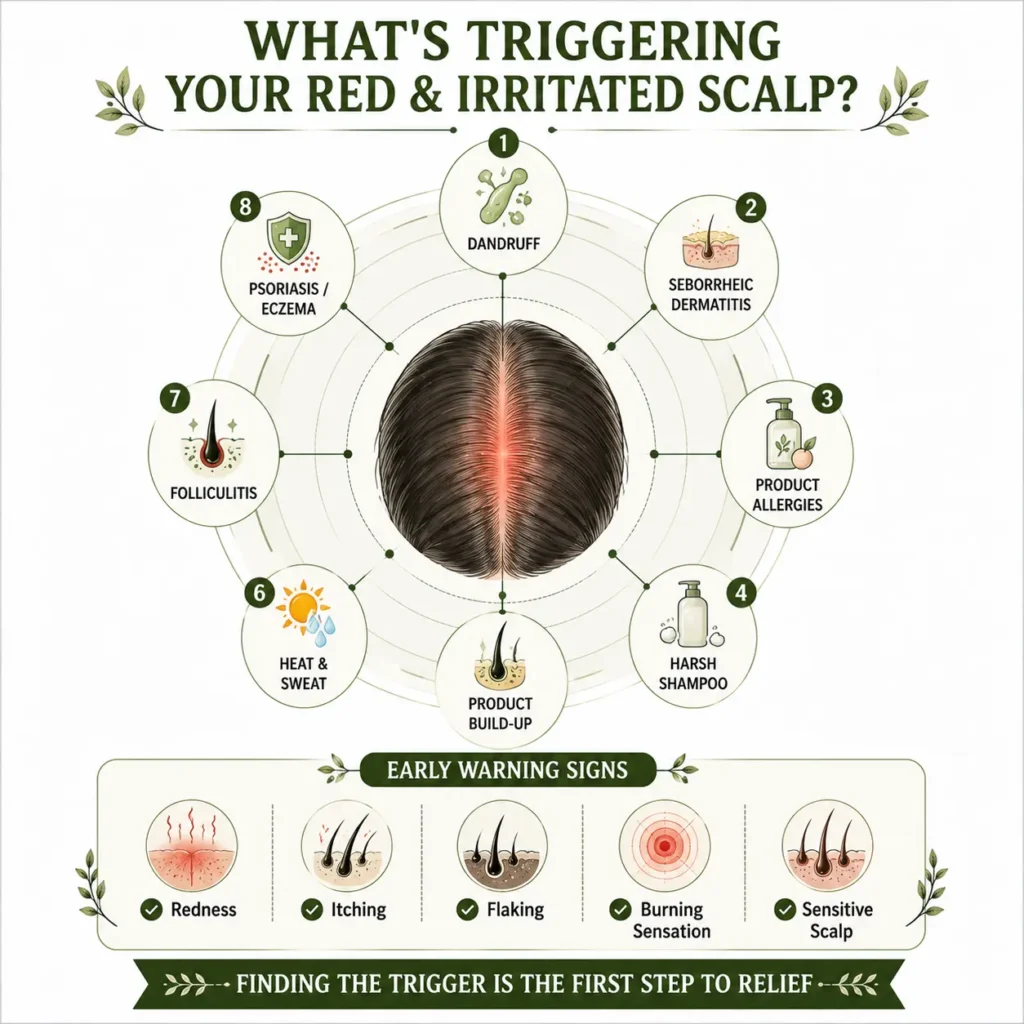
1. Dandruff Is the Most Common Culprit
Dandruff is one of the leading scalp irritation causes, triggered by an overgrowth of Malassezia — a yeast naturally present on everyone’s scalp. As the body reacts to it, redness, flaking, and itching often follow together, not separately.
2. Seborrheic Dermatitis
Seborrheic dermatitis scalp symptoms go a step beyond typical dandruff — think thicker, greasy, yellowish scales combined with more persistent redness. It’s a common inflammatory condition affecting a notable percentage of the population and often needs a more targeted approach than regular anti-dandruff shampoo.
3. Product Reactions and Allergies
Fragrances, preservatives, and certain chemicals in shampoos, conditioners, or hair dyes can trigger allergic contact dermatitis. If redness appeared shortly after trying a new product, this is often the first thing worth ruling out.
4. Overwashing or Harsh Shampoos
Stripping the scalp with strong detergents removes too much natural oil, prompting a rebound effect where the scalp overproduces sebum — which can worsen both oiliness and irritation over time.
5. Product Buildup
Styling products like gels, mousse, and dry shampoo can accumulate on the scalp when not washed out thoroughly, trapping irritants close to the skin and triggering ongoing redness.
6. Sweat and Heat Exposure
Waiting too long to wash your hair after a workout, or prolonged sun exposure without protection, can inflame the scalp. Sweat left on the skin for extended periods creates the perfect environment for irritation to build.
7. Folliculitis
This is a fungal or bacterial infection of the hair follicles that shows up as small, red, sometimes painful bumps. Unlike general irritation, folliculitis usually needs targeted antifungal or antibacterial treatment rather than a standard shampoo switch.
8. Psoriasis or Eczema
In some cases, persistent redness points to a deeper skin condition like scalp psoriasis or eczema — both involve overactive skin cell turnover and typically need a dermatologist’s guidance for proper management.
Itchy Scalp Remedies You Can Start Today
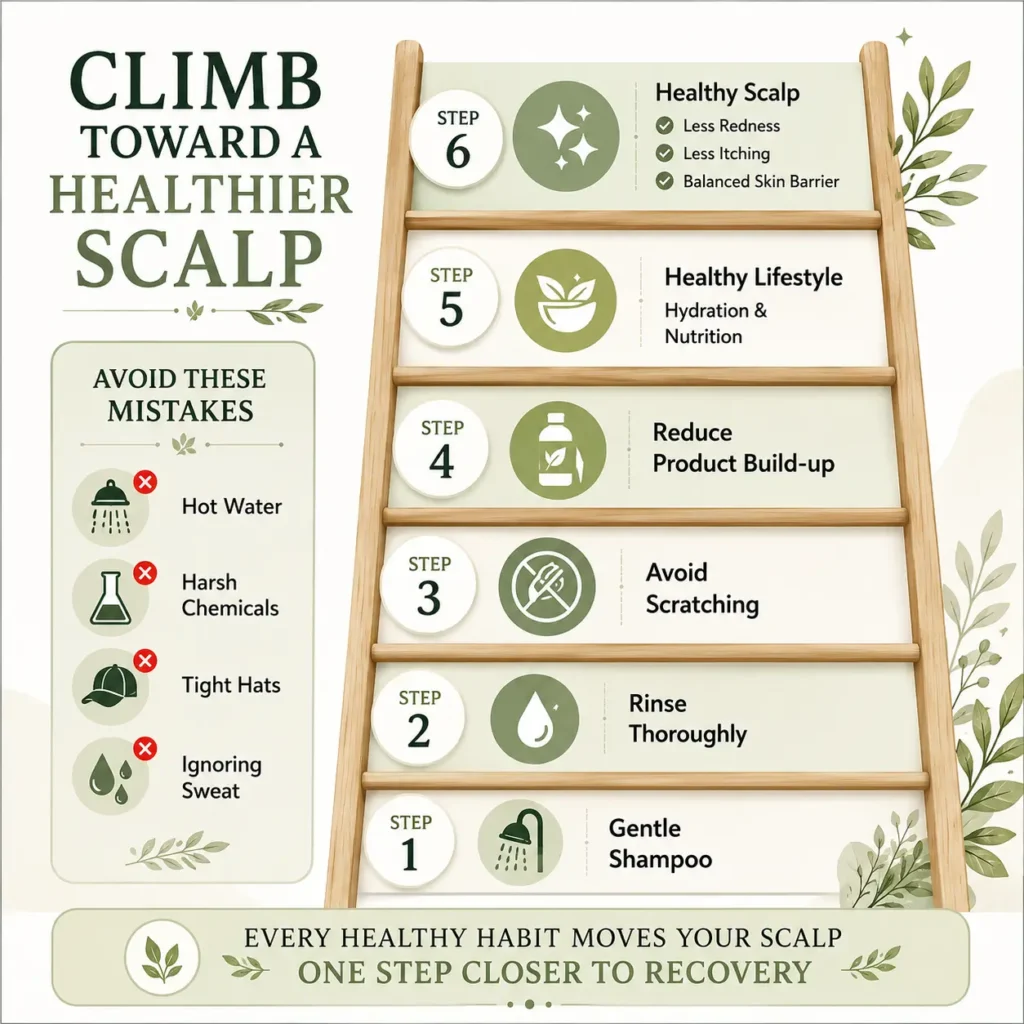
A few practical itchy scalp remedies to calm things down while you identify the root cause:
- Switch to a gentle, fragrance-free, sulphate-free shampoo
- Avoid scratching — it damages skin and worsens inflammation
- Wash scalp promptly after heavy sweating or sun exposure
- Reduce product buildup by rinsing thoroughly
- Avoid tight hats or headwear for extended periods
How to Soothe Irritated Scalp Naturally
If you’re wondering how to soothe irritated scalp without harsh chemical treatments, focus on ingredients that calm inflammation rather than strip the scalp further. Natural anti-inflammatory and antimicrobial ingredients tend to work gradually but more sustainably than aggressive medicated formulas.
Try Rosemary Dandruff Gel for Lasting Relief
If dandruff or general irritation is behind your redness, a Rosemary Dandruff Gel can offer gentle, consistent relief. Rosemary is well known for its natural antimicrobial and anti-inflammatory properties, helping calm an irritated scalp while creating a less favorable environment for the yeast that triggers redness and flaking.
Unlike harsh medicated shampoos that can leave the scalp feeling stripped and more reactive, a rosemary-based gel works gently, supporting your scalp’s natural barrier instead of disrupting it further. With regular use, it may help:
- Calm redness and irritation without over-drying
- Reduce flaking linked to dandruff or seborrheic dermatitis
- Soothe an itchy scalp without triggering rebound oiliness
- Support a balanced scalp environment over time
When to See a Dermatologist
If redness persists beyond 2–3 weeks despite gentle care, or comes with significant hair loss, thick scaly patches, or pain, it’s time to consult a dermatologist rather than continuing to self-treat. Some conditions, like psoriasis or fungal infections, need targeted prescription treatment to fully resolve.
Final Thoughts
A red and irritated scalp almost always has an identifiable trigger — whether it’s dandruff, product reaction, buildup, or a deeper skin condition. Once you narrow down the cause, pairing gentle care with a soothing, natural formula like rosemary dandruff gel often makes a noticeable difference within a few weeks.