The debate between thin hair vs hair loss confuses a lot of people, mostly because both look similar at first glance — less volume, more scalp showing, hair that feels finer than before. But they’re actually two different conditions with different causes, and knowing which one you’re dealing with changes how you should treat it.
What Is Thin Hair?
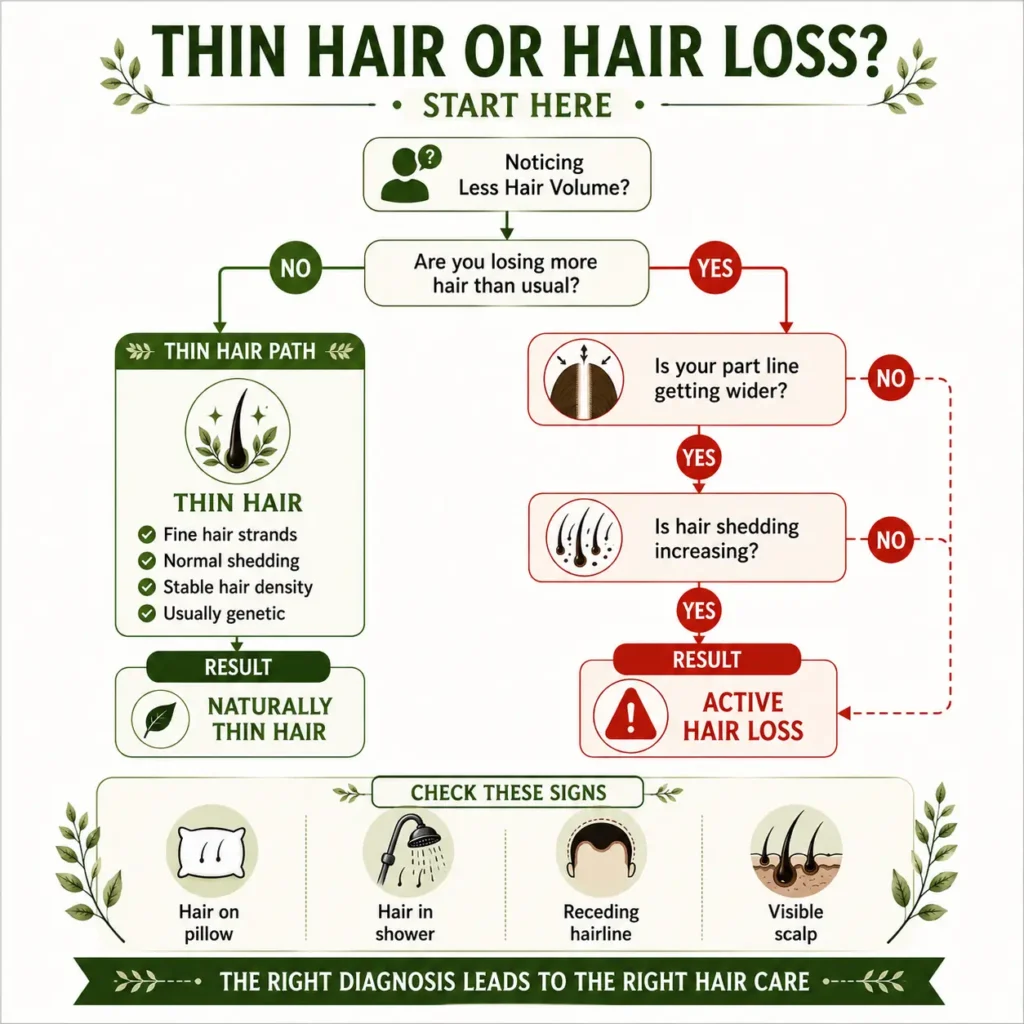
Thin hair refers to the individual diameter of each strand being naturally finer. This is often genetic and has nothing to do with how much hair you’re losing. People with thin hair can still have a full, healthy head of hair — it just appears less voluminous because each strand is finer in texture.
What Is Hair Loss?
Hair loss, on the other hand, refers to an actual reduction in the number of hair strands or active follicles. This can be temporary (like stress-related shedding) or progressive (like pattern hair loss), and unlike thin hair, it usually gets worse without intervention.
Key Signs of Hair Loss to Watch For
Here are the most reliable signs of hair loss that distinguish it from naturally thin hair:
- Noticeably more hair on your pillow, brush, or shower drain than usual
- Widening part line or visible thinning at the crown
- Receding hairline, especially along the temples
- Bald patches or thinning in specific, defined areas
- Hair strands appearing shorter than they used to, as if growth is stunted
If you’re only noticing fine texture without any of the above, you’re likely dealing with naturally thin hair rather than active hair loss.
How to Tell If Hair Is Thinning — The Pull Test
A simple way to check how to tell if hair is thinning at home: gently pull a small section of hair (about 20-30 strands) and see how many come out. Losing more than 2-3 strands per pull, especially if this happens consistently across different areas, may indicate active shedding rather than natural fine texture.
Common Hair Thinning Causes
Understanding the underlying hair thinning causes helps determine the right approach:
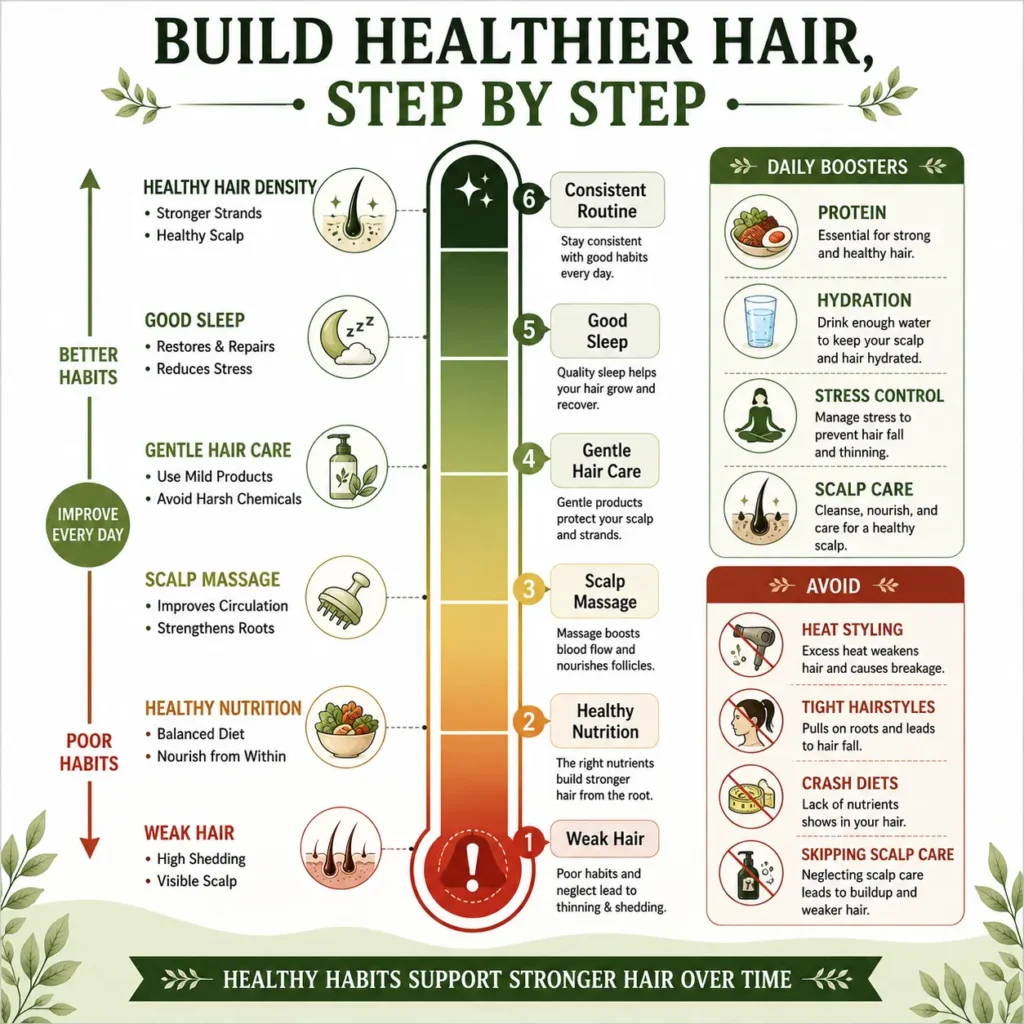
- Genetics – pattern hair loss runs in families and progresses gradually
- Hormonal changes – pregnancy, menopause, thyroid issues, and PCOS all affect hair density
- Nutritional deficiencies – low iron, protein, or biotin weakens strands and slows regrowth
- Chronic stress – pushes follicles into a resting phase prematurely
- Harsh hair care habits – tight hairstyles, heat styling, and chemical treatments damage follicles over time
Thin Hair vs Hair Loss: Quick Comparison
| Factor | Thin Hair | Hair Loss |
|---|---|---|
| Strand diameter | Naturally fine | Can be normal or fine |
| Density over time | Stays consistent | Decreases progressively |
| Scalp visibility | Mild, stable | Increases over time |
| Shedding amount | Normal (50-100/day) | Noticeably higher |
| Reversible? | Not applicable (natural trait) | Often yes, if caught early |
Hair Loss Treatment Tips That Actually Help
If you’ve confirmed active shedding, these hair loss treatment tips can help slow or reverse it:
- Address nutritional gaps with a balanced, protein-rich diet
- Manage stress through better sleep and routine
- Avoid tight hairstyles and excessive heat styling
- Use gentle, sulphate-free hair care products
- Consult a dermatologist if shedding continues beyond 3 months
Try Hibiscus & Onion Hair Gel for Stronger Strands
Whether you’re managing thin hair or early-stage hair loss, a Hibiscus & Onion Hair Gel can support healthier growth without weighing hair down. Onion is rich in sulphur, which strengthens hair from the root, while hibiscus nourishes the scalp with antioxidants that reduce breakage and support natural density over time.
Regular use can help:
- Strengthen weak or thinning strands from the root
- Support natural regrowth in early-stage shedding
- Add volume without heavy residue, ideal for naturally thin hair
- Improve scalp circulation through consistent massage application
For anyone still unsure about thin hair vs hair loss, pairing a lightweight, nutrient-rich formula like this with consistent scalp care is a safe, gentle starting point regardless of which one you’re dealing with.
Final Thoughts
Knowing the difference between thin hair vs hair loss comes down to tracking changes over time — thin hair stays consistent, while hair loss progresses. If you notice ongoing shedding, a widening part, or a receding hairline, it’s worth addressing early with the right nutrition, gentle hair care, and targeted products before it becomes harder to reverse.