
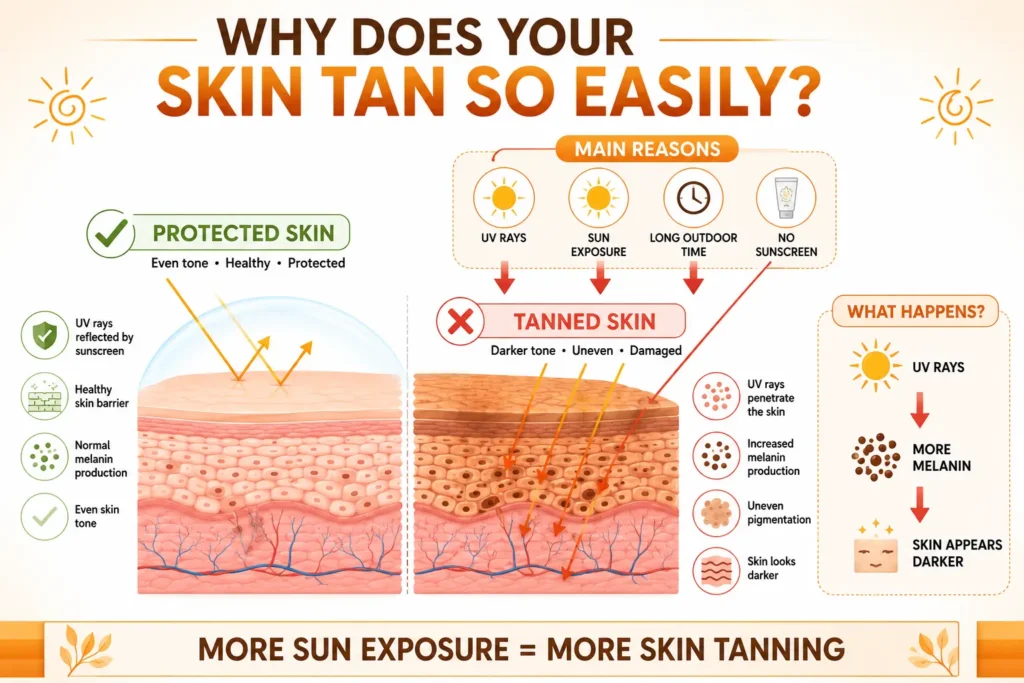
Skin Tanning Causes are often misunderstood. Many people believe tanning only happens after spending hours at the beach, but even short periods in the sun can gradually change your skin tone.
Have you ever gone outside for a quick walk and returned home with noticeably darker skin?
Maybe your face becomes tanned after riding your bike to work. Perhaps your hands look darker than the rest of your body even though you don’t spend much time outdoors.
If this sounds familiar, you’re not alone.
Many people notice uneven skin tone or tanning without realizing that everyday sun exposure, environmental conditions, and a lack of proper skin protection may all contribute.
Understanding why your skin tans easily is the first step toward protecting it and maintaining healthier-looking skin.
Skin Tanning Causes: Why Does It Happen?
Your skin naturally produces melanin, a pigment responsible for its color.
What Happens During Sun Exposure?
When your skin is exposed to ultraviolet (UV) rays, it produces more melanin to help protect itself.
Why Your Skin Looks Darker
As melanin increases, your skin gradually appears darker. This natural response helps reduce the effects of UV exposure, but repeated tanning may also contribute to uneven skin tone over time.
Why Some People Tan Faster Than Others
Everyone’s skin reacts differently.
Common Factors
- Natural skin tone
- Genetics
- Time spent outdoors
- Daily sun exposure
- Lack of sun protection
People with certain skin types may develop tanning more quickly than others.
Sun Tan Removal: Can a Tan Fade Naturally?
Many people wonder whether tanning is permanent.
Natural Skin Renewal
Your skin constantly renews itself by shedding old cells and producing new ones.
How Long Does It Take?
A mild tan may gradually fade over several weeks if your skin is protected from further sun exposure.
Habits That Support Skin Renewal
Simple daily habits may help your skin recover more effectively.
Helpful Practices
- Gentle cleansing
- Daily moisturizing
- Drinking enough water
- Wearing sunscreen
- Avoiding unnecessary sun exposure
Consistency is often more important than quick fixes.
Skin Tanning Prevention: Daily Habits That Help
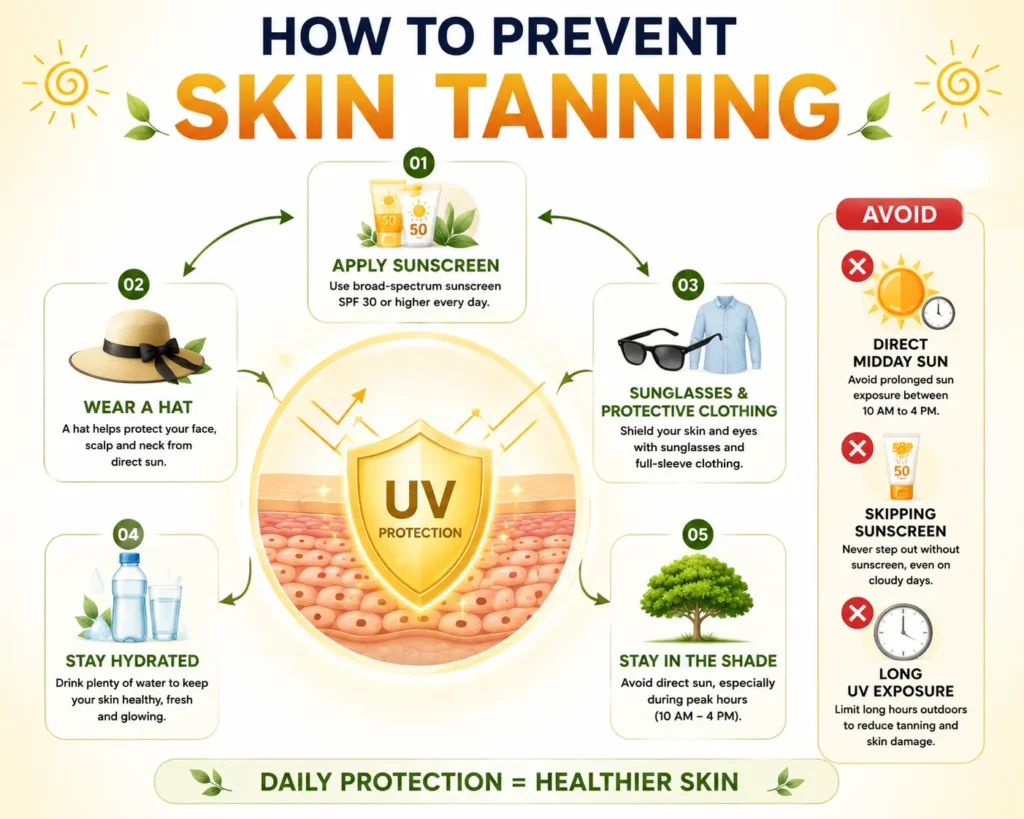
Preventing tanning is usually easier than trying to reduce it later.
Wear Sunscreen Every Day
Protect Against UV Rays
Applying sunscreen before going outdoors helps reduce UV exposure and supports healthier skin.
Limit Direct Sun Exposure
Choose Shade Whenever Possible
Avoiding intense sunlight during peak afternoon hours may help reduce unnecessary tanning.
Wear Protective Clothing
Cover Exposed Skin
Long sleeves, hats, sunglasses, and umbrellas can provide additional protection from direct sunlight.
UV Damage to Skin: More Than Just Tanning
Tanning is only one effect of ultraviolet exposure.
Uneven Skin Tone
Pigmentation Changes
Repeated sun exposure may contribute to darker patches and uneven skin appearance.
Dryness
Moisture Loss
UV rays may reduce your skin’s moisture, making it feel rough or tight.
Early Signs of Aging
Collagen Breakdown
Long-term sun exposure may affect skin elasticity and contribute to the appearance of fine lines over time.
Healthy Skin Protection: Build Better Daily Habits
Healthy skin depends on consistent protection.
Stay Hydrated
Support Skin Health
Drinking enough water helps support your body’s natural functions and contributes to healthier-looking skin.
Follow a Gentle Skincare Routine
Avoid Overloading Your Skin
Using too many harsh skincare products may weaken your skin barrier instead of improving it.
Eat a Balanced Diet
Nourish Your Skin
A diet rich in fruits, vegetables, healthy fats, and protein supports overall skin health.
Stay Consistent
Healthy Skin Takes Time
Daily skincare habits usually produce better long-term results than searching for overnight solutions.
When Should You See a Dermatologist?
Consider professional advice if you notice:
- Sudden skin discoloration
- Persistent pigmentation
- Uneven patches that worsen over time
- Skin irritation after sun exposure
- Dark spots that do not improve
A dermatologist can evaluate your skin and recommend the most suitable treatment based on your individual needs.
Final Thoughts
Understanding Skin Tanning Causes can help you make better skincare decisions and reduce unnecessary sun damage.
By following simple daily habits, protecting your skin from UV exposure, and maintaining a consistent skincare routine, you can support healthier-looking skin and reduce the appearance of tanning over time.
Small lifestyle changes often make the biggest difference in maintaining an even, healthy complexion.