
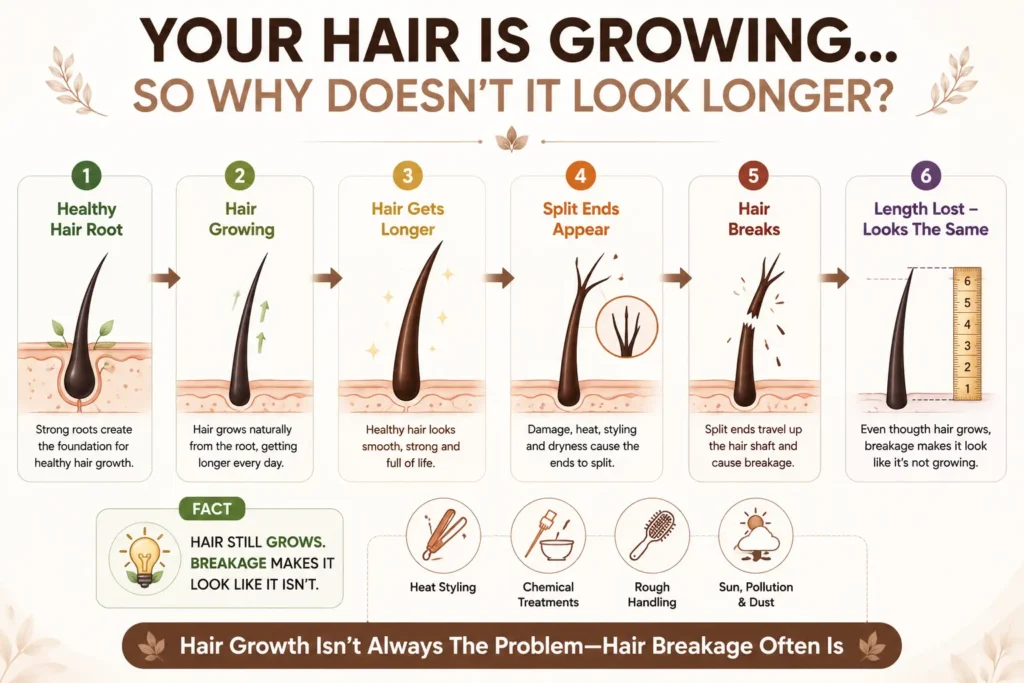
Split Ends are one of the most common hair concerns, yet many people ignore them until their hair starts looking dry, frizzy, or difficult to manage. If you’re trying to grow longer hair but feel like your hair never gets past a certain length, split ends could be one of the reasons.
Have you noticed your hair becoming rough at the ends even after using shampoo and conditioner?
Maybe your hair breaks easily when brushing. Perhaps you’ve been growing your hair for months, but it still doesn’t look longer or healthier.
If this sounds familiar, you’re not alone.
Many people believe their hair has stopped growing, when in reality it is breaking at the ends faster than it can retain length.
Understanding why split ends happen and how to prevent them can help you maintain stronger, healthier-looking hair over time.
Hair Growth Tips: Can Split Ends Affect Hair Length?
Hair naturally grows from the scalp, but damaged ends can make it difficult to maintain longer hair.
Hair Growth Starts at the Scalp
Healthy hair growth begins beneath the scalp where hair follicles produce new strands.
Why Hair Looks Like It Stops Growing
Hair usually continues to grow, but split ends can cause frequent breakage, making it appear shorter over time.
Hair Breakage vs Hair Growth
Many people confuse hair breakage with slow hair growth.
The Difference
When the ends split and continue breaking, your hair loses length even though new hair is growing from the roots.
Hair Damage Causes: Why Do Split Ends Happen?
Daily habits often contribute to hair damage.
Excess Heat Styling
High Temperatures Weaken Hair
Frequent use of straighteners, curling irons, and blow dryers may weaken the hair cuticle, increasing the chance of split ends.
Chemical Treatments
Hair Coloring and Bleaching
Repeated chemical treatments may reduce hair strength and increase dryness.
Rough Hair Handling
Aggressive Brushing
Brushing wet hair roughly or using tight hairstyles may increase hair breakage.
Environmental Exposure
Sun, Wind, and Pollution
Everyday environmental factors may gradually dry out the hair and contribute to damaged ends.
Healthy Hair Care: Daily Habits That Help
Simple routines can help reduce everyday hair damage.
Use a Gentle Shampoo
Clean Without Over-Drying
Choose a shampoo that cleanses your scalp while helping maintain your hair’s natural moisture.
Condition Your Hair
Keep Hair Hydrated
Conditioners help smooth the hair cuticle and improve manageability.
Handle Wet Hair Carefully
Reduce Breakage
Use a wide-tooth comb and avoid pulling your hair while it is wet.
Limit Heat Styling
Protect Hair Fibers
Allow your hair to air dry whenever possible or use lower heat settings when styling.
Prevent Split Ends: Protect Your Hair Naturally
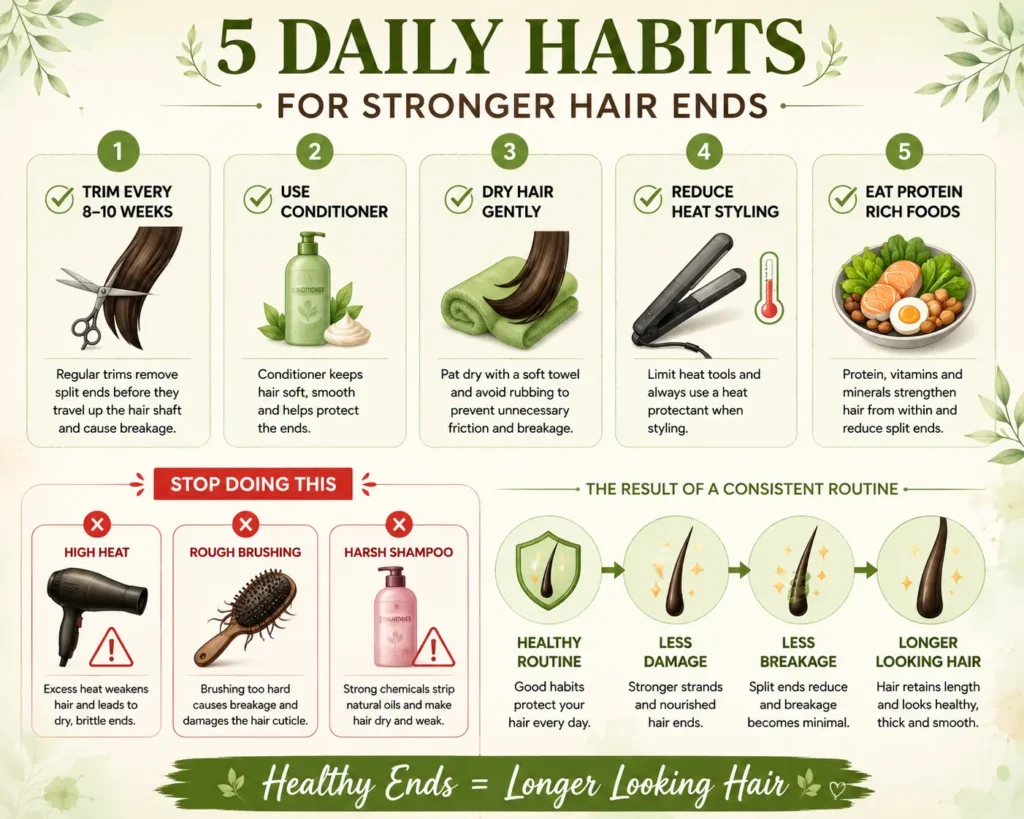
Preventing damage is often easier than repairing it.
Trim Your Hair Regularly
Remove Damaged Ends
Regular trims help prevent existing split ends from travelling further up the hair shaft.
Eat a Balanced Diet
Support Hair Health
Protein, vitamins, iron, and healthy fats contribute to normal hair growth and strength.
Stay Hydrated
Healthy Hair Starts Within
Drinking enough water supports your body’s normal functions, including healthy hair.
Be Consistent
Healthy Hair Takes Time
Consistent hair care habits usually provide better long-term results than constantly changing products.
When Should You Consult a Hair Specialist?
Consider professional advice if you notice:
- Excessive hair breakage
- Persistent split ends despite regular trims
- Sudden hair thinning
- Dry, brittle hair that doesn’t improve
- Hair loss lasting several months
A dermatologist or hair specialist can help identify the underlying cause and recommend suitable treatment options.
Final Thoughts
Understanding Split Ends can help you recognize why your hair may not be reaching its desired length.
Rather than focusing only on hair growth, pay attention to reducing breakage through gentle hair care, regular trims, healthy lifestyle habits, and consistent routines.
Small daily improvements can make a noticeable difference in maintaining stronger, smoother, and healthier-looking hair over time.