
White flakes on shoulders are one of those things everyone notices before you do — a dark shirt, a quick glance in the mirror, and suddenly you’re wondering what’s really going on with your scalp. While most people immediately assume “dandruff,” these flakes can actually mean several different things depending on their texture, color, and how often they appear.
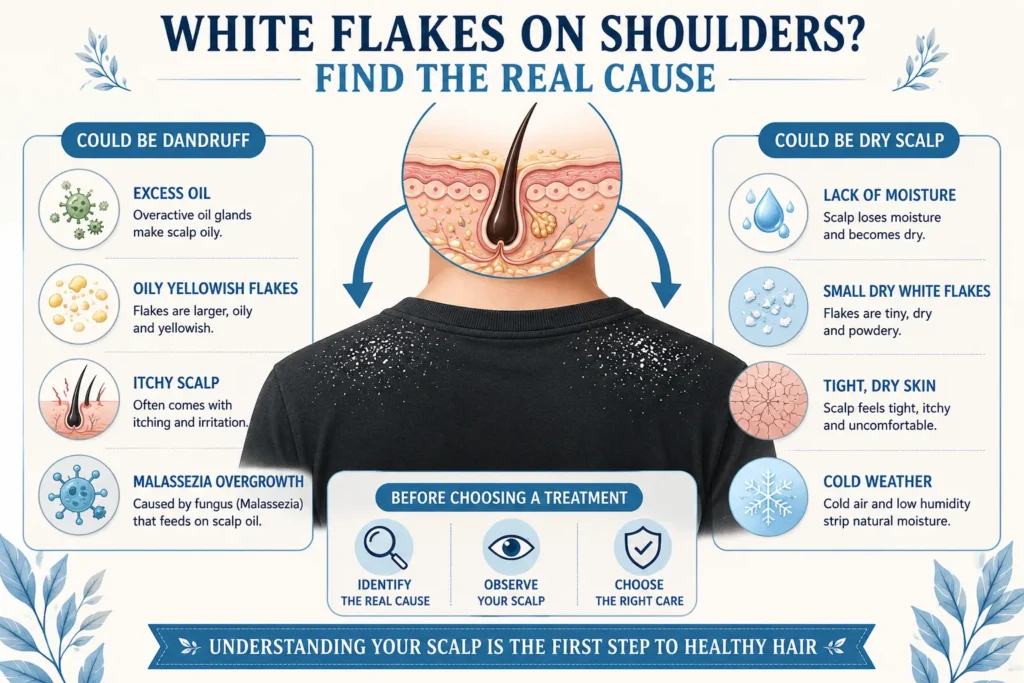
What Causes White Flakes on Shoulders?
These flakes are essentially dead skin cells shedding from your scalp at a faster-than-normal rate. A healthy scalp naturally sheds skin roughly once a month, but when this turnover speeds up, the buildup becomes visible as white flakes in hair and eventually falls onto your shoulders.
Dandruff Vs Dry Scalp — Know the Difference
Not all flaking is the same, and understanding dandruff vs dry scalp is key to treating it correctly:
- Dandruff: Caused by excess oil and overgrowth of Malassezia, a yeast naturally present on the scalp. Flakes tend to be oily, slightly yellow-white, and often come with itchiness.
- Dry Scalp: Caused by lack of moisture rather than oil or fungus. Flakes are usually smaller, drier, and may appear alongside dryness on other parts of your body too.
Treating the wrong one with the wrong product can actually make symptoms worse, which is why this flaky scalp meaning distinction matters before you pick a treatment.
Common Causes Behind Recurring Flakes
- Malassezia overgrowth – the most common trigger, especially when the scalp barrier is weakened
- Seborrheic dermatitis – a more inflamed, greasy form of flaking with redness
- Product buildup – residue from styling products or infrequent washing
- Cold or dry weather – strips natural moisture, worsening flakes in winter
- Stress and hormonal changes – affect oil production and scalp sensitivity
- Underlying skin conditions – such as eczema or scalp psoriasis, which can mimic dandruff but need different care
When It Might Be More Than Dandruff
If flakes are accompanied by thick, silvery scales, noticeable redness, or persistent soreness, it could point to a condition like scalp psoriasis rather than typical dandruff. In these cases, consulting a dermatologist is the safest way to get an accurate diagnosis instead of guessing with over-the-counter products.
How to Get Rid of Dandruff Naturally
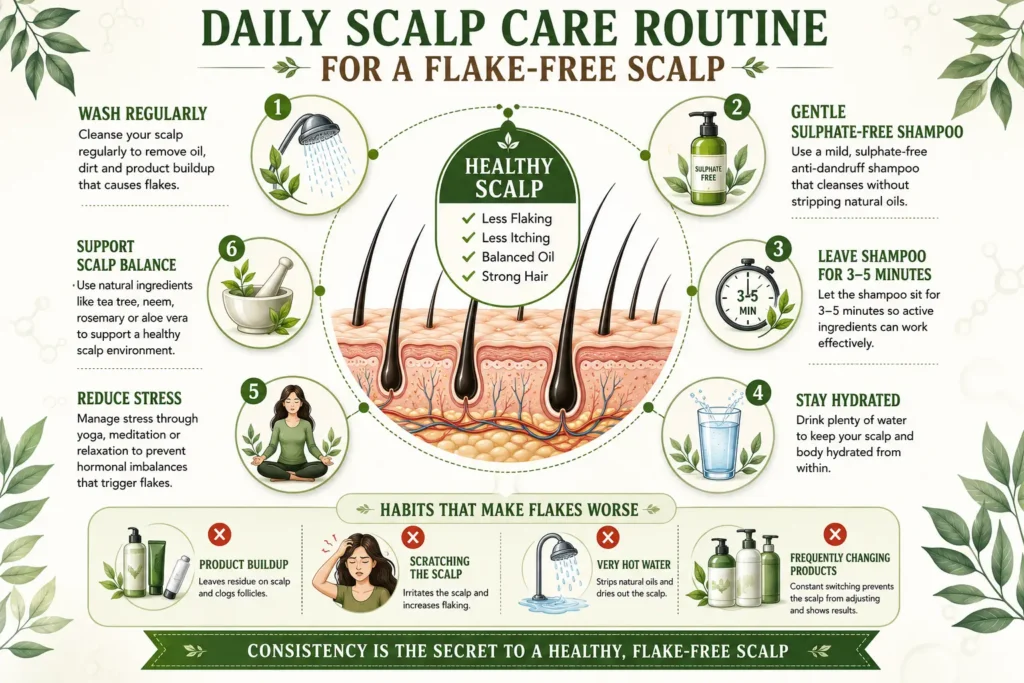
Here are practical steps for how to get rid of dandruff without over-drying or irritating your scalp further:
- Wash regularly to prevent oil and product buildup
- Use a gentle, sulphate-free anti-dandruff shampoo
- Leave treatment shampoos on for 3–5 minutes for full effect
- Avoid switching products too frequently — give each one 4–6 weeks
- Manage stress and stay hydrated to support scalp balance
Try Rosemary Dandruff Gel for Consistent Relief
If you’re looking for a gentler, more sustainable way to manage white flakes on shoulders, a Rosemary Dandruff Gel can be a valuable addition to your routine. Rosemary is well known for its natural antimicrobial and anti-inflammatory properties, which help calm scalp irritation while creating a less favorable environment for Malassezia to overgrow.
Unlike harsh medicated shampoos that can strip the scalp with prolonged use, a rosemary-based gel works more gently, supporting your scalp’s natural balance rather than disrupting it. With consistent use, it may help:
- Reduce flaking without excessive dryness
- Calm an itchy or irritated scalp
- Maintain scalp balance between wash days
- Support a healthier environment for future hair growth
This makes it especially useful for people who’ve tried multiple anti-dandruff shampoos without addressing the underlying scalp condition — a common reason flakes keep returning despite consistent treatment.
Final Thoughts
White flakes on your shoulders can mean different things — from simple dryness to fungal overgrowth to an underlying skin condition. The key is identifying which type you’re dealing with before choosing a treatment, since the wrong approach can prolong the problem instead of solving it. Pairing consistent scalp care with a gentler option like rosemary dandruff gel often delivers more lasting results than repeatedly switching harsh shampoos