
Noticing yellow dandruff instead of white flakes can feel alarming, especially if you’re used to seeing the usual dry, powdery kind. But the color of your flakes actually tells you a lot about what’s happening on your scalp — and yellow flakes almost always point to a different underlying cause than typical dandruff.
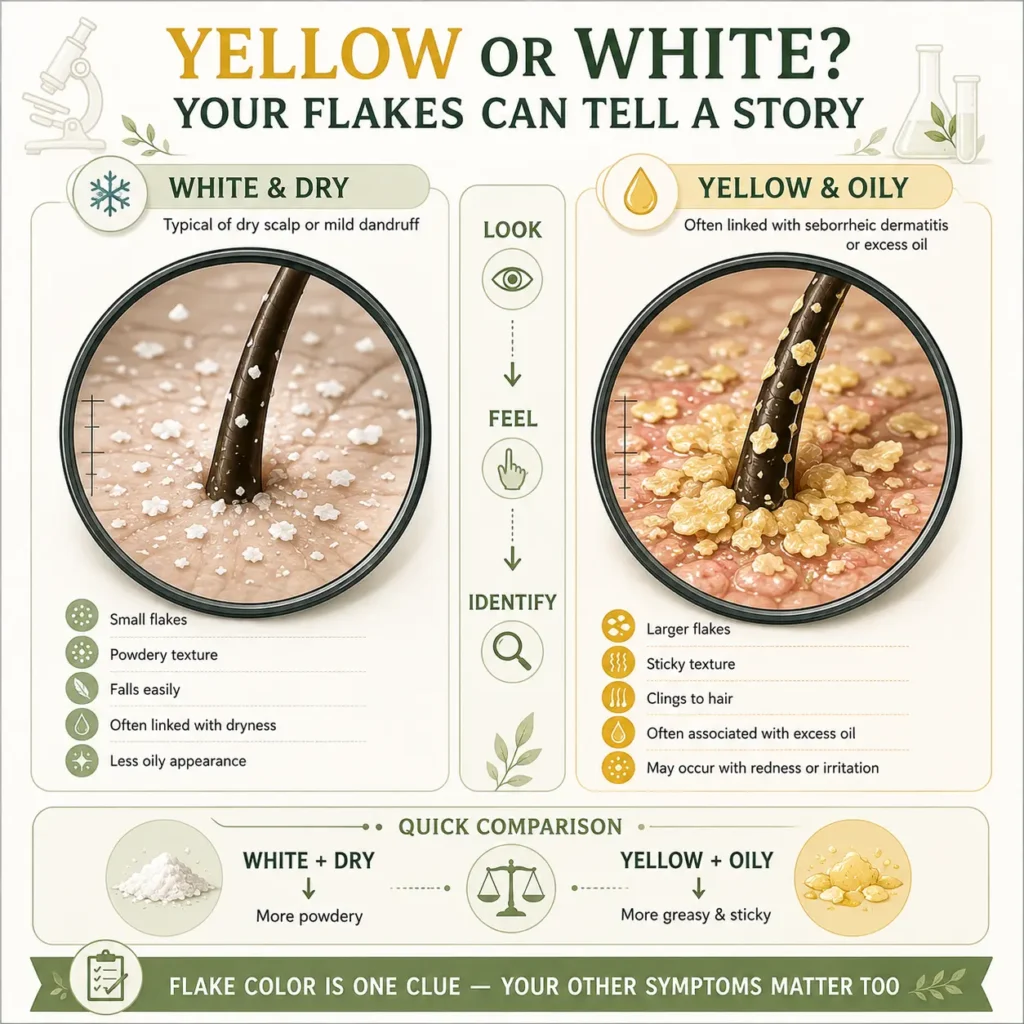
Yellow Dandruff Instead of White Flakes: What’s the Difference?
White flakes are usually dry, small, and powdery — they fall off easily and are typically linked to mild dandruff or a dry scalp. Yellow flakes, on the other hand, tend to be larger, oilier, and stickier, often clinging to the hair shaft rather than falling loose. This distinction matters because the two conditions don’t always respond to the same treatment.
What Causes Yellow Flakes?
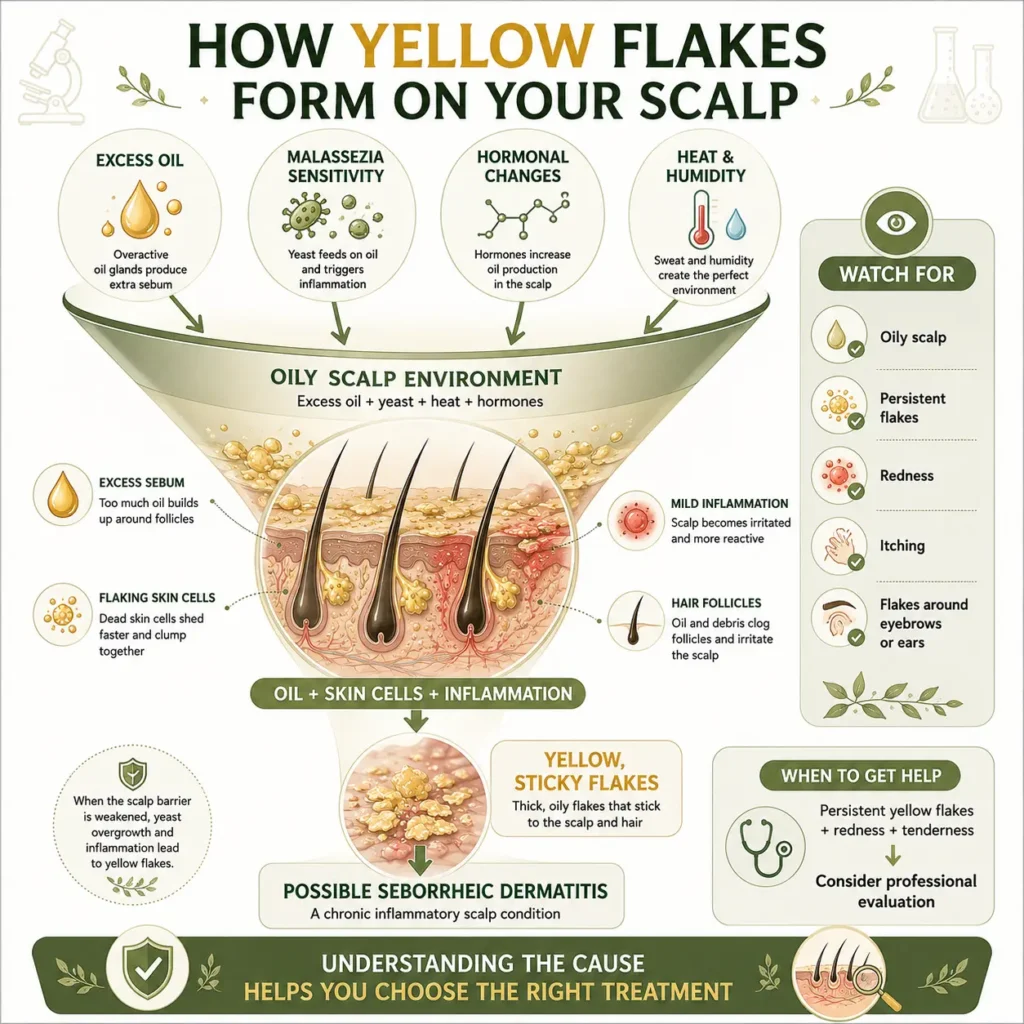
The most common yellow flakes causes trace back to a condition called seborrheic dermatitis rather than standard dandruff. Here’s what’s actually happening:
1. Seborrheic Dermatitis
Seborrheic dermatitis scalp symptoms occur when oil glands go into overdrive, mixing excess sebum with naturally shedding skin cells. The result is flakes that look yellow, feel greasy, and stick around far longer than typical white flakes.
2. Malassezia Yeast Sensitivity
A naturally occurring fungus called Malassezia globosa feeds on excess oil on the scalp. In some people, the body reacts to a byproduct this fungus produces, triggering inflammation that speeds up skin cell turnover — leading to the thicker, yellow-tinted flakes associated with seborrheic dermatitis.
3. Oily Scalp
An oily scalp dandruff connection is common — overactive sebaceous glands create the exact oily environment where yeast and inflammation thrive together, making yellow, greasy flaking far more likely than the dry white variety.
4. Hormonal Changes
Fluctuating hormones, particularly during puberty, stress, or certain life stages, can increase oil production significantly, indirectly triggering or worsening yellow, oily flaking even in people who’ve never had noticeable dandruff before.
5. Weather and Humidity
Hot, humid conditions increase sweat and oil production, creating a more favorable environment for yeast overgrowth — which is why yellow, oily flaking sometimes becomes more noticeable during certain seasons.
Signs You’re Dealing With Yellow Dandruff, Not Regular Dandruff
- Flakes appear oily, sticky, or thick rather than dry and powdery
- Scalp feels tender, red, or unusually oily
- Flaking persists even after using a typical anti-dandruff shampoo
- Symptoms sometimes extend beyond the scalp to eyebrows, ears, or facial hair
How to Treat Yellow Dandruff
Practical steps for how to treat yellow dandruff effectively:
- Look for antifungal actives like zinc pyrithione or ketoconazole, which target yeast overgrowth directly
- Avoid heavy, oil-based hair products that add to existing oiliness
- Wash more frequently if oil buildup is a major trigger, without over-stripping the scalp
- Give any new treatment at least 4–6 weeks before switching
- See a dermatologist if flaking doesn’t improve, since seborrheic dermatitis sometimes needs prescription-strength treatment
Try Rosemary Dandruff Gel for a Balanced Scalp
If oiliness and yeast overgrowth are behind your yellow flakes, a Rosemary Dandruff Gel can be a gentle addition to your routine. Rosemary is known for its natural antimicrobial and anti-inflammatory properties, helping calm the scalp environment where Malassezia and excess oil typically combine to cause thicker, greasier flaking.
Unlike heavy oils or harsh medicated shampoos that can either feed oiliness or over-strip the scalp, a lightweight gel formula works to balance both. With consistent use, it may help:
- Calm inflammation linked to seborrheic dermatitis
- Reduce excess oil without stripping the scalp completely
- Support a scalp environment less favorable to yeast overgrowth
- Complement antifungal treatment as part of a broader routine
When to See a Dermatologist
If yellow, oily flaking persists despite consistent care, or comes with significant redness, tenderness, or spreading beyond the scalp, it’s best to consult a dermatologist. Seborrheic dermatitis can sometimes require prescription-strength antifungal or anti-inflammatory treatment that over-the-counter products can’t fully address.
Final Thoughts
Yellow dandruff instead of white flakes usually signals seborrheic dermatitis rather than standard dandruff, driven by excess oil and yeast sensitivity rather than simple dryness. Identifying this distinction early helps you choose the right treatment — targeting oil and yeast rather than just dryness — for faster, more lasting relief.