
If your scalp smells bad after shampooing, you’re not imagining it, and you’re not alone. A lingering odor right after a wash can feel confusing — didn’t the shampoo just clean everything? In most cases, the smell isn’t about cleanliness at all. It’s about what’s happening beneath the surface, deep in the scalp’s oil glands and pores.
Scalp Smells Bad After Shampooing? Common Triggers
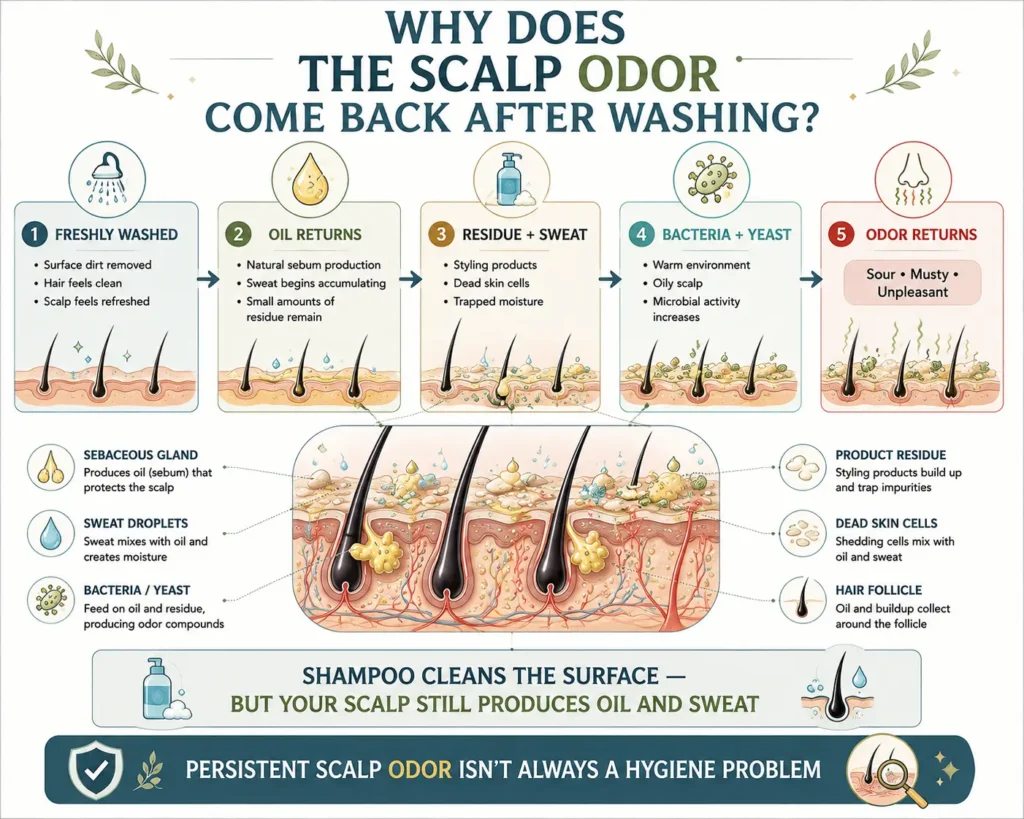
Odor rarely comes from a single source — it’s usually a build-up effect where oil, sweat, dead skin cells, and leftover product combine over time. Regular shampooing removes surface dirt, but it doesn’t always break through everything trapped closer to the scalp itself. That’s why the smell can return within hours of washing, even when your hair looks and feels clean.
1. Overactive Oil (Sebum) Production
Your scalp naturally produces sebum to protect hair, but overactive sebaceous glands create excess oil that attracts bacteria and combines with dead skin to form a breeding ground for odor-causing microbes. Genetics and hormones both influence how much oil your scalp produces.
2. Bacteria and Yeast Imbalance
Bacteria and yeast scalp issues are a major hidden trigger. Malassezia — the same yeast linked to dandruff — thrives in moist, oily environments and produces compounds that create a sour or musty smell, even when hair looks visibly clean.
3. Product Buildup
Silicones, waxes, and heavy styling products can accumulate on the scalp over time, trapping bacteria underneath. Regular shampoo often cleans the hair strands but doesn’t fully break through this layered residue sitting on the scalp itself.
4. Sweat and Poor Airflow
Wearing hats or tight headwear for long periods traps sweat against the scalp, reducing airflow and creating a warm, damp environment bacteria love — especially common for people who are active or live in humid climates.
5. Improper Rinsing
Only washing the hair strands while skipping the scalp itself is one of the most overlooked mistakes. Shampoo needs direct contact with the scalp to break down oil and buildup — running it just through the lengths won’t clear the source of the smell.
What Causes Smelly Scalp Beyond Hygiene
Common smelly scalp causes also include diet and hormonal changes. What you eat, along with fluctuations during puberty, pregnancy, or menstrual cycles, can influence how much oil your scalp produces, indirectly affecting odor intensity even with a consistent wash routine.
How to Get Rid of Scalp Odor
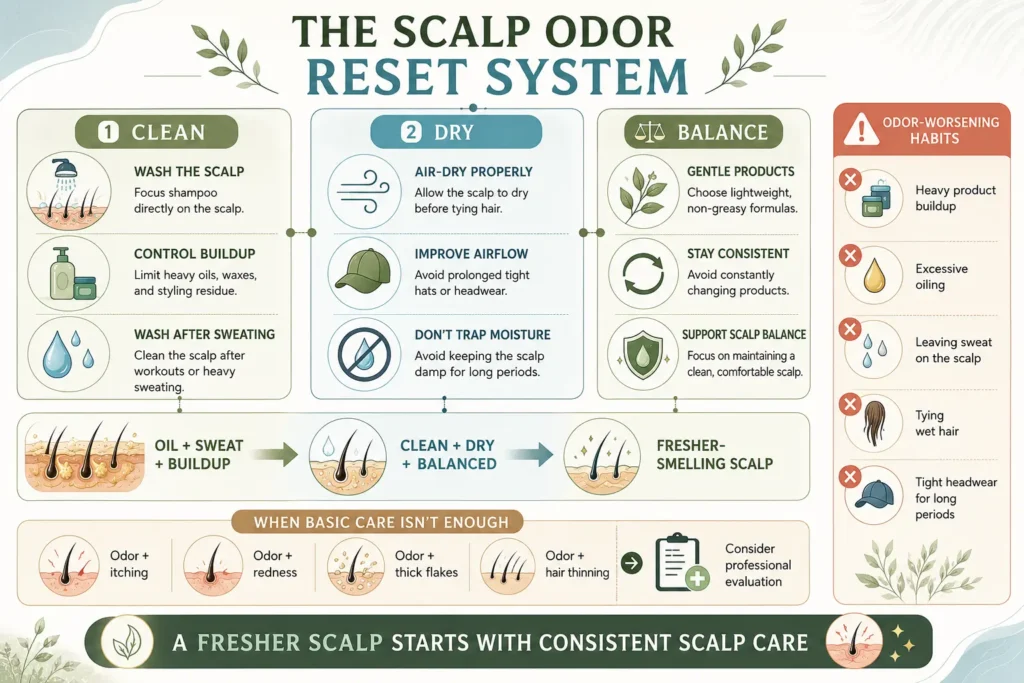
Practical how to get rid of scalp odor steps to try first:
- Focus shampoo directly on the scalp, not just the hair lengths
- Wash promptly after workouts or heavy sweating
- Avoid heavy oils and product buildup
- Let your scalp fully air dry before tying hair up
- Avoid wearing hats or tight headwear for extended periods
Scalp Odor Remedies Worth Trying
A few natural scalp odor remedies that target bacteria and buildup gently:
- Diluted apple cider vinegar rinse to rebalance scalp pH
- Clarifying shampoo used occasionally to clear deep buildup
- Lightweight, non-greasy formulas instead of heavy oils that add to buildup
- Consistent scalp massage to improve circulation and reduce oil stagnation
Try Hibiscus & Onion Hair Gel for a Fresher Scalp
If buildup or excess oil is contributing to the odor, switching from heavy traditional oils to a lightweight Hibiscus & Onion Hair Gel can help. Unlike oils that sit on the scalp and trap sweat and bacteria underneath, a gel-based formula absorbs faster and doesn’t leave the same greasy residue that odor-causing microbes thrive on.
Onion is rich in sulphur, known for its natural cleansing and antibacterial properties, while hibiscus offers antioxidants that support a calmer, healthier scalp environment. With consistent use, it may help:
- Reduce residue buildup compared to heavy oils
- Support a cleaner scalp environment between washes
- Calm irritation that can worsen oil production and odor
- Complement a proper washing routine rather than replace it
When to See a Dermatologist
If odor persists despite consistent, proper washing, or comes with itching, redness, or noticeable flaking, it’s worth consulting a dermatologist. Persistent scalp odor can sometimes signal an underlying infection or skin condition that needs targeted treatment beyond home remedies.
Final Thoughts
A scalp smells bad after shampooing situation almost always traces back to oil, bacteria, or buildup trapped close to the skin rather than a hygiene issue. Focusing shampoo directly on the scalp, avoiding heavy residue-causing products, and switching to a lightweight, nourishing formula like hibiscus onion hair gel can make a real difference within a few weeks.