
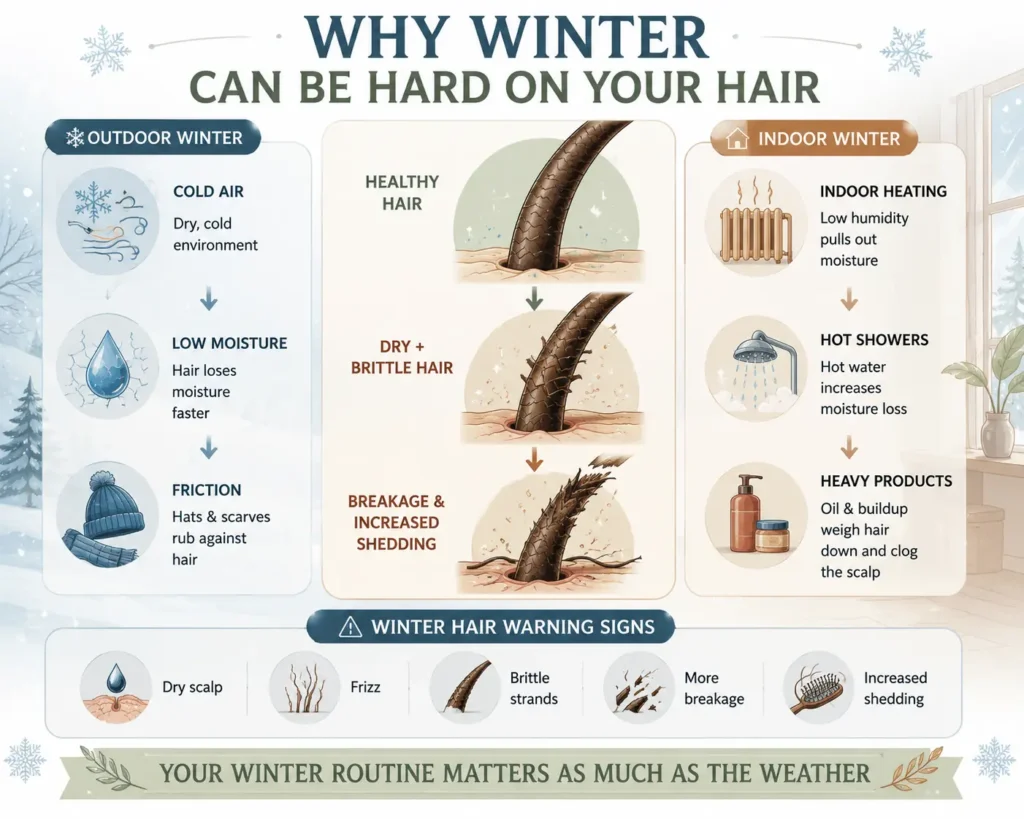
Several common winter hair care mistakes that cause hair loss happen without people realizing it — small daily habits that don’t get adjusted when the weather changes. Cold weather itself doesn’t directly cause hair loss, but it does increase dryness, breakage, and seasonal shedding, and the wrong habits during this season can make thinning far more noticeable than it needs to be
Winter Hair Care Mistakes That Cause Hair Loss: Where It Starts
During winter, your scalp naturally produces less oil, and the surrounding air is much drier. Most people don’t adjust their routine to account for this shift, continuing the same washing frequency, water temperature, and styling habits used in summer. Over time, this mismatch between routine and season is what quietly accelerates breakage and shedding.
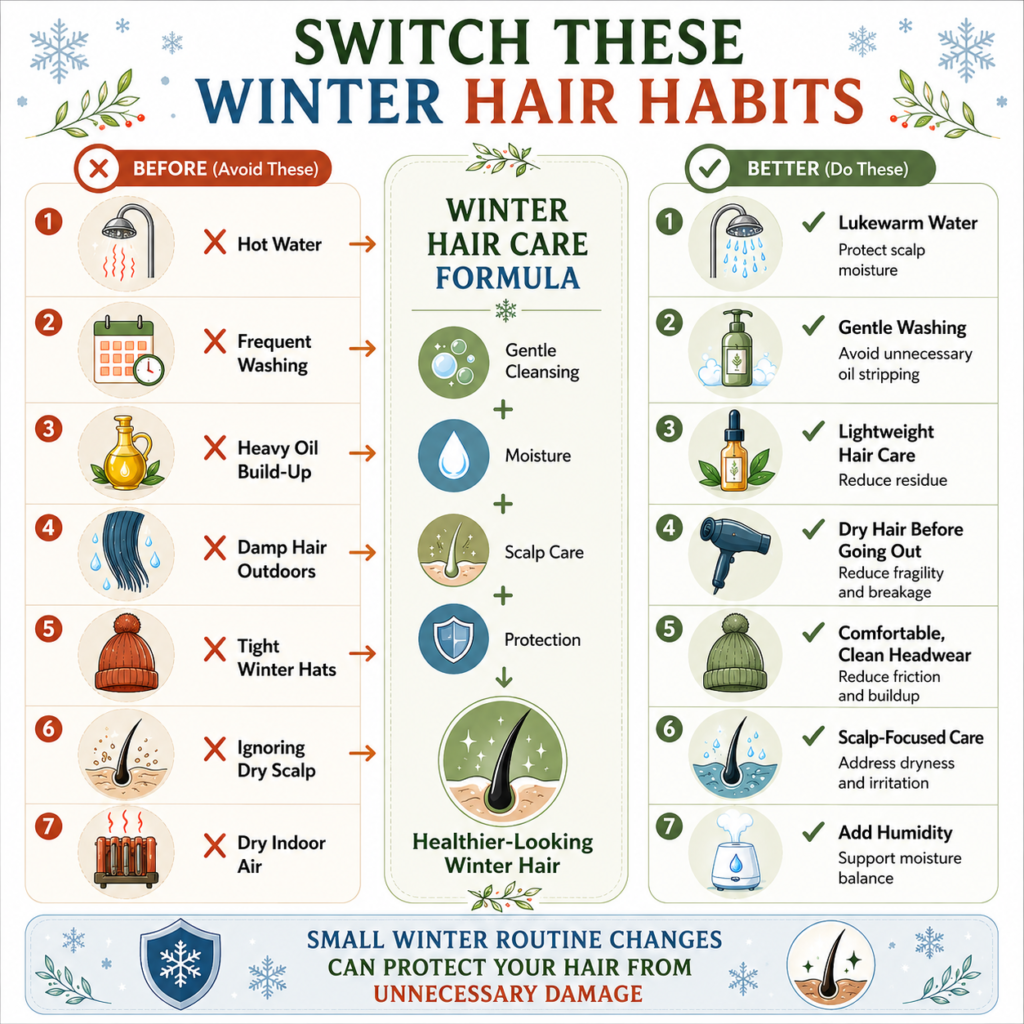
1. Washing Hair Too Frequently
Washing as often as you do in summer strips away natural oils your hair needs even more during colder months. Spacing out washes slightly and choosing gentler, sulphate-free formulas helps preserve this protective oil layer instead of stripping it repeatedly.
2. Taking Long, Hot Showers
Hot water feels comforting in winter, but it’s one of the fastest ways to dry out both hair and scalp. Hot water opens the hair cuticle and increases moisture loss, making strands more brittle and prone to snapping. Keeping showers warm rather than hot, and limiting them to 5–10 minutes, helps prevent this damage.
3. Using Heavy Oils and Overloading Products
Many people switch to extra-thick oils or heavy serums in winter, assuming more product means more protection. In reality, thick oils can clog follicles, trap dirt, and cause greasy roots paired with dry ends — a combination that can contribute to winter hair fall causes.
4. Ignoring the Scalp While Focusing Only on Strands
One of the biggest mistakes is treating only the hair strands while ignoring the scalp. Healthy hair growth starts with a healthy scalp, which means addressing flaking, irritation, or dryness directly rather than only applying products to hair lengths.
5. Wearing Tight Hats Without Washing Regularly
Wool hats and beanies protect against cold but trap sweat and moisture against the scalp, especially if worn daily without regular washing. This buildup can lead to irritation and follicle stress over time, one of the more overlooked winter hair fall causes.
6. Skipping Humidity Control Indoors
Indoor heating significantly lowers humidity, pulling moisture out of both hair and scalp throughout the day. Without any humidity control, hair becomes progressively drier the longer heating stays on, especially overnight.
7. Going Outside With Damp Hair
Stepping into cold air with wet hair increases strand fragility and breakage risk, since the hair shaft is already more vulnerable when wet. This habit compounds the dryness winter already causes on its own.
Dry Scalp Winter Symptoms to Watch For
Dry scalp winter symptoms are often mistaken for dandruff, but they’re usually caused by seasonal dryness rather than fungal buildup. Watch for flaking, itching, and increased shedding — these signs mean your scalp needs hydration-focused care, not necessarily an anti-fungal treatment
How to Prevent Hair Loss in Winter
Practical steps for how to prevent hair loss in winter:
- Limit washing to 2–3 times per week using gentle, sulphate-free formulas
- Use lukewarm water instead of hot for washing
- Choose lightweight, nourishing formulas over heavy, thick oils
- Stay hydrated and maintain balanced nutrition, including adequate protein
- Use a humidifier indoors to counter dry heating
Winter Hair Care Tips for Long-Term Protection
A few additional winter hair care tips to protect against seasonal thinning:
- Deep condition weekly to replace lost moisture
- Avoid tight protective styles for extended periods without care breaks
- Protect edges and hairline from friction caused by hats and scarves
- Trim regularly to prevent existing damage from traveling upward
Try Hibiscus & Onion Hair Gel This Winter
If your winter routine feels heavy or greasy, switching to a lightweight Hibiscus & Onion Hair Gel can support your scalp without the buildup that heavy winter oils often cause. Onion is rich in sulphur, which supports collagen production and strengthens hair from the root, while hibiscus offers antioxidants that nourish the scalp and help reduce breakage.
Used consistently through the colder months, it may help:
- Provide lightweight nourishment without clogging follicles
- Strengthen strands weakened by dryness and friction
- Support scalp health without the greasy residue heavy oils leave behind
- Fit easily into a 2–3 times weekly winter routine
Final Thoughts
Winter hair care mistakes that cause hair loss usually come down to habits that don’t adjust for the season — over washing, hot showers, heavy products, and scalp neglect. Making a few intentional changes, paired with a lightweight, nourishing formula like hibiscus onion hair gel, can help you get through winter with stronger, healthier hair instead of increased shedding.